Tag Archives: healing

Advent and Healing

I started to name this post “The Art of Healing” in a sort of ironic way, because what I know about healing could fit a postage stamp. But then I felt a frisson of fear that someone might read that and think I had answers or instructions and be terribly disappointed when what I really offered was my tiny hard-learned truth that healing tends to be something that happens to us, not something we make happen ourselves.

All I have really learned is that I can participate–as best I can and am able–with healing. I can make room for small practices that help me be more open to the Spirit: quiet listening, stillness, walking in creation at my own pace, breathing slow and deep, leaning more into curiosity and grace rather than judgment within and without, befriending myself as much as I possibly can. But I am finding that’s a tiny speck truth that holds a galaxy of freedom in it for someone like me.

As someone both hard-wired and well-trained to perform, I immediately recognize benchmarks sketched out by someone else as urgent, laudable demands. I joke about being a recovering straight-A student. But unlearning those patterns of an external-centric, someone-else-always-has-the-answers orientation is a lifetime’s work.

Even and especially when it comes to healing.

All of us are on some sort of healing journey. Many—most?– of us wish we were farther along than where we actually are. Even in the smallest, run of the mill healing experiences, like dealing with a really bad cold as I am now, there’s often an internal and external tendency to pushpushpush forward. There’s things to do, calendars to obey, ministries to administer, people to serve, lessons to teach, sermons to write, expectations to meet (insert the words of your Inner Taskmaster here)!!

As if viruses can be out-willed. As if we nephesh are machines, just a little oil here, replace this worn out part, clank-click-twist-and-shut, and boom! Ready to go!

Just take this medicine, this home remedy, this zinc-coated lozenge—no, wait! Studies show that zinc doesn’t really help. Take this instead! That’s the ticket: this cold medicine that’s been on the market for ages (you know the one we told you over and over, “take this and you’ll be better in no time!”)—no, wait! Studies have shown it has almost no effect on congestion. So…ummmm…just rest and by tomorrow or the day after you’ll be raring to go! And even if you aren’t, hurry up and get back to it!

By next week, I likely will be fine. Or at least back to my normal. But the thing I am reminded every single time I get a really bad cold is that it takes as long as it takes to run its course and my system to recover.

And even more so, every single time I get a bad cold I think of people who deal with chronic illness, urgent diagnoses, life-altering accidents… people whose “normal” requires a complete re-figuring. Families I have walked with through the years who have re-made their lives in response to a circumstance completely out of their control. Nephesh whose everyday existence challenges every jot and tittle of our cultural myth of constant upward production and progress.

And how human beings have been doing this hard work for millennia. How pain and suffering and struggle are an integral part of what it means to be human and alive, even if our modern lives want to tell us they are aberrations or worse, that we are aberrations when experiencing hard times.

From where I sit now, propped up in bed surrounded by tissues, lozenges, cold meds (that may or may not be remotely effective), and a humidifier, supported by good health insurance, a compassionate family and congregation, I want so badly to be more untangled than I am from these lies about suffering and healing that alienate us from ourselves. I want to get better at recognizing those lies when they float themselves into my congestion-fuzzy brain or burrow into my neighbor’s self-judgment that she should be dealing with her grief “better.” I am markedly better at recognizing these lies when someone else says them than when I hear them in my own self-chatter. So there’s that.

The part of me that recognizes those lies loves Advent. I crave the stillness and wonder and waiting and even the sharply pointed warning “Prepare!” by John the Baptist —a strange character in any story but especially in our modern always-upwardly-progressing, manufactured-cheer-no-pain-here holiday season myth.

You bet I want to prepare! I want space and time and courage for a clear-eyed gaze like John’s. I want to burn up all that chaff that clogs up our lives and keeps us from truth. I want to clear the decks of everything that keeps me spinning and toiling for treasures that do not keep so I can sit down and see the treasure that is already ours.

Come on John, I’m urging this Advent as the lies seem stronger than ever to me, give us that truth that leads us manger-side.

I want all the time the next four weeks can give us. Every minute. Not so I can gobble it up, but so we can marinate, soak slow and deep and long in this gift of a season of preparation. A season where pain and suffering and struggle and grief and messy, prickly humanity are all “normal,” welcome, accepted, seen, valued. For me, at least, that’s way for me to “prepare Him room.”

If I know anything about healing, it’s that healing takes its own time. I can walk or sit or lie down in its pace or I can choose not to. But the season will take as long as it takes. Ugh. Whew. Thanks be to God. Amen.

We are quite naturally impatient in everything to reach the end without delay.
We should like to skip the intermediate stages.
We are impatient of being on the way to something unknown, something new.
And yet it is the law of all progress
that it is made by passing through some stages of instability— and that it may take a very long time.

~ Pierre Teilhard de Chardin in HEARTS ON FIRE

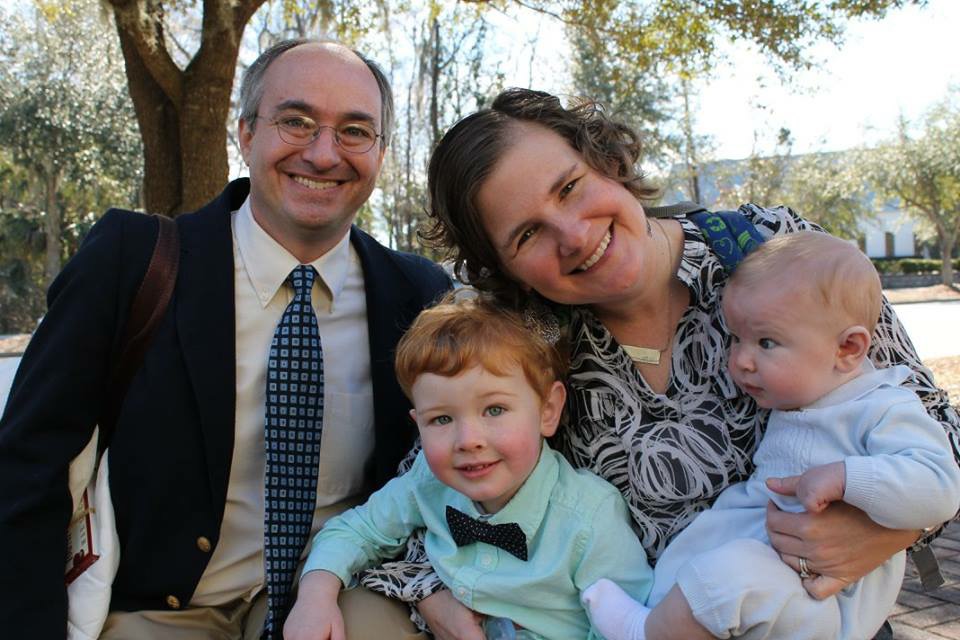
Rev. Alicia Davis Porterfield lives in Greenville, NC, is mom to one teenaged and two young adult sons, and is part of a clergy couple.
Melanie Storie: When It Stops

Today on the mountain, I watched it raining in my backyard while there was no rain at all in my front yard. The sun was shining through the fog. The cows were grazing in the front pasture. If I moved, maybe it would have all stopped. So, I stayed still. It rained like this for minutes in the back. The sun gazed bright on the cows. The rain stopped. The sun bathed everything. 

A few weeks ago, I was an elementary school teacher. I had served as a Children’s minister and then a missionary where my work often overlapped with local schools. I was called to work in public schools. I became a substitute, then a tutor, then I earned my teaching degree through a lateral entry program. I taught kids who needed a good teacher. They depended on me for far more than academics. A student whose dad went to jail in the night needed my black cozy chair for a nap the next day. I poured out my heart for the children I taught. Teaching was my new ministry.

I taught through deaths in my family, through COVID, through surgery, through a lockdown due to an actual shooting within our school zone (the Sheriff Deputies examined my classroom door for bullet fragments), and through the Big Ugly that put both of my children in the hospital.

Teaching is a ministry of stamina and dedication. In the profession, there is a phrase often echoed, “Find your WHY.” I knew my “WHY?” I was called by God to help children and families. In this new phase of my life, this calling kept me going on hard days, on scary days, on days when I didn’t think I could keep going. I loved my job and I kept going well in a hard profession.

Until I couldn’t. 

We moved to the mountains. It had always been our dream. Our boys have flown the nest, we found jobs. We moved. I started the school year.

Everything felt off. The supports I had in place in my old district were gone. More depended on me. Truthfully, more has been piling on for teachers every year. My husband, who works as a chaplain, was making more money than me, but I left for work before him and was home after him. I always had work with me at home. It was getting worse with the move. I was having a hard time getting everything done. My anxiety was through the roof. 

My nineteen year old son, Owen, asked me if I had seen the hummingbird at our house. I hadn’t. I hadn’t had time to see anything but work. 

After a weekend of tears and panic attacks, I quit my teaching job. All those traumatic times I had taught through caught up with me. There was no way to find “balance” or “self-care” without walking away. 

I don’t know what’s next. I do have faith that there is something good. I had time to  sit outside and meet my hummingbird. I can see miracles like rain in the backyard and sun in the front.

Sometimes, we need everything to stop so we can see and hear all of those things we have been missing. I cared for other people’s children so very much. I’m grieving that loss. I almost lost myself. I’m a precious child too. I thank God for reminding me.

“After the earthquake came a fire, but the LORD was not in the fire. And after the fire came a gentle whisper.” ~1 Kings 19:12

Melanie Storie is a writer, minister, and educator who lives in the NC mountains.

Griselda Escobar: Everyday Theology and the Ordinary Task

She says she does not know when it began. She cannot pinpoint what caused it. She could not recall the first time she realized it. All she knows for sure is where she is now.

Life has become overwhelming.

The work that once filled her heart with passion became difficult to fulfill. Preparing lunches, making schedules, and following those schedules somehow transformed into too much. Times of enjoying the moment and the family she loves felt scarce. Her child’s laughter –which makes her smile as she thinks of it–could not change the feeling. The continual support of a loving husband were not lifting the weight.

What happened? she asked. How did I get here?

As time went by she has tried different approaches and sought for answers to help her deal with her feelings. She has kept praying. But at times she continues to doubt herself, her feelings, her faith.

Her God has not changed though. And she has become amazed at how God continues to mold her faith . . . in the everyday ways.

In 2nd Kings 5 we find the story of Naaman,  a powerful military leader in a vulnerable place. He was not accustomed to being out of control. In fact, he was always in control.

Here Naaman finds himself in an uncommon situation, a situation completely out of his control: he has contracted leprosy. He is in desperate need of healing. His wife’s servant girl refers him to the God of Israel.

Out of resources, out of control, he goes. He starts at the palace with the king, but leaves empty handed. He’s then referred to the prophet Elisha, who doesn’t even go out to speak to him in person, but sends a servant to relay the message.

Elisha tells Naaman to do an ordinary task in an ordinary place. He is not sent to a special location renowned for its healing miracles. No one promises him an extraordinary experience.

Instead God simply told him, through Elisha, to go and bathe himself seven times in the Jordan.

Naaman goes away angry. He is thoroughly unimpressed with the prophet of Israel. “’I thought that he would surely come out to me and stand and call on the name of the Lord his God, wave his hand over the spot and cure me of my leprosy. Are not Abana and Pharpar, the rivers of Damascus, better than all the waters of Israel? Couldn’t I wash in them and be cleansed?’ So he turned and went off in a rage.”

What kind of healing involves just ordinary basic hygiene?! Where was the drama? Where was the flair? Had his servants not intervened and convinced him to try these simple instructions, Naaman may never have been healed.

But God picked an ordinary way to heal him. Here in this ordinary place, doing an ordinary task, in the presence of only his companions, God brought a miracle. Naaman’s healing reflects the sacredness of the ordinary in the hands of an extraordinary God.

Mental illness can be a hard thing to talk about. It is often not discussed, especially by those dealing with it, because it carries a different stigma than being diagnosed with diabetes, heart disease, or hypertension. So it stays hidden in the shadows far too often, with sufferers cut off from resources and people who might help them. In the church especially, our silence and judgment has damaged those who most need us.

The stigma around mental illness might be similar to the stigma that accompanied leprosy in biblical times. Leprosy was viewed as a punishment for personal sin. Today, in many faith communities, depression or other mental illnesses are viewed as a result of a lack of prayer or faith or even because of a “bad spirit.”We turn away from what we don’t understand.

The embedded theology in this stigma around mental illness says that those who struggle with mental illness or love someone who does are being punished by God–or at least forgotten, cast aside, like damaged goods. It says that we are to blame for the illness we are experiencing and our ongoing struggle only testifies to our lack of being “right with God.” If we really loved God (or God really loved us), we wouldn’t be wrestling with this illness.

Unraveling the embedded theology around the stigma associated with mental illness unmasks it as completely false. We do not worship the One who hands out illness, whether  heart disease or depression, cancer or bipolar disorder, as punishment. We worship the One who is near to the broken hearted, who reached out to those everyone else had shunned, who brought healing to people who suffered from all kinds of illnesses. The more we expose the lie of the stigma, the more we shed light on the truth of God’s love and grace.

Today the woman at the beginning of this story is receiving the help that she needs and joy has begun to seep back into her life, especially in the gratitude of ordinary tasks. She has begun to enjoy family game night and movie night. Her laundry room has become holy ground; the act of washing dishes has become a sacred act.

Her home is the holy of holies and she has grown grateful for this process and the family who will experience her healing as witnesses of God’s power. The ordinary tasks of daily life have become a reflection of a loving God. There is no ordinary work, task, or place with an extraordinary God.

13348822_10209309612439391_1329748157_n

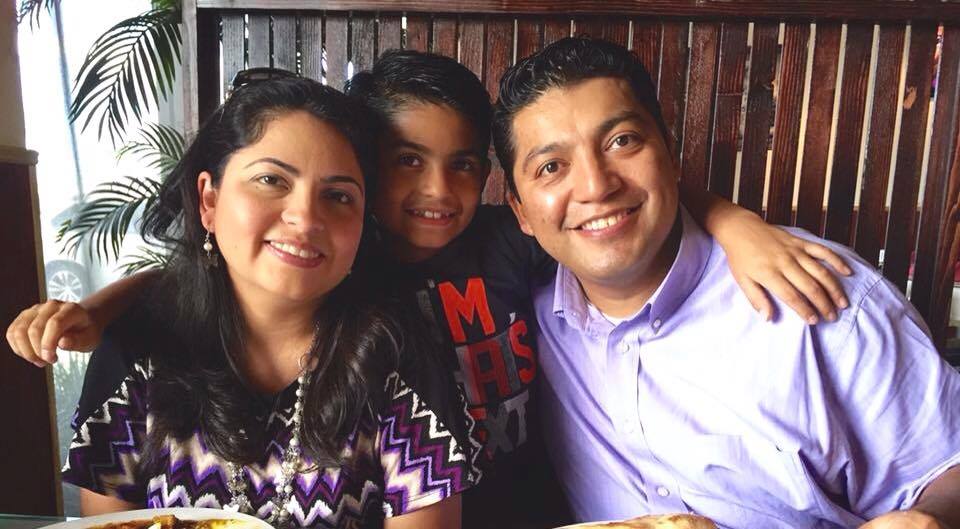
Griselda Escobar is an ordained minister living in Corpus Christi with her husband and son. An experienced chaplain, she enjoys serving God in different church opportunities through preaching and working with women and children.

Ashley Neese Mangrum: Remembering Tabitha

In the days and weeks following Pentecost, armed with the new indwelling of the Spirit, Jesus’ disciples were experiencing God in radical ways. A foreign eunuch is baptized on the side of the road; a zealous persecutor turned Christ-follower becomes the church’s greatest missionary; a Roman centurion known as a God-fearer sits waiting for the gospel and radically changes the nature of the church and its mission; and Peter, the denier, is its leader. People who were believed to be dead to God had received God’s spirit, too, and were given a new life and a new home in the Body of Christ.

Wedged in between the famous, radical stories of Saul-turned-Paul and the Roman centurion named Cornelius is a little known woman named Tabitha (Acts 9:36-43). Tabitha is not known by her prestige or position of influence, wealth or the brand of her shoes. She is not known by the names of her husband or children, by her great accomplishments or the size of her jeans. She is known by her kindness. Those who know her associate her name with the overflow of kindness and compassion that fills her days. She is known as Jesus’ disciple.

Tabitha takes her place in the Acts of the Apostles alongside men who did great and spectacular deeds in the name of God–healing, preaching, baptising. She accompanies men who were given life-changing dreams.

But the most flashy thing Tabitha does is die. She dies and everyone mourns and Peter is called. Peter had become known for his healing ability–God’s ability to heal, rather. Peter walks into a room heavy with grief and sorrow where Tabitha’s lifeless body had been lain. He kneels beside what is left of her and prays. And when the time is right, he speaks to her saying, “Tabitha, arise.” Tabitha opens her eyes. Peter reaches for her hand and helps her up. She is raised to walk in newness of life. Tabitha’s life is restored to her but also to those around her, for she most certainly continued in the kindness and compassion for which she was known.

Many read Tabitha’s story and miss Tabitha altogether. Her story is often told as the story of Peter. He is the one doing the healing, after all. But we know that is not true. God is the healer. Peter was simply the faithful conduit. I think Tabitha is wedged in between the remarkable stories of our church’s early days to remind us that being Jesus’ disciple is not just about preaching or baptising, dreaming dreams, healing, or having breadth of influence. Her story teaches us not to get caught up in the flashy and miss the true work of a disciple: acts of kindness and compassion. Deeds that often go unseen and almost always overlooked, as is Tabitha. It is a call to each of us to be like this woman–ministers and disciples known for our abundance of kindness and compassion.

Whether or not we have the kindness and compassion part down, we have each been Tabitha at one time or another. Each of us has been knocked off our feet, laying lifeless in a room thick with sorrow, unable to open our eyes, and instead we see only darkness. The life we knew has been lost. And each of us have been in desperate need of a Peter, someone to sit beside us in the sorrow, pray fervently, and when the time is right, help us get up. We have all needed someone to take our hand and walk beside us.

This is the role of a minister.

As I call each of us to be Tabitha, known by our acts of kindness, I cannot help but recognize that we are also called to be Peter.

A few months ago, I stood at the bedside of a man known for his deeds of genuine kindness and compassion, a disciple often overlooked and taken for granted much like Tabitha. I knelt beside his motionless body and prayed with all my might. I spoke to him saying, “Open your eyes, Dad.” My father, the most faithful and sincere minister I know, was not dead, but he lied in a comatose state after suffering a tragic accident and sustaining a traumatic brain injury.

In addition to my role as minister-mother, I was also now minister-daughter. Perhaps I always have been, but tragedy has a way of bringing the role of minister to the forefront. (Luckily, I also have a minister-brother with unwavering strength and faith.)

To minister to the one who has always ministered to you, to care for the one who has always taken care of you–this is hard. It requires us to wade through even more emotional baggage and fear. We can never separate ourselves from the context in which we were raised, the people and places that shaped us (the good and the bad) into the women and ministers we are today. Ministering with our contexts behind us is a different thing altogether than returning to our contexts to minister within it. Your role as minister-daughter is coming, and for many of you, it has already come. My hope is that we would be as diligent in the role of minister-daughter as we are in the role of minister-mother. I hope that we will be kind and compassionate, quick to pray, and bold enough to speak truth, hope, and restoration.

My dad did not open his eyes, at least not right away. But he did eventually, and I felt as Peter must have felt on that day long ago beside Tabitha: amazed at the power of God to bring light in the darkness and hope when all seems to lost; honored to witness first-hand God’s healing and restorative work in the world.

I don’t pretend to understand healing or our role in it. But watching God work in my dad’s mind and body on the long road to recovery, sheds new light on the story of Tabitha. To be a disciple is to live by kindness and compassion. And to be a minister is to be quick to pray, first and foremost. To be a minister is also to be a faithful conduit of God’s hope. It is to enter into the places of sorrow and remain there for a while, and when the time is right, we take a hand in ours and help her up. The same power that opened Jesus’ eyes and raised him up, the same power that flowed through Peter and into Tabitha’s lifeless body, is present with us even now. We have the ability to speak life and healing, to be the conduit of restoration, the presenter of hope in the midst of sorrow and grief.

So, blessings to you who are like Tabitha for the sincere kindness and genuine compassion that marks your days makes the world a holier place.

And blessings to you who are like Peter for being quick to pray and a faithful conduit of God’s healing and restorative work, helping us see the world anew.

photo

Ashley Mangrum is a minister and mother of two living in Davidson, North Carolina with her husband, Ben. She is especially thankful right now for good conversations with her minister-father, Shelby, who continues to make a miraculous recovery. In her free time, Ashley is an aspiring artist and cupcake connoisseur.


LeAnn Gardner: The Gift of Suffering

About three years ago, I found myself in a place I never imagined: in the throes of Post-Partum Depression. The one thing I had wanted my entire life—a child—had been given to me. A healthy, red-headed, perfect little specimen of a boy rested upon my chest as I lay on an operating table, exhausted and out of my mind.

We marveled at him and I thought, “He is the cutest baby I have ever seen.” But did I feel an instant bond? No.

Suffice it to say, PPD invaded my life and rested its pinions there for a while.

In the days of suffering from PPD, the last thing I was thinking of was serving. I just wanted to get through the hell I was feeling and hoped that at the other end, I would be a good mother. The fears and anxieties were crippling.

In those early days, I had one paralyzing vision: that at my son’s first birthday party, I would be in the shadows of the crowd, being an observer, not an active participant in my son’s day (read: life) because I had not gotten better. I would not have the energy, or even worse, the affection for him, to plan his birthday party.

This may not seem like a big deal, but if you knew me, you would know that I love (L-O-V-E) to throw parties. Not being an integral part, the integral part, of my son’s first birthday party would be a sign that something was really wrong with me….and even worse, that I was not mothering him in the ways that were most authentic to who I was as a person.

That vision still makes me cry because it reminds me how bad things were for me after he was born.

But as the days passed (and it took a lot of days, strung together) I got better. It was not instant. It took a long time, but the light crept in and I was able to finally find my rhythm as a parent, as his parent. I gained confidence in meeting his needs, accepted that my life had indeed changed, and that suddenly my calling had shifted to being his mama.

And I embraced it….and him.

As the days turned to months, my secret leaked out, partly because I “verbally vomit” to process my issues, and word was getting out that things weren’t so rosy for me. Because PPD is a sore thumb amidst baby showers and pools of pink and blue, new mamas feel isolated and alone.

I imagine there were whispers of “LeAnn had a hard time; talk to her.” Connecting with other people in the throes of this darkness was key for my healing. Being a resource to those facing similar demons was healing for me, too.

Jesus is given many titles, but the Suffering Servant is one that seems to be the most reflected during Holy Week. Does this mean that Christ could not adequately serve without first suffering? We Jesus people preach the Incarnation- that Christ put on skin and walked among us, that he experienced our spectrum of emotions, including pain, grief and realities that did not meet expectations.

What does this mean to all of us (humans) who experience struggle? The essence of my faith rests in this notion: that my suffering not only mattered, but had also been experienced in and by Christ. There was a knowing in my soul that a Presence greater than me and my pain and anxiety was with me, minute by minute, day by day, until that string of days equaled a month and then months and then three years!

My second son was born 7 months ago. I found myself, again, lying on an operating table, in a cold sterile room, but something was different. My very being had been changed since the redhead was born. I was already a mother. I had been through hell and back with all of my insecurities and angst, and although I was not perfect, nor he, we together have forged a path of mama and son. That sweet little rosy headed boy has taught me so much (even to this day).

Christ is present in struggle. We know this. We preach it all the time. But it is different to walk it. To feel the pain in the fibers my being and know that Emmanuel has walked the ground where I have stood and suffered is life altering. May we be reminded of this miracle during this Holiest of weeks.

2015-01-25 15.32.18

LeAnn Gardner is a right brained social worker and minister married to a left brained engineer. Together they (sometimes) compose a full brain. She is mother to two boys, ages 3 and 7 months.

Rachel Whaley Doll: Healing Journey

Rachel's painting
Rachel’s painting

Early last spring, as we were preparing to move, my husband, Aaron, brought me several small bags. “I found these in the freezer. Can you believe we still have bags of breast milk?! I’ll just throw them out.” I grabbed the bags, highly offended. “No, YOU did not make this, you do NOT get to decide what happens to it!” I surprised even myself at my passionate response to these little bags. You see, my youngest child is now six, in first grade, and stopped nursing at age one.

But those little bags signified so much I had never dealt with. I put them back in the freezer and spent the next week trying to decide what their fate would be. Our move would take us 800 miles away, so the bags would not be traveling with us. But they represented a time in my life that had been so hard in coming; I was not willing to simply throw them away. It felt like I had a tangible connection to so much untouchable loss. I prayed, I meditated, and I waited to see what would be created from those little bags of breast milk, sitting my freezer.

I’m not sure how I arrived at my plan, but I saw a watercolor forming in my mind. I gathered blues, purples, and black paints; sea salt to represent so many tears. And I waited. It occurred to me that over the course of our ten rounds of fertility drugs, there had been ten embryos that had been created by Aaron and me. Ten. That number was astounding. Those little bags of milk represented the end of a four year struggle with infertility. They represented seven embryos that never attached. They represented the child lost through miscarriage. They represented the cherished time I nursed two amazing children. Still I waited.

One day, amid packing boxes and looming deadlines, the feeling was overwhelming. It was time. I stood at my dining room table and began to swirl the blues, the purples, the black. I left ten little spaces and while the paint was still very wet, I dropped the breast milk onto the canvas and watched as it swirled and mixed and danced with the colors on the canvas. I sprinkled salt over it all, and whispered prayers for each of those embryos, for the space they would always hold in my soul, for the healing I longed to take place there. Finally, eventually, it was finished. The power of that dance; of paint, milk, tears, salt, and prayers – was unspeakable. I had no idea how much I had needed that dance. When it was finished, I sat in silence with the painting for a long time. There was a powerful connection swirling in the air. Eventually the feeling of connection was replaced by a wide feeling of peace inside me. There was a little milk left over, and I walked outside and sprinkled it over the wild blackberries that grew in our yard, knowing it would feed someone; birds, squirrels, friends, strangers.

That was months ago, and the painting is very dear to me. It went to the book launch party with me, and hung that night in the art gallery as we celebrated. After our move, I hung it in our new home, in our bedroom, and enjoy its nearness. A couple of weeks ago, my hand brushed the bottom of the canvas as I went to turn on the light. My fingers came away damp, and I turned on the light to see streams of paint weaving down the wall. The painting was wet. Aaron said the recent high humidity had caused the salt to soak in the moisture from the air.

But why now, in January? It had not done this through the many humid months of summer in North Carolina. I counted up the months in my head; it has been dry and fine all this time. Chills raised the hairs on my neck as I realized it had been painted nine months ago. I realized it was weeping. I cannot explain the journey of this painting except to say we are connected, and in my eyes it is beautiful beyond measure.

Whatever journey you are walking, honor the connections your soul sees, and allow them to dance.

Rachel Doll

Rachel Whaley Doll is an educator, Biblical Storyteller, and lover of beach sand. She is also the author of two books, The Exquisite Ordinary, 2012, and Beating on the Chest of God; A Faith Journey Though Infertility, 2014. Connect with Rachel at rachelwhaleydoll.com.

Rev. Dr. Courtney Pace Lyons: “We Are Dancing Still.”

Image

Easter has a strange rhythm for me. As a child, I looked forward to wearing a new dress to worship and an egg hunt in the backyard. As a believer, I came to appreciate the deeper meaning of Easter, the celebration of Christ’s resurrection and our salvation. As a minister, I looked forward to worshiping with my congregation, planning special performances, and proclaiming the good news that Christ is risen. Though I wished I could be with my family on Easter morning, I cherished the rare opportunities my congregants had to worship with theirs.

This is my fourth Easter as a mother. My son was just a few months old for his first Easter, dressed in the most adorable blue gingham outfit, a gift from Pam Durso. That was my last Sunday at a church where I had been ministering for three years, a strange experience of loss and newness at Easter.

My family came to celebrate Easter with us the next year as well, and after a busy morning of leading worship, I treasured watching my son in his first egg hunt. He was delighted at the first egg he found. He studied it, showed it off to me and his grandparents, and would not put it down. I had to point to several other eggs before he caught on that there were many eggs to be hunted.

My son’s third Easter, I preached my first Easter morning sermon. My parents and grandmother came to hear me preach, and we enjoyed a special lunch at a nice restaurant in town after church. I remember my grandmother ordered cheesecake as her lunch, and I loved her for seizing the day. But it was also my first Easter divorced, and our visitation schedule worked out that my son was with his dad. It was the first time I remember Easter feeling unresolved.

This year, my son’s fourth Easter, was a blend of my childhood and our new life together. We attended church together, the first opportunity we have ever had to do so where I did not have a responsibility in the worship service. Then we joined my family for a meal in the house where I grew up, and Stanley hunted eggs in my old backyard. Even as we are beginning a new tradition for our family of two, I was able to share some of my childhood Easter memories with him. These bones shall live.

As I have pondered the rhythm of Lent, into Easter Sunday, and how this fits in the larger flow of the year, I feel a little off beat. For more than a year, life felt like one long journey of suffering on the way to more suffering, like Good Friday with no Sunday. There were good days and incarnational people, don’t get me wrong. But if you have ever gone through a season of grief, you know that it doesn’t always wrap up neatly for holidays. You sing and dance, but from the depth of your sorrow instead of elation. And sometimes when you sing and dance, you feel a majestic, unshakeable joy rising up within you, shooting out through your limbs, reminding you that the God in whom you hope has been and will continue to be faithful. And sometimes when you sing and dance, you feel nothing, but decide to keep hoping anyway.

Palm Sunday of last year was our first Sunday at what has become our new church home. “Hosanna, Hosanna, he comes in the name of the Lord. Hosanna, Hosanna, he comes in the name of the lord,” we sang as the children waved palm branches around the sanctuary. This year, my mother and grandmother came with us for Palm Sunday, and we sang “Hosanna” as the children waved palm branches. I realized, as my son and I walked hand in hand around the sanctuary waving and singing together, how far we have come this year. The weight of my grief has been cast off, and I have been made new. If last year was the journey to Jerusalem, this year has been the deliriously ecstatic sprint from the empty tomb to proclaim the good news that He is Risen! As I remember Christ’s resurrection, I feel my own. These bones shall live!

In our church bulletin on Palm Sunday, I saw a quote from Ann Weems: “Our hosannas sung, our palms waved, let us go with passion into this week. It is a time for preparation…each of us must stand beneath the tree and watch the dying if we are to be there when the stone is rolled away. The only road to Easter morning is through the unrelenting shadows of that Friday. Only then will the alleluias be sung; only then will the dancing begin.” My journey of unrelenting shadows had led me to Easter morning, and there would be singing and dancing. And this time around, I sang and danced with elation Christ has risen from the grave, and my heart was so full of joy and hope that I had to sing and dance about it! Alleluia!

Jan Richardson writes: “In the years to come I will learn how necessary it is to keep dancing, how celebration is not a luxury but a staple of life, how in the grimmest moments I will need to take myself down to the closest festival at hand. It will not do to drown my sorrow or to mask my despair or to ignore the real suffering of the world or of my own self. I will go to beat out the message with my feet that in the darkness we are dancing, and while we are weeping we are dancing; sending shock waves with our feet to the other side of the world, we are dancing still” (from Night Visions: Searching the Shadows of Advent and Christmas).  

We have all experienced suffering or loss of some kind, and some of us have even hit the bottom of the barrel and been reborn from our own ashes. Thanks be to God that suffering and loss are not infinite. Thanks be to God that out of broken earth, flowers burst forth. Thanks be to God that dead bones live.

This Easter, whether you are in a season of mourning or celebrating, whether your heart is heavy-laden or fancy-free, whether you feel like an abandoned and hopeless disciple or witness to the inbreaking of the Kingdom of God around you, may you know the height and depth and width and breadth of Christ’s love for you. May your life be rich with dancing and singing, even if the best you can do is sing slightly out of tune and dance off pace. As you move to the rhythm of the music, celebrating the good news that Christ is Risen and death has been defeated, may you feel the resurrecting power of Christ in you and around you and through you. These bones shall live, indeed! Alleluia!

Rev. Dr. Courtney Pace Lyons is the proud mother of Stanley. She currently serves as Assistant Director of Student Success and Instructor of Religion at Baylor University. She holds an Honors B.S. in Computer Science Engineering from University of Texas at Arlington, an M.Div. from George W. Truett Theological Seminary and a Ph.D. in Church History from Baylor University. She is a member of Equity for Women in the Church and worships with her church family at Lake Shore Baptist Church in Waco, TX. She and her son Stanley love to take walks, read stories, and ice skate together.

Image