After growing up watching Braves baseball with my dad, I married a basketball `player. The game feels so fast for me, so intense. I’ve spent so much time asking my ever-patient spouse, “Wait! What just happened?!”
I ask that most often about fouls: “illegal personal contact or unsportsmanlike conduct on the court or sidelines of a game. Most player fouls involve contact that impedes an opposing player’s gameplay.”1
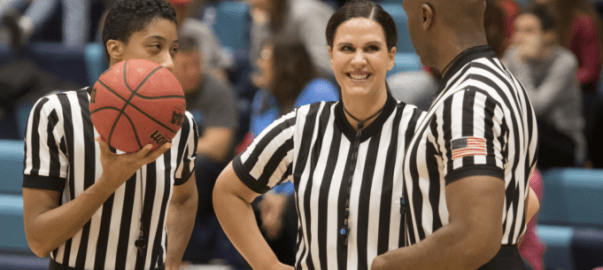
The referees call the fouls based on the rules of the game. Sounds simple on paper. Not so much in real life.
Like most human endeavors, calling fouls is about perspective.
As a non-basketball person, here’s what I’ve been learning over the years: just because a foul doesn’t get called on the court doesn’t mean harm wasn’t done, wrong wasn’t done. Just because the ref doesn’t see it doesn’t mean it didn’t happen. Just because there’s no visible wound doesn’t mean it didn’t happen.
So often, fouls are finessed in such a way that they’re hard to see. That’s why they have instant replay. That’s why sports talking heads spend so much time parsing and arguing over a certain play. Thousands of fans and anti-fans weigh in online. Everybody wants a say: foul or no foul? A player can get seriously hurt and a foul still not be called.
Fouls in real life are different. Everyone may want to weigh in about what “really happened” from their perspective. But the older I get, the more I realize how essential it is for many of us to become the ref in our own lives.
If something hit or hurt, you get to call the foul in your own life, even if you don’t do it out loud. Even if it’s just for your own heart and mind and processing. Tell yourself the truth.
You don’t need to wait for another ref to confirm it or a committee of instant replay parsers to weigh in. It happened to you, you know what it felt like, you feel or remember the power of it, the surprise of it, or the sting of it. It happened to you. You are the expert on what it felt like and how it affected you.
Pleading our case to get those around us to acknowledge our experience places the locus of understanding outside of ourselves. So many women, so many people I know–myself included–have been mistakenly taught not to trust our own experience, our own judgment, our own gut. Too often, we prioritize what others tell us “really” happened or how we “should” think or feel about it and find ourselves doubting what we experienced. It’s a form of giving away our power to name the truth we know in our bodies, in our memories, in our truest selves.
That power exists only within your own skin. Naming what you experienced is about you. Other people don’t get to decide what it felt like in you or how it impacted you or what you carried forward in yourself because of that experience. That privilege and responsibility belongs with you–in you.
Supportive people who center us can help with the process, absolutely and amen. Others who have earned our trust and lived their love for us in compassionate and wise ways—seek these out if and when you need them. Your experience, struggle, and pain are pearls of great price. Trust only others who will treasure them with you, care for them with you.
Be wise in protecting and providing for yourself. At the first whiff of minimizing or hedging from anyone, get the heck out of there. Stop the conversation when you hear someone trying to “fix” the situation by telling you what you should feel or how to interpret what happened before you’re ready to go there (if you ever are—that’s your choice, too).
You don’t have to be “nice” about it. In fact, don’t be “nice” about it. Be kind to yourself with a quick and hard “stop,” hand up to make your point. If it’s someone you normally can trust (who might be having a wonky time of their own), you might clarify, “I’m telling you something precious to me and I need you to listen. If that’s not what you can offer right now, let me know and we’ll pause this for later.”
Looking at a foul, a wound, straight on with open, clear eyes is part of healing. No one gets to tell you it didn’t happen. It happened. It happened to you.
No one gets to tell you, “no harm, no foul.” You are the ref in your own life. You are the steward of your experience. No one else.
- https://www.masterclass.com/articles/how-fouling-works-in-basketball
- Referee photo: From left, Stacey Thomas, Novi, Mich.; Lindsay VanDyken, Jenison, Mich.; and Charles Smith, Fort Wayne, Ind. Photo Credit: Ralph Echtinaw. Source: https://www.referee.com/dont-sell-your-halftime-short/
 ministryandmotherhood