Tag Archives: Ministry and motherhood

Hannah Marshall Coe: Handmade Love

Backseat Gospel, Entry No. 32:

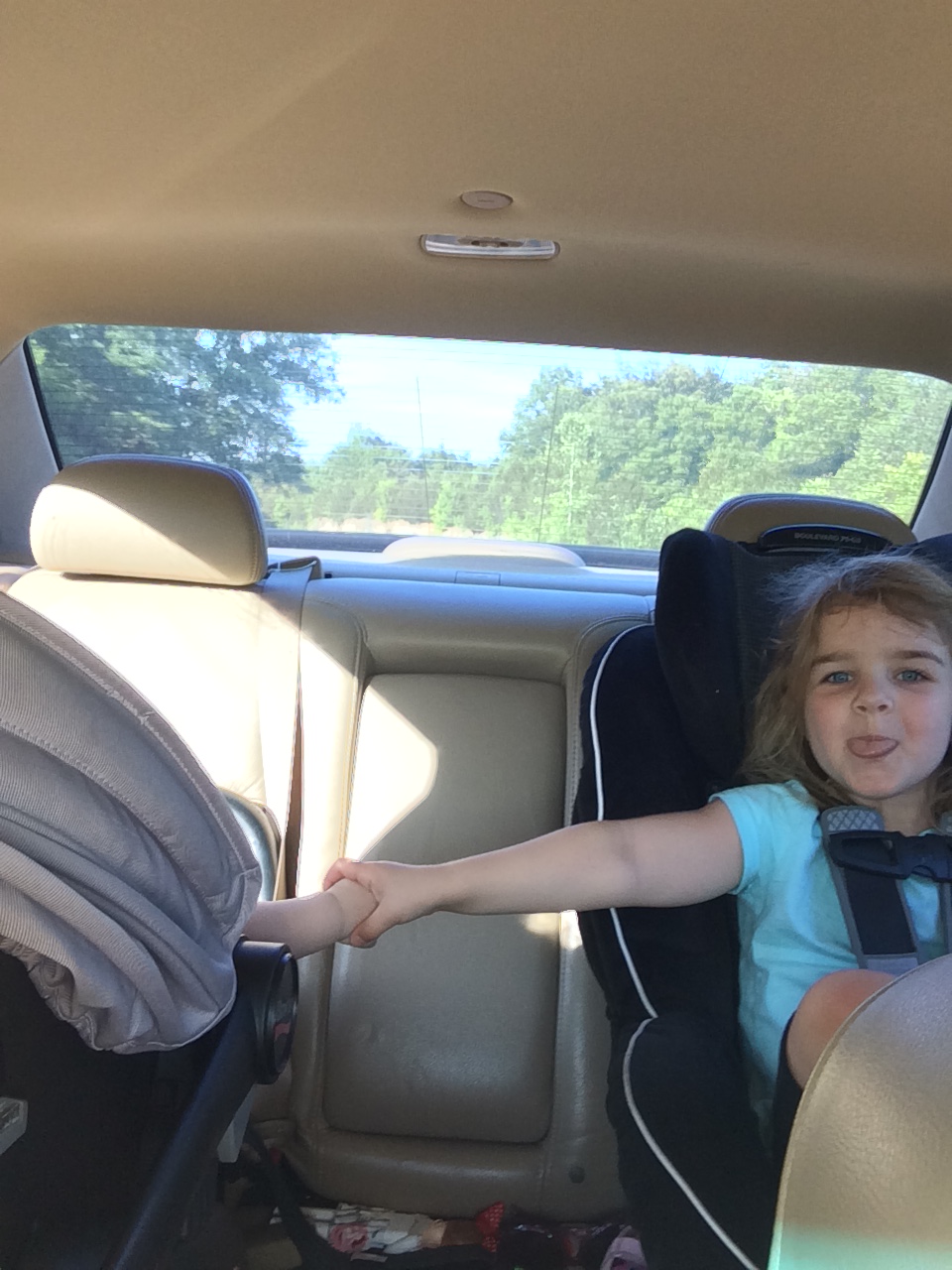
This is a Valentine’s gift bag from a school friend. We’ve been told not to touch the bag. “These are special things given to me and no one is allowed to touch them. Leave the bag right here.”

The bag is full of “handmade squishies.” For those unfamiliar, squishes are soft little stuffed toys. Squishies are for comfort, love, and squishing when you need to feel something else that feels as tender as you do about life. Specifically, having to clean your room or brush your teeth or practice your sight words.

I am not going to touch the bag. But without touching it, I can see it’s overflowing with handmade love. It’s a carefully curated “blind bag” (bag of surprises) with handmade paper squishy objects—pizza, a crayon box, a notebook, pillows. I know how much time, and creativity, and genuine love this took. And I know how much it means to the person who told us not to touch it.

I am learning that a special kind of love is handmade. With what we have available to us. With colored pencils and paper and tape. With holding hands and time and listening and creativity. With fair, honest, and encouraging words. With eye contact and opening the door for someone and moving clothes from the washer to the dryer because the person who started the load forgot. With what I can find and what I can muster when I don’t have the resources I wanted or expected. The material is all right here, now. I have so much to learn about the abundance of love at my fingertips. I am so thankful for the people in my life who are teaching me, including my children whose handmade love bubbles over and comes out beautifully every day. Holding close to my heart and soul each piece of beautiful, gritty, handmade love that reveals itself today. Including this gift bag I am not allowed to touch.

Pastor Hannah Marshall Coe is mom to three smart, strong daughters and serves as senior pastor at Calvary Baptist Church in Waco, TX.

May be an image of 3 people, people standing and indoor

A Sink with a View

In 27 years of marriage, we have lived in four different houses. In 27 years of marriage with three children born in four years’ time, I have spent huge chunks of my life standing at the kitchen sink in each of these four houses. Thankfully, each sink had an interesting view. 

Our first home in Sanford, NC was a little brick cottage built in 1949. Character rested in every heart-pine plank of flooring, which a kind-hearted church member refinished for us at cost when we first moved in. Thank you, friend. Those gleaming floors led into a partially updated kitchen with a double sink.  

That sink seemed to birth litters of dirty dishes. Standing in place, I wrestled the tops of hundreds of sippy cups, prying apart their innards using my fingernails and some hanging-on-by-my-fingernails language. Pyrex casserole dishes soaked there in hopes of less scrubbing later. Baby oatmeal, peanut butter smears, soaked-then-dried Cheerios conspired to a concrete crust that awaited my efforts after nap time. 

Elbows deep in suds, I once tried to calculate how much time I spent at that sink. But I gave up because that required math-ing, which required more of my always-leaking-out energy than I had to give. I kept scrubbing. 

My neighbor’s full, graceful maple tree filled half the window’s view. It was old enough to have spread itself up and over their 1950’s ranch and most of their small backyard. Its twin sheltered our backyard. 

One fall afternoon, when Eric was the P.O.D. (parent-on-duty), I dragged a lawn chair under the branches of our maple to sit under its golden-yellow glory. Looking up, I felt the wonder of creation and my tiny spot in such a grand story. 

I could only enjoy our backyard tree when I was outside playing with the boys or raking up its multitude of leaves in November. I could also see it if I turned my head a bit farther than was natural as I rocked and fed our babies in the nursery, the only room with a view to that part of the yard. 

But every day, several times a day over a decade, I had a perfect view of the neighbor’s maple. Standing at the sink, doing the mundane reproductive labor of washing the dishes while caring for three tiny people and serving as an eldercare chaplain and running through the many lists in my head of what else needed to be done by when, I had a glimpse of the sheer gift that it is to be alive in this world. 

I remember standing with my mother, who had come up with Dad for a fall visit, and remarking that looking at that tree was like “sipping sunshine.”  We were side-by-side, one washing, one rinsing and drying. As our hands worked in tandem, we both lifted our eyes to the tree and then smiled at each other. She knew exactly what I meant. 

At our next house in Wilmington, NC, the sink was situated for perfect sunset viewing. Our neighbors across the street had a Bradford pear that turned a rich burgundy red that lasted, in that warmer place, long into Advent. 

I stood at that sink for nine years, shepherding little boy plates that turned into big boy plates that turned into breakable, everyday adult plates. There I washed my last sippy cup. My last chunky baby spoons. Endured my last can-this-bib-be-saved maneuvers. 

But, I kept the little melamine Thomas the Tank Engine bowl, which we still use for single snack servings. It survived the past two moves. One to West Virginia, where the kitchen sink welcomed me with view of the hills laced in morning mist or stained with evening’s last light. Over our six years there, the number of dishes reduced by one person as our oldest began and finished high school and then headed off to college. 

And that little bowl survived the last move in January back home to North Carolina, this time in the East. Here the sink faces an ever-changing mosaic of shared-with-my-neighbor green foliage, long leaf pine, and Carolina blue skies that meld into each sunset’s palette. The last of the sun’s rays poke through the spaces between the branches, slowing the transition, saying a long last Southern goodbye. 

Our second child is off to college now, too, so the washing up load is lighter most days and mostly free of plastic, besides our rotation of reusable water bottles, which are notably reminiscent of sippy cups in their resistance to being cleaned.  

So much has changed in the 27 years of four sinks, each with its own gift of a view. I am still me, yet so very different from when I first stood at that sink in Sanford, NC, gazing at that glorious maple. 

That first sink saw me become a minister (officially) and become a mother. I am still these things. God is still faithful. 

It has been a long, hard season in my little part of the world. And the leaves will still turn, the sun will rise and set in splendor, punctuating our days with blessing and beauty. 

The view from the sink never fails to say something I need to hear. Thanks be to God. 

Starting Again

Over the course of 2022, I had not one, not two, but three different physical challenges that sent me to physical therapy. Because each challenge involved a different part of my body, I worked with three different therapists during that time. The gifts and skills of all three therapists, as well as a perfect-for-me therapy assistant, helped me through the toughest year of my life so far.

Because I was there so often that painful year, when I signed in each visit, I had to pause and think hard before filling in who I was seeing that day. Too much change. Too many problems.

But something stayed the same every single visit: the collection of inspirational posters lining the walls of the big treatment area. No matter where I looked, there was some strong man in an outdoorsy photo coupled with a grit-centric saying. “Determination: never stop pushing for what you want” or “Commitment: stay the course no matter what.”

I can’t remember what they actually said because they said nothing to me. At least nothing that my ears could hear as encouragement or blessing. I understood that the intent was to push us toward our treatment goal. I wasn’t confused. I was just exhausted.

I had nothing left in me that could push or stay the course. I felt empty. Worse, I felt trapped.

A long string of loss and struggle and grief had needed my attention for years. But over an eight year period I found myself in a seemingly endless season of unfamiliar shifting circumstances. I couldn’t find my feet in this new terrain. What I thought was solid ground often gave way. Hidden stones jutted just under the surface. I lost count of the times my step landed wrong, jarring me down to my bones.

All of my pastoral skills, all my chaplaincy training, all my theological thinking, all my passion for scripture and prayer and compassion and grace, all the wisdom of a lifetime of mentors, spiritual friendships, study, openness to learning and commitment to working through my stuff…none of it helped me find my way out of that maze of broken ground.

Even so, those things helped me get up and keep walking, over and over again, like PT for the soul. God was at work. I kept going, picking my way over sharp edges, trying to avoid loose stones, concentrating on each footfall, treading diagonally on the steepest declines, growing painfully familiar with falling.

Each rising was harder than the last one. I kept hoping the trail would even out, grow smoother. I just had to keep trying, keep going.

But after too long traveling that way, I was grit-less.

PT helps us find ways to work with or work around some part of us that isn’t working like it should. Contrary to the messages on those posters, what that year of PT did for me was help me come to the end of my grit, courage, and determination to get back up and keep going. That was the only way things were going to change.

In the middle of my work with one PT specialist, I found that things were suddenly getting worse, not better. Troubled and anxious, I perched on the examination table and told her how the past week had gone. I remember her tilting her head, listening closely, and then saying, “You know, sometimes we can work so hard on strengthening that we forget how important it is to soften, to release. So let’s focus on that today.”

Wait, what?!? I had no idea that was available to me. I had no idea that was part of the process.

She took me through a slow series of stretching exercises. We focused on my breathing. We worked on me actively relaxing certain muscles. I’d been strung so tightly for so long, it took intense focus to let myself let go.

Something shifted in me that session. As I moved through the series of stretches, she asked me more about what I do as a pastor. What I told her was what I wanted to do, what I value, what I believe is vital for the body of Christ, what I long to see in us and for us.

“I didn’t go into ministry to give my life to an institution,” I surprised myself by saying out loud. A long, slow, once-trapped breath suddenly poured out of me. She heard me. I heard myself.

Over time, I learned I could stop trying to walk that rock-filled path. I realized it wasn’t the only path. I started to give myself permission over and over to put down my determination, grit, courage, boldness, and whatever else the poster preachers demanded. I really didn’t have much of a choice anyway. Everything in me was so tensed and tied up in trying to be resilient that I was practically paralyzed.

In time, a new path emerged in that wilderness. In time, I’m becoming healed and rested enough to start again. But God knows it’s been a starting again that looks very different from how I have ever done things before. And thank God for that.

So here we are, starting again. Ten years after the publication of our book, A Divine Duet: Ministry and Motherhood, this communal blog, Ministry and Motherhood, is ready to take some new steps after a hiatus. Join us.

Here’s the details:

What and When: 500-1000 word pieces are due on Thursdays. Single spaced, 12 point font. Photos welcome (with credit as needed). Pieces will be lightly edited and formatted for the space. Send to hello@ministryandmotherhood.com.
What to write: Share where you are, what you’re learning, what you’re up against, what you’re thinking about, what you want to say about ministry, motherhood, and anything else the Spirit is stirring in you. This is a space for saying what you want and need to hear yourself say.
Support: Need help zeroing in on a topic or exploring what you want to say? Want to write but feel overwhelmed or a little reluctant? I’ll be delighted to schedule a conversation for support and processing space.
Why write?: Women called to ministry have things to say that our church and our world need to hear. Women have always been part of the story. If we don’t tell our own stories and frame our own reflections and insights, they tend to get lost in all that’s overflowing off our already full plates. • Purpose: To mutually create a space where we can tell the truths we see, the ones we feel burning in our bones like Jeremiah (20:9).

Contact hello@ministryandmotherhood.com to learn more and sign up for a week that best fits your life and schedule.

In the meantime, blessings for all who are starting again in big and small ways. May we know in heart, mind, and body that God is with us…as God always is.

Aileen Mitchell Lawrimore: Everyday Theology: To My Beloveds on the Day After the Election 2016

In this tumultuous week, we turn to ministry-mom Aileen Lawrimore of NC whose blog post addresses so thoughtfully and eloquently what it means to love and not lose heart.

To my sweet babies. You: who I held in your earliest days, whose preschool programs I applauded, whose elementary school presentations I attended, whose milestones I’ve celebrated. You:  who have cried in my arms, on my couch, and on my shoulder. You: who I have counseled, advised, guided. You who I have loved and who have loved me in return: Hear me.

This US election is not the solution to the world’s problems or the creation of them. This is neither the beginning, nor the end. This is a moment. An historic moment, a game-changing moment, a moment for rejoicing or weeping depending on your perspective. But beloveds, this is one out of many such moments in the history of our nation and of our world.

Are you listening? This is important.

Some of you are delighted with the results of last night’s election. Okay, that’s fine. But don’t be a braggart. Be gentle and be kind. It is not okay, no matter what the world tells you, to call people names, to boast in victory, to bully others with no regard for their feelings, interests, or even opinions.

Watch your language. (You know how I feel about this!) Despite what your government’s leaders may model, it is not right or good to use filthy language. Rise above it. If you feel like a winner today, use language becoming of royalty, not trash.

Finally, if you are claiming this victory as a victory for Christ, please remember that there are people who share your faith, but not your political beliefs. You can be happy about who won or about whom you defeated. This is one of the wonderful things about this nation: you have the unalienable right to your opinion. But this right comes from your citizenship in the United States; as a citizen of the Kingdom of God, you are called to adhere to the message of Christ who said it is the meek, the merciful, and the peacemakers who are blessed, not the boastful, the prideful, and the rude . . .

Click here to keep reading on Aileen’s blog, “Aileen Goes On.”

Merianna Harrelson: Everyday Theology: When Our Children Serve Beside Us

As true, mutually-supportive sisters in ministry, we’re borrowing from the amazing Merianna Harrelson’s blog for this week’s post as she reflects on serving with her own children. 

2016-09-10

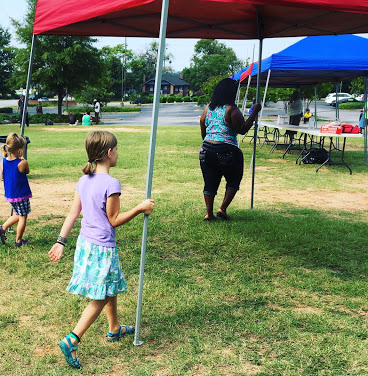
This past Saturday as part of ministrieslab, we partnered with Resurrectionsthat has been popping up on Saturdays in downtown Columbia to serve a midday meal for fourteen years. We knew it was going to be hot and we knew that there were going to be a lot of people in need. We also knew we had all three children. We made the choice that all the kids would go and serve beside us. We made that choice not knowing for sure if children had helped serve before or whether there would be tasks they could handle, but knowing we wanted them to understand that serving and helping others in need is part of who we are as a family.

When we arrived, we found that the whole team at Resurrections believed the same thing we did. They believed that willing hands are willing hands, no matter how big or small. They asked our children to jump in by carrying the tents and serving food just like the adult volunteers were doing.

The picture I am taking away from this Saturday is our eight-year-old serving another eight-year-old who was there with her mother. To serve someone her own age and own height was a powerful picture of what happens when we invite children to serve beside us rather than restricting them to children’s missions activities. When we serve together as a family and serve other families in need, there is a powerful communion that occurs. We understand that family is what unites us and binds us, whether we have a lot of whether we have little.

When our children serve beside us, we are welcoming them into the gospel message. We are letting the little children come unto God. We are bringing the kingdom of God here to earth in ways that we as adults can’t see. When our children serve beside us, we hear in their voices, “I like that better than some of the other times we’ve served because we actually got to do something. They actually let us help and serve the food.”

Thanks be to God for pop up meals and for people who understand that when Jesus said, “For I was hungry and you gave me food,” he wasn’t just talking to adults.

This post originally appeared on Merianna’s blog, at http://merianna.net/2016/09/children-serve-beside-us/. Follow Merianna’s blog for more insightful, soulful reflections. 


Heather Mustain: Everyday Theology: Courage and Vulnerability

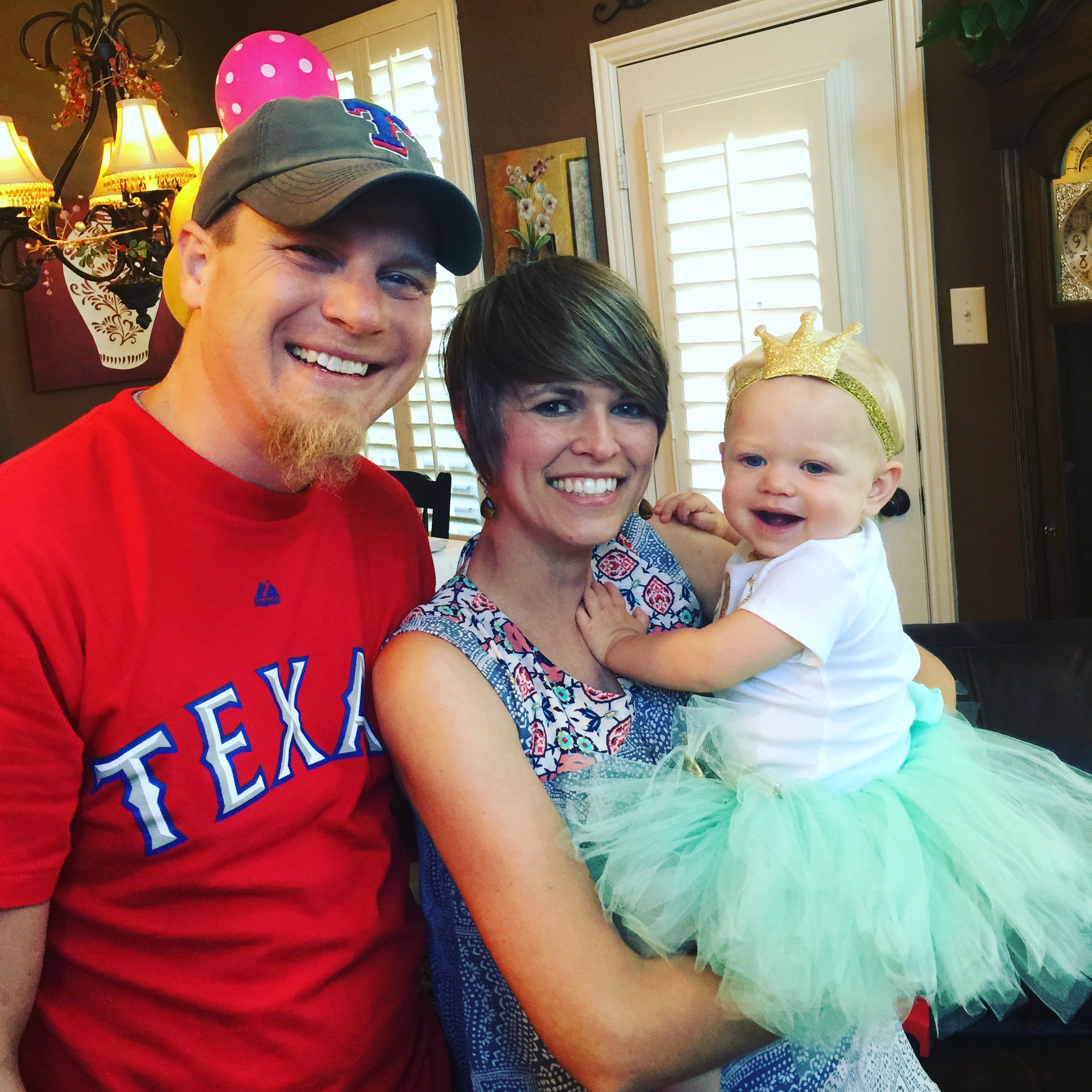
In the last two weeks my husband Chad and I celebrated our eighth wedding anniversary and our baby girl, Jimmie’s, first birthday. Realizing neither of us had taken any time away since Jimmie’s birth, it felt like the perfect time to treat ourselves to a “stay cation” We made plans for Jimmie to stay with her grandparents and we reserved a hotel room in downtown Ft. Worth.

Before having Jimmie, Chad and I loved going to the movies, so the first obvious activity on our staycation was to hit up the local movie theater. The enjoyment of going to see a movie for me is not always about the movie, but about the experience- the ice-cold Coke, popcorn and candy, and a theater so cold and dark you feel as if you’re the only one inhabiting it. The choice of movies wasn’t stellar this past weekend and we agreed we were in the mood to have a good laugh, so we found ourselves at the 1:40 p.m. showing of Bad Moms.

bad moms

My first year as a mother has been filled with incredible joy yet has been tainted with the darkness of postpartum depression. So the movie Bad Moms felt relatable and as the darkness of PPD has dissipated I felt ready to have a good belly laugh about the many times over the course of this year where I have felt like a bad mom.

The film satirically examines the values and beliefs our society holds about motherhood. Gwendolyn, the film’s antagonist, is the school’s PTA president. Every morning while she and her posse stand out in front of the school, every mother dropping of their child falls prey to their overly critical eyes and mouths.

Amy, the film’s protagonist, is always late and seems to never get anything right no matter how hard she tries. Gwendolyn jokingly asks Amy how she manages having a full time job and wonders aloud, “doesn’t she miss her children?” Her comments stab at the heart of a long-held feud between mothers who decide to pursue a job outside of the home and those who decide to stay at home with their children–as if one is more “right” than the other.

Later on in the movie, after being bullied by Gwendolyn one too many times, Amy decides to run for PTA president, a long-held position by Gwendolyn. While Gwendolyn’s campaign platform is all about what mothers could continue to do to be even better, Amy’s campaign platform is about doing less and shedding the idea of perfection. During her candidate speech, Amy admits to her imperfections as a mother and even labels herself as a “bad mom,” for which she receives a standing ovation. Her openness and vulnerability to being a bad mom makes room for other mothers to say “me, too!” A freedom exists under Amy’s new leadership that was choked out by perfection in Gwendolyn’s. In the midst of crude jokes and middle school humor, this caught my attention.

The evening before Chad and I left for our staycation, we had a conversation with friends that continued to linger in my mind and spirit. We were sharing with this couple that after three years in Dallas we still felt a lack of connection and friendship, something we thought this couple would know nothing about. Their natural charisma and outgoing personalities led us to believe that if anyone belonged it was them. Instead they said, “us too.” And as Chad and I reflected upon their “us too” we wondered if we both felt this way, then who else does?

Vulnerability is courageous and it leads others to being courageous too. Admitting our imperfections makes space for others to admit theirs too. And these are moments that lead us to finding solutions that benefit the whole of us and not just part of us. In the movie, Amy’s vulnerability leads hundreds of other mothers to freedom just as my friend’s vulnerability lead Chad and me to ours. And now instead of just wallowing in our own self-pity, vulnerability has moved us to become a conduit to belonging and friendship for other young families and couples who have felt the same. Vulnerability has shifted our perspective and has reminded us that we are not alone.

So today be vulnerable and see what happens. It may just lead to laughter, standing ovations, and a chorus of “me, too!”

IMG_7204

Heather Mustain serves as minister of missions at Wilshire Baptist Church in Dallas, TX. An advocate for global missions, Heather graduated from George W. Truett Theological Seminary at Baylor University with a Master of Divinity and a Master of Social Work.

Katrina Brooks: Everyday Theology: Pastored by Our Daughters

I began a DMin program the summer of 2015. The first day of class my daughter took me to breakfast, walked me to class and took the obligatory first day of class photo. In celebration of the adventure she designed a planner to make sure I chronicled my journey and kept track of my assignments. That year conversations with my ministry coach often left me with more questions than answers, but for the most part I progressed through the program on track.

In July 2016 I had a meltdown. When I say meltdown I mean broken-hearted, tears rushing down my face, wondering why I was subjecting myself to the humiliation type of meltdown. I probably should have expected it. The two week long DMin seminar was tough.

On the first day I ran to the car at break and cried. The next break I called my spouse and whined. Between weeks I had a week with my family. Correction. I had a few days with my family and a lot of time by myself. The meltdown came the first night of the second week.

The day started out well. I was on point. I was engaged. I was rediscovering my scholar self. I felt refreshed and renewed. When case studies were presented after lunch things changed. By the time I entered the hotel room I shared with our daughter I was one hot mess. Sensing I was “on the brink” my seminary-trained daughter asked a few innocent questions. I melted.

Lost in an emotional downward spiral all I could think of was having another student walk away from the campus organization I served. I was heart broken after one particular student left. The way he exited the organization. The way his words of parting cut me to the core.

And this was the second one in two weeks. Both exited with the words, “God wants me to do something else.” For three years we had done life together and the grief was overwhelming as images, ideas, feelings and run on sentences ran through my mind at world record pace.

Our daughter let me whine. She let me babble. She let me cry. Using her powerful ministerial authoritative voice she demanded, “Give me your hands.” My face must have betrayed my thoughts because this time she insisted, “Mom, give me your hands.”

As my daughter firmly held my hands in hers, she looked deep into my eyes and said, “It’s okay to let them leave. It is okay that they only stay a season and then move on. You didn’t do anything wrong.” For what seemed like an eternity I looked into her eyes and allowed her word to shatter my grief. She then offered, “Maybe you need to think of campus ministry as an interim pastorate. Students are going to leave and that is okay. It is okay if they are only there for a season.”

Her words shocked me, but I allowed them to marinate. What a revolutionary idea–so counter-intuitive to being a local church pastor. Folks are not supposed to leave. Folks visit, join, stay and the result is an increased church roll. The longer I breathed, quickly at first and then finally calm and rhythmically, the idea seemed to take root and then began to spread like a virus. Campus ministry as an interim pastorate?

When our children are young and are navigating a host of crises, parents are the ones who grab their children’s hands, look deep into their eyes and offer words of hope. In July it was my daughter who offered healing to her mom. In grabbing my hands, looking into my eyes and offering hope she blessed me to reimagine who I am in this season and invited me to consider a new ministry paradigm.

Months later I am still wrestling with the implications of my daughter’s words. As I consider new paradigms, dreams and metaphors, I do so empowered by her words. Thank you, Tara Danielle, for being the hands and feet of Christ to your mom that night. Thank you for hearing me and providing what I needed to become the campus pastor I need to be in this season. I love you my ministry sister! PS…the next round of cupcakes is on me (lol)!

IMG_1856

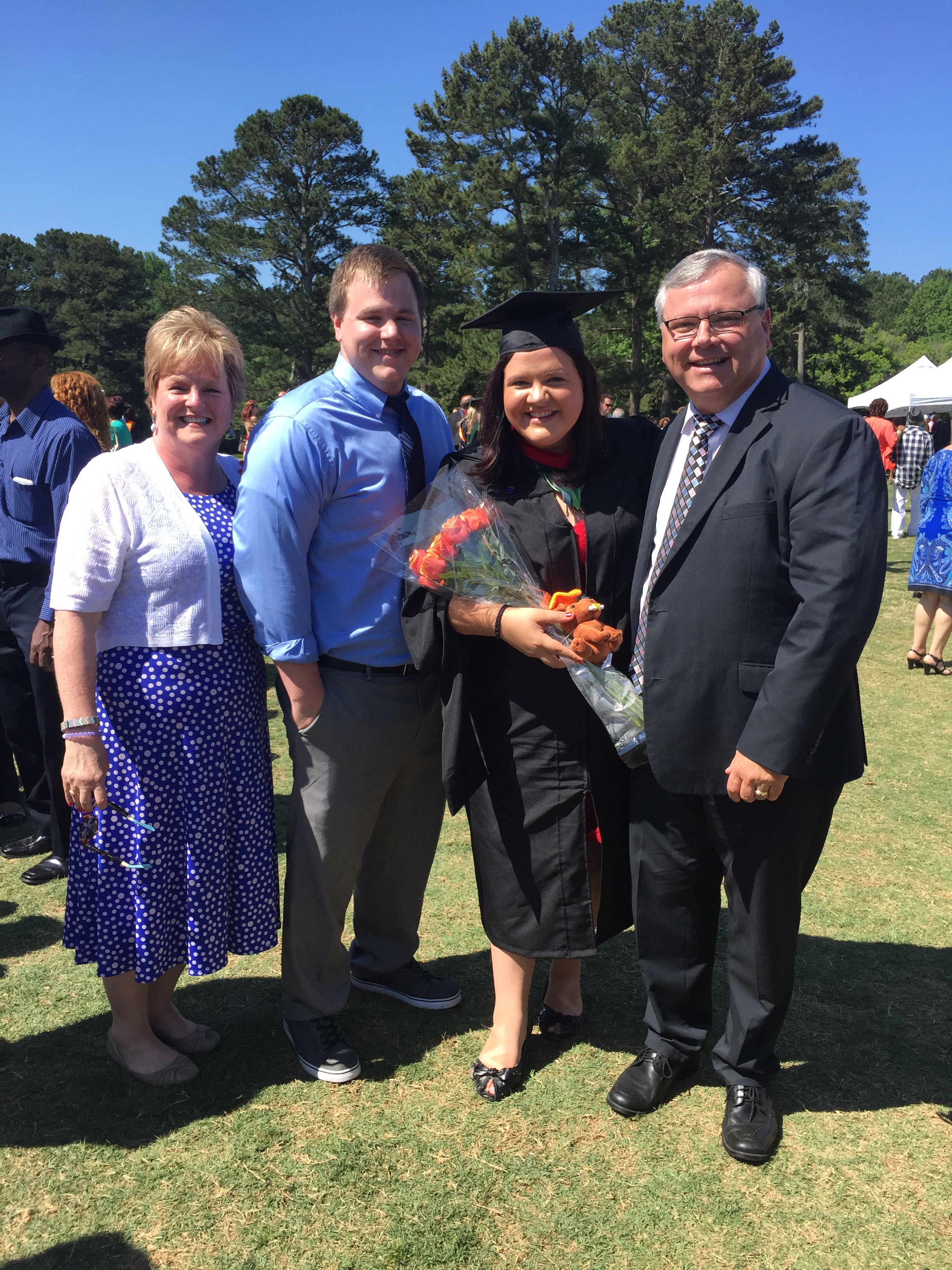
Katrina Stipe Brooks serves Lynchburg College as campus pastor and Madison Heights BC as youth pastor. She is the mom of two amazing young adults and the wife of an equally amazing spouse.


LeAnn Gardner: Everyday Theology: Subversive Hope

If you are anything like me, the energy and current of our world can squelch my hope in the future in a matter of seconds. I start to fear for my boys, and before I know it, I’m parenting out of fear. I’m wife-ing out of fear. I’m friend-ing out of fear. Which is not at all the person I want to be.

Newsprint

There is indeed a lot to fear. What I have come to learn about myself is that I cannot let myself go down the spiral of anxiety for too long. Given my personality, sitting in that place would leave me immobilized, isolated and hopeless. It does not help anyone, including these littles I am parenting to stay in that place. I don’t want them to have a mother whose modus operandi is fear.

Nor do I want to live in denial. Because pretending or ignoring that nothing bad happens in our world is inauthentic as well. So what can we do to care for our hearts so that we are not constantly bogged down with helplessness?

First, we decide to ingest images of hope. I am a visual person. If I see something one time, it is locked away forever in my mind’s eye. Because my vocational choices have led me down paths where I heard, day after day, stories horrific of abuse and neglect, I have to be very disciplined about what I choose to hear and see.

This vocation of hearing people’s sadness has put certain things off limits for me- certain movies, books, etc I cannot read. When someone tells me of a great book they have just finished, I ask questions. “Is it graphic? Does it involve abuse of any kind?” If the answer is yes, I can’t do it. Same goes for TV. My husband knows not to even ask me to watch a Quentin Tarentino movie. It’s just not ever going to happen.

This is a conscious decision on my part. This may not be a big deal to you, but I know that for hope to have its full potential to enter my heart, I have to keep certain visuals out of my mind. This is where I’m sounding very preachy and again, everyone is different. What kind of inventory needs to be done in your mind to make room for the seed of hope?

I also believe we have to be intentional about letting the good things in as well. There is new research that says our brains are wired to pay more attention to the negative than the positive. Neuroplasticity means that by simply training the brain to stop and pay 15-20 seconds of attention to small positives (a stranger’s greeting, a sweet kiss from a baby, the sweet signs of a loved one in your life, the chance to feel your lungs and legs working) can actually rewire your outlook to be more positive. Hope is intentional and subversive.

Nadia Bolz-Webber, a Lutheran pastor in Denver, talks about her tendency to become angry and hopeless- and quickly. One Sunday, right before she was to serve the Eucharist to her congregation, someone said something to her that elevated her cortisol levels rapidly and high. She spotted infant twins in the congregation and instinctively asked the parents if she could hold one of the babies. That day, she served the Eucharist with a baby in one hand and the elements in another. She knew that she had to replace her anger with good energy- the energy of an innocent baby- to get through the service and to offer her congregants the elements.

Now not all of us have access to babies when our stress elevates, but the point is it could be helpful to have a strategy to mitigate the stress and fear that enters our brains and hearts at a rapid pace. As we continue being bombarded by election coverage, perhaps we can be on the journey to exploring a good balance of being informed, but not overcome by this election season, knowing that our ultimate hope does not rest in a candidate, but in a Savior.

We surround ourselves with hope bearers. Being in a community of faith makes this one easy for many of us. In my community of faith, we hope together, as a body of Christ, as we gather school supplies for kids who are in a difficult place. We work alongside Metanoia, a holistic community development non-profit, to make lasting community change. And on a micro level, we surround ourselves with intimates who don’t have their heads in the sand, but who believe alongside us, that love wins every single time, even if at that particular time it doesn’t feel like it.

I’m not talking about Pollyanna faith here-I’m not talking about someone who says to a person in deep grief: God wanted one more angel in heaven. NO. I’m talking about the people, who in deep vulnerability, walk alongside the wounded as they grieve, recognizing that pain, death, poverty and suffering are realities.

But even beyond pain, I believe that a church community are witnesses to the wholeness of our lives- even the seemingly mundane part of our lives. We not only celebrate the big things: baptisms, weddings, graduations, births, but we show up and bear witness to new jobs, beginnings of school years, lost teeth, basketball games and new homes. We bear witness to one another’s lives.

Unknown-1

We roll up our sleeves and become agents of hope ourselves. What if, instead of allowing our fear to immobilize us or make us angry, we meet fear in the face and defiantly say, “I’ll show you!” And what we show is service. When we fear, we serve. When we have anxiety, we serve. When someone moves, we help them pack. When someone has a baby, we take them food. When youth go to camp, we go as a chaperone. When the church needs locking up, we stay late and lock up. When the children need teachers, we teach. When the tables need moved, we move them. When the Spirit lays someone on our heart, we call them.

My rolling up of sleeves service will look different than your roll up your sleeves service because we are different in our giftings and callings. The point is, as we wait, as we long for the suffering of the world to end, we serve. And we celebrate the good that is already happening in our midst. God knows no one is glad that the Charleston shooting of nine innocent souls happened, nor the trauma of the survivors. But the hope that peeks through in tragedy is God’s business and we have seen the Gospel on display many times throughout the aftermath of that unspeakable tragedy.

Every night as I lie in bed with my four year old or as I rock my two year old, I sing a hymn. It is my quotidian act of subversion; to sing this song of hope into their ears. Hear these words:

“Go my children with my blessing, you are my own. Waking, sleeping, I am with you, never alone. In my love’s baptismal river, I have made you mine forever, go my children with my blessing, never alone.”

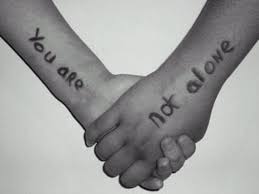
We are not alone. We belong to God, the one who gives us our hope. We are loved. We love. And we speak truth to the hope that propels us. Love wins….every single time. Amen.

IMG_5543

LeAnn Gardner is a right brained social worker and minister married to a left brained engineer. Together they (sometimes) compose a full brain. She is mother to two boys, ages 4 and 2 years.


Hannah Coe: Everyday Theology: Compassion as a Catalyst

IMG_3432

July 7, 2016. I dropped both girls at school. The NPR show On Point came on the radio as I left my last school drop-off. On Point is a show hosted by Tom Ashbrook that looks into pressing issues of the time and is conversational in style (panel discussion, call-ins, etc.). Since I’m usually running late (does anyone else feel like they’ve survived WWIII after they drop off the last child?), I hear the first 30 minutes or so of On Point.

The topic of the day was originally to be on the shooting death of Alton Sterling on July 6, 2016 in Baton Rouge, Louisiana. But the shooting of Philando Castile in St. Paul, Minnesota on the night of July 6 was added to the On Point discussion. As the show’s host and panel guests for the day reviewed and discussed the video footage of the shooting of Alton Sterling and the moments after the shooting of Philando Castile, it was as if these shootings happened before their very eyes. Even as the host and panel discussed the day’s questions, breaking news rolled in. Disbelief and horror rang in their voices. They could not believe what they were seeing and hearing.

I could not believe what I was hearing. I drove to the wrong place. Scheduled to do weekly hospital visits, I drove to the church and realized, only after parking my car, I wasn’t where I meant to be.

Diamond “Lavish” Reynolds, Philando Castile’s girlfriend, narrated for the world the moments after her boyfriend was fatally shot. Her voice was calm and direct. She became upset once in the back of a police car. In the background, we can hear the voice of her four year old daughter say, “It’s okay, Mommy. I’m here with you.”

It’s okay, Mommy. I’m here with you…

It’s okay, Mommy. I’m here with you…

It’s okay, Mommy. I’m here with you….

The words ring in my heart. They ring, and they do not stop ringing.

They are beautiful because they are words of compassion, mercy, and empathy. They are words I hope this four-year-old little girl has heard over and over and over again from someone who loves her very much, hearing them so often, they came out of her mouth when she saw her mother in pain. Because that’s what you do when someone is in pain. You show compassion, mercy, and empathy. These are Christ’s words, are they not? We can hear them coming from his heart, because Christ, our Companion, is here with us, here with that little girl, here with Diamond “Lavish” Reynolds.

It’s okay, Mommy. I’m here with you…

The words ring in my heart and they change me. I’m not good with chemistry, but compassion is a catalyst, is it not? Compassion urges, encourages, and births impossible transformation. The words tell me that things must change. And I must be a part of the change. I have known this for a long time.

But on July 7, 2016, compassion urged my imagination to see my black, male friends dying in the front seat of that car. Friends, colleagues, brothers who prayed for me at my ordination, sat next to me in seminary class, walked me to my car after class because it was dark, and joked with me on Facebook about the hilarity of life with young children.

Compassion urged my imagination to put myself in the passenger seat, my worst fears coming to fruition–fearing for my life, fearing for my future, fearing for my child, damned if I do and damned if I don’t. Compassion urged my imagination to see my four year old daughter in the back seat of that car. Compassion tells me things must change. Friends, they must change.

I must do compassion and mercy and empathy. I must do the ministry of reconciliation. Just when I feel like it doesn’t matter anymore, I must remember that it really does matter.

It really does matter.

I am praying each day about how God calls me to be a part of change in my community, in my country, in the world. I am praying each day about how to use the privileges I’m afforded to work for justice and for reconciliation. I am praying each day about how I am called to share compassion, mercy, and empathy. I am praying, praying, praying.

I am going to town hall meetings, forums, and other places where I can listen and learn and (somehow) join my voice to build bridges and build hope. I am dreaming up curriculum and planning conversations with children’s ministry leaders in our church in hopes that we can be intentional about teaching the explicit commands of Christ to love our neighbors. I want us to be honest and real about the problems of this world (because children know about them anyway) and to be direct in our conversations about race, class, ethnicity, and the love of Jesus which transcends all those boundaries (cause, yeah, children really believe that, they just need to know adults do, too).

Today I need to tell you that it really does matter. I need to tell you that it really does matter because I need to hear it. I want to tell you because maybe you need to hear it too. Wherever you are on your journey of motherhood and ministry, right now, today, what you are doing matters. Every word. Every hug. Every act of service. Every gracious response. Every explanation of “Katherine, how would it make you feel if Annalina took that toy from you? Sad? Maybe we can find a different way to share toys.” With every act of compassion, mercy, and empathy, the ground becomes more fertile, the seeds are spread, and God’s Dream grows a little more.

I must teach it to my children by telling, doing, and sharing it with them. I must tell it to them over and over and over again, believing that it will come out of their mouths and the very living of their lives. This four year old girl is changing me with her words of compassion. That could have been my little girl in my back seat

Another layer to this story is that I’d selected Luke 10:25-37, the Parable of the Good Samaritan, to preach on the coming Sunday and had spent significant time meditating on the word “mercy” as used by the lawyer to describe the one who was a neighbor. That Thursday morning I had nearly settled on what one scholar calls a Christological reading of the text. A reading in which we picture Christ as the man lying half-dead on the side of the road, in need of mercy. A reading in which the lawyer, and we, are able to see ourselves as the man lying half-dead on the side of the road, in need of mercy. This reading of the text speaks to the world’s deep and desperate need for compassion, mercy, and empathy. This reading of the text gives us eyes to see one another for who we really are: human, which is to be created and loved by God.

There is no ribbon to neatly bind this reflection. No color-coded arrangement that will organize or make sense of the injustice before our eyes. It is what it is. Ugly. Unjust. Unceasing.

The traditions of our faith tell us more than once that we must see the world with double-vision. As it is and as it must be. I’ll admit that seeing the world with double-vision leaves me feeling dizzy and sick to my stomach. Though discouraged, the calling is ever-stronger. Practice compassion. Follow the way of mercy. Work for justice in a spirit of love.

IMG_3419

A Georgia native and graduate of Mercer University’s McAfee School of Theology, Hannah Coe serves as Associate Pastor of Children and Families at First Baptist Church in Jefferson City, Missouri.  Hannah and her husband, David, are parents to Katherine and Annalina. They enjoy playing, eating, and the occasional nap.

Chansin Esparza: Breastfeeding and Spiritual Gifts

“He’s so big!”
Blog - 2
        It’s the constant refrain of my life. Every time I go to worship, the grocery store, a friend’s house – wherever – that’s what people exclaim about my five-month-old baby.  Ever since his two-month pediatrician appointment, my baby has been off-the-charts tall.
 
      Or …. long. He is off-the-charts long. Babies are long – not tall – because they cannot stand up. It’s been a little awkward as my pediatrician, on multiple visits, has asked me to consider donating breastmilk to the milk bank because he assumes that with such a fast-growing baby, I must have extra-good milk. 
       I blame the baby, not my milk. He had a huge appetite, right from the start! In the early weeks, it felt like the only thing I ever did was breastfeed him. Maybe most babies are big eaters like him. But my husband warns me that if our son is anything like he was, then when our boy hits the teen years it will again feel like all I ever do is feed him. 
      Now that my baby is no longer a newborn, the experience of breastfeeding is more efficient and less painful (thank God!). Since he’s not feeding all the time, I let my mind go to other things once in a while. I occasionally forget about his reoccurring hunger.
      So sometimes he gets fussy, and not really thinking about why, I take him up to change his diaper. Maybe this will help, I think.
       But then as I set him on the changing table and place my arms near his body, he leans his little head up … and tries to bite my arm! He’s rooting on whatever part of my body he can get his mouth close to. I’m hungry! he’s telling me. With his open mouth and fierce eyes, I remember. Oh yeah … you need to eat, little one! And I laugh because he’s desperately grabbing at my arm and trying to put his cute mouth on it. 
Aug - 1
      If I’m being cynical, it can seem like the baby just wants to use me. I’m a means to an end: his full tummy. But it dawned on me that the milk that he is trying to get access to … is not really mine. It’s his. God put that milk inside me for his sake. I don’t need it. It’s a gift from God given to my baby through me. I’m the conduit for delivering the nourishment. 
And that makes me think of the Church. 
      All of us have gifts that God put inside us for the sake of others. We are conduits for delivering what is needed to the people God has brought into our lives. We have gifts of our time and attention and love and resources. And we have spiritual gifts. The purpose of spiritual gifts is to build up the Church. God gave them to us for the sole purpose of doing good in the world. They’re useless if we keep it to ourselves, just like I’d have no use for breastmilk if it wasn’t for my baby. 
      I currently serve a church of people who have a variety of gifts and use them for the sake of others. For example, we have a creative arts camp that we put on for kids at a nearby housing project. In order to bring the love of Jesus to those kids through a fun, safe, organized, and effective camp experience, it takes all kinds of gifted people. A few of them are…
  • The gift of Administration – Martha patiently registered the children who didn’t know how to spell and parents who knew little English.
  • The gift of Evangelist – Jason walked around the apartments, looking for kids and encouraging them to come to the camp. 
  • The gift of Leadership – Pam planned the activities and coordinated volunteers, calling the shots as the day went on.
  • The gift of Serving – Vanessa poured drinks and helped the kids with their crafts. 
  • The gift of Encouragement – Jan spoke positive words to the kids about their artistic abilities and encouragement to the adults for their interactions with the kids. 
  • The gift of Mercy – Lauren remembered the names and stories of the kids from the housing project whose needs are hard to comprehend.
  • The gift of Giving – Stephanie brought supplies and offered her church shirt to me when she learned I didn’t have one.
  • The gift of Teaching – Sarajane taught the children dance moves and instructed them through the bubbles and piñata activities. 
  • The gift of Faith – Val believed in the entire process and expected God to make it successful, even before we began. 
      In Christ, we are one body. The parts of a body need the other parts in order to survive. Just like my baby gets hungry and looks to me for what he needs, we in the Church are at a loss and in need of the gifts that are in our Christian brothers and sisters. 
      God made you the way you are – not just for your sake, but for the sake of others. How are you giving away your gifts to those who are meant to receive them? 
Blog - 1
Chansin Esparza is an Associate Pastor at Life In The City in Austin, Texas. Her husband, Jason, serves the church as well. Their son was born in January 2016. She blogs at ChansinEsparza.com.