
Tag Archives: growth

Aileen Lawrimore: “Read It Again”

“Hey Mommy, we need to talk,” my daughter, Trellace, a freshman at Georgetown University was in her first college level religion class and she was not happy. 

“Mom! The book of Judges is awful! I never knew all this was in the Bible!”  

Trellace, born in 1994 after the Cooperative Baptist Fellowship (CBF) split from the Southern Baptist Convention (SBC), was as much a church kid as I had been. But she came along when CBF churches like ours were still trying to figure themselves out; we had not yet created reliable literature to help our volunteers teach kids biblical truths.

Determined not to be fundamentalists, some of us failed to teach fundamentals at all. As a result, there’s a whole generation of faithful little Baptists who missed out on the kind of focused Bible teaching I had received in my formative years. 

I was a child in the seventies. I went to GA’s and Acteens on Wednesdays and Training Union every Sunday night. I competed in “sword drills” so much that I could turn to a text in Haggai as fast as I could one in Genesis or Revelation. In the churches of my childhood, “read-the-Bible-through” efforts restarted every January. “Read the Bible Daily” was a tick box on our offering envelopes which we turned in weekly, containing at least 10% of our allowances.

Say what you will about old-timey SBC churches; but they taught us how to be disciplined and intentional students of Holy Scripture. 

Trellace also went to church every Wednesday and Sunday. But our church focused on God’s love, forgiveness, and grace and glossed over some of the nastier bits of the biblical narrative. Trellace had hardly even heard of Satan, let alone realized that God takes a lot of heat for ungodly behavior. Judges caught her off guard. 

“Levite’s concubine?” I asked her.  

“What? No. . . who is that?” 

“Never mind.” She’d find out soon enough.  

“Okay so anyway, Judges,” Trellace continued. “So much war and devastation. How could God call for all that evil?” 

Aha. She’d just begun the book then. She had not even met Jephthah’s daughter yet, bless her heart. “How many times have you read the passages that bother you?” I asked her. 

“Um once, why?” 

“You need to read them again.” 

She wasn’t having it. 

“Here’s the thing,” I said. “There are not many things we know with absolute certainty about God. But there are two truths I keep in mind when I’m reading the Bible. First, we know that God loves us more than we can imagine, and mere humans cannot change that, no matter what. Second, we know God is a God of grace and mercy. God is always ready to forgive us, ready to offer us a second—or 102nd chance.”  

“So then why did God ordain all this fighting, killing, and just meanness?” Trellace asked, teetering between skepticism and relief. 

“Well, that’s why you need to read it again. Maybe you misunderstood.”  

“Yeah Mom, I don’t think so.” 

“Here’s the thing: God is NOT a Big Bad Meany. We know that. We know that we know that. This is an absolute. There may be infinite additional truths about God, but this is one we know for certain. So, when it looks like God is being a Big Bad Meany, we know that there is more to the story,” I explained. “So, we need to read it again.” 

This has been a failsafe method of Bible study for me for decades.

Sometimes there’s a nuance in the text that I overlook. For example, Psalm 109. In this text, the Psalmist is nothing if not a Big Bad Meany. But a close look will remind readers that it is not God pronouncing these evils; this is a psalmist’s honest prayer that his own wicked desires be sanctified. It’s a beautiful example of how to be authentic before God, regardless of how ugly we look in the moment. 

Other hard texts might depict antiquity seeking explanations for life’s successes or failures. It’s not like they could check satellite images, order MRI’s, or run blood tests. They made sense of things the best they could. And often that meant throwing God under the (not yet invented) bus.

I remember getting downright furious with God for killing off Uzzah. You’ll find the story in 2 Samuel 6. David and the boys are celebrating the return of the Ark of the Covenant when the ox leading the cart that holds the Ark stumbles. Uzzah reacts reflexively and catches the ark before it falls. Then, according to the text, God strikes Uzzah dead for touching the Ark.  

That’s some serious Big Bad Meany behavior, right? I tagged the text for future discussion with my father, a pastor. In those pre-cellphone days, we had to wait for face-to-face visits for conversation, or at least until after 10 when the long-distance rates went down. 

A few weeks later, sitting in his living room, I recalled the Uzzah story. “Daddy!” I said, “God’s just being petty here. Uzzah was only trying to help. Would God prefer that the Ark fall into the road?”  

“Hmm,” Daddy said, hardly looking up from the solitaire game he had laid out on his lap desk. “I always figured Uzzah had a heart attack when he realized what he had done, and the people gave God the credit because they didn’t understand science.”  

For parents who are also biblical scholars, we give you thanks, oh Lord. 

Of course, there are also times when the texts won’t become clear upon subsequent readings. Faithful students learn to live with this because contrary to Descartes’ declaration of cognito ergo sum, we cannot always think our way into understanding. Often, we need to sit with our questions, live in the mystery of faith. As difficult as that can be, it’s a lot easier if we remember that God is NOT a Big Bad Meany. 

“Oh,” Trellace said. “I get it. Okay. Thanks. Headed to class. Love you Mommy!” 

“Love you too Trellace,” I signed off. 

Help her to keep reading, I prayed. Help her to keep asking questions. And help her always to find shelter in the truth that you love her more than she can imagine, and that you are not now, never have been, and never will be a Big Bad Meany. 

Rev. Dr. Aileen Lawrimore is a minister, writer, and parent of three adult children who currently pastors Ecclesia Church in Asheville, NC.

Photo from pickpik.com.
Wonder Women and Their Socks

Last week I wrote about the inspiration of a week full of Wonder Women. From a Zoom meeting of women lead pastors to the re-start of a women’s Bible study at the church I now serve to Baptist Women in Ministry of North Carolina’s 40th Anniversary Symposium (I am still thinking about that phenomenal cake!!), I was filled to the brim in the presence of such Wonder Women.

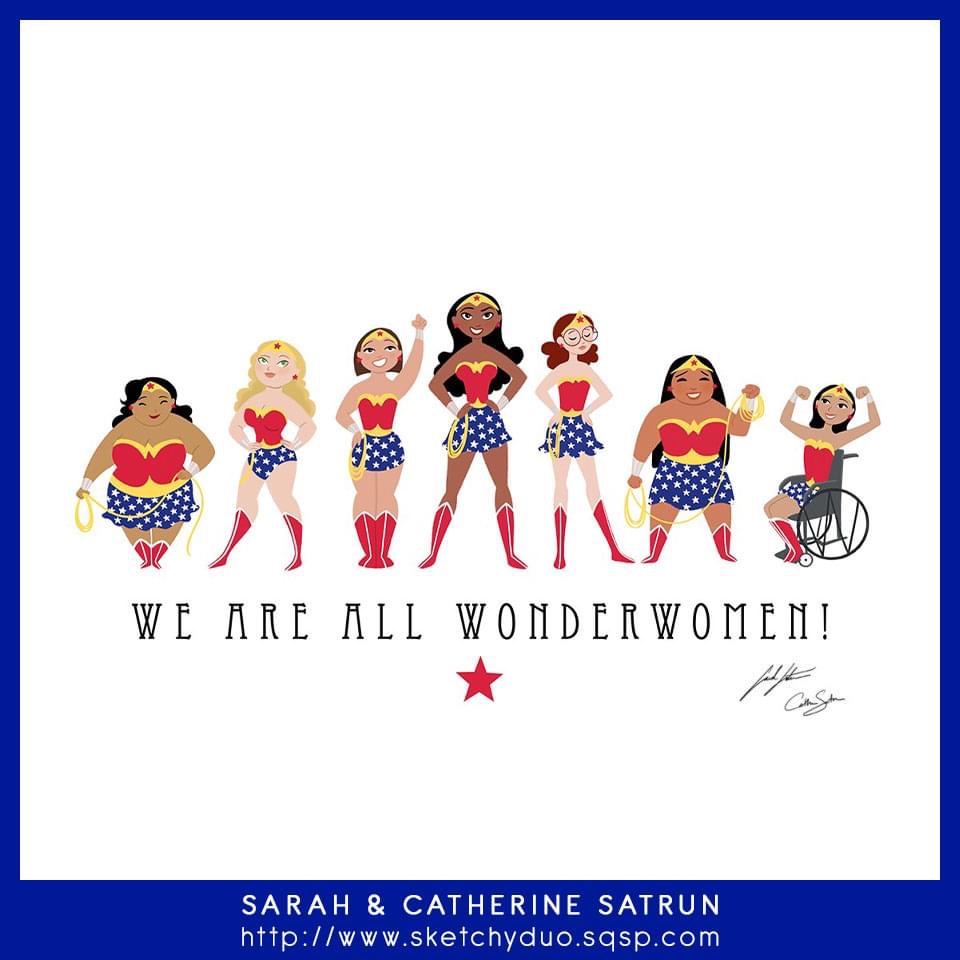
A more seasoned ministry friend, whom I deeply admire and love serving with whenever possible, noted that the artwork I shared by the immensely talented twins, Sarah and Catherine Satrun did not include her more “full of years” (Gen. 25:8) group.

“None of these Wonder Women look like women of my ilk— you know, decrepit, wrinkled, spry, with compression socks. Jus’ sayin’. In our caricature, though, please do keep the twinkle in the eye!”

This led to a conversation about my love for Wonder Women of a certain age (my years as an eldercare chaplain were some of my favorites!), which led to a chat about WW themed compression socks, which she swiftly located. Always resourceful!

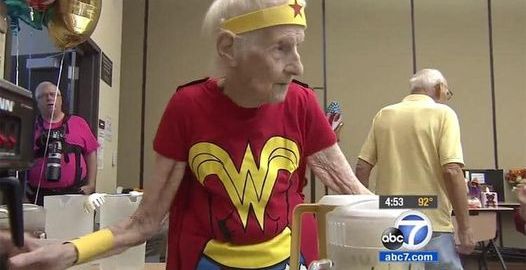
She also found a photo that I immediately saved on my desktop.

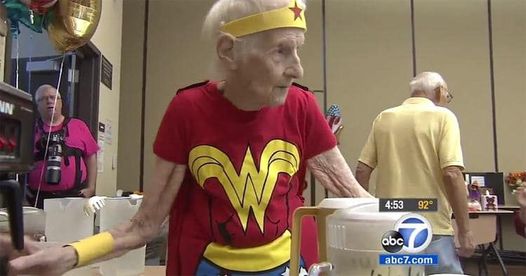
YES to every pixel of this. YESYESYES!! Friends, this Wonder Woman was 103 when this was taken! Read more about her here.

YES to those who have gone before and lived with courage and whole-hearted love and perseverance and compassion for themselves and others and who still, as they adapt to the last season of this life, open their hearts to what is now.

That’s my favorite aspect of the Wonder Women of a certain age in my life: the ability to honor what has been—what worked for them, what didn’t work for them, the truth of their experiences without rose-colored or doom-colored glasses—AND to be present to the now, to value that the world is always changing, and to not hold the women or the world of now to the shape and substance of the past.

When I am in the presence of a woman who can hold her story with respect and grace and love and also make room for others’ unique-yet-connected story…I know I am with a true Wonder Woman. That space is holy. That space is filled with the love that makes all things possible.

We can do both. We can honor what has been and what worked in the past and how hard certain things were that aren’t that kind of hard anymore. And, at the same time, we can honor what is happening now and how what used to work isn’t working anymore and lean into the desire for transformation and adaptation. Living with that kind of versatility is wisdom in motion: willingness to be malleable, responsive to the Spirit, leaning into reflective learning.

Years ago, I served a community with two prominent women leaders, whom we’ll call Polly and Alice. Both had a deep passion for loving God and loving others. Each had her own gifts to bring to the table and contributed greatly to the ministries around them.

They could not have been more different.

Polly wore vibrant clothes, laughed often and loudly, and taught her Sunday School class even after macular degeneration limited her vision. She procured a special machine that enlarged the writing in her quarterly until she could read it and kept right on leading the friends with whom she had walked most of her life.

She once told me she planned to teach until she couldn’t see anymore–and then she might learn braille! I’m pretty sure she was joking about the braille. But with Polly, you never knew—she just might do it.

Alice found her niche in missions. She’d led women gathered in someone’s fancy, seldom used parlor to learn about missionaries serving in places they struggled to locate in a map. They prayed for missionaries and raised funds in all sorts of creative ways, from collecting dimes in tiny cardboard church-shaped boxes (which fascinated me as a child!) to selling baked goods and cookbooks and crafts.

Alice struggled hard when women’s interest in missions began to shift from learning about “foreign” missionaries to doing hands-on missions in their own communities or traveling to participate in missions around the country—and even the globe. On Wednesday nights, more women opted for Bible study rather than the traditional missions study. Their call was to study scripture and live it out by doing missions themselves, making an impact right where they lived.

Alice became deeply frustrated when she could not influence younger women to do missions like their mothers or grandmothers did. She worried that “no one cares about missions anymore!” As we humans often do, she couldn’t quite make the shift to what had already shifted and was never going to shift back. Her grief for what she viewed as “lost”–the old, familiar, defining ways–was so powerful and so painful, that she couldn’t quite see the good that was happening in new, different ways of living missions.

I know now that in a way I didn’t know then that sometimes grief comes out with protective fronts like frustration or judgment, which make the grief hard to hear. Looking back, I realize that sometimes, in both ministry and my own spiritual journey, I have missed the deeper grief as I tried to deal with (or duck) the sharper, protective emotions coming my way. I want to keep becoming more attuned to the grief underneath, to listen for its tones in those protective emotions and know that what I am hearing is pain, fear, loss–grief.

During that season of ministry, I told my husband, “I want to grow up and be Polly.” I still do. Imperfect, colorful, determined to use her gifts as long as she could, finding ways to adapt and giving room for new learning. Polly absolutely would have worn Wonder Woman compression socks.

I want to as well. I also want to keep learning how to lovingly tend to my own grief, listening for my own protective measures– criticism or anger or judgment–and recognizing that they connect to something that hurts. And the first step to healing that hurt is realizing that it exists.

As I keep getting fuller in years, I want more twinkle in my eye, more compassion for myself and others. I want to give more room for others to be, to create space for those who come after to make their own ways of living out their faith—and know that, just like I did “back In the day,” they need support for the hard work of figuring it out in their own setting. When the things I hold dear shift, I pray for the grace to grieve what was so good for me for so long and trust that God is still, as always, doing a new thing, a new good thing.

Both Polly and Alice were Wonder Women in their own ways. They taught me so much. I think maybe Alice just forgot for awhile that her tiara could also be a boomerang—more than one thing can be true at once.

In fact, a whole lot of things can be true at once, including the rich variety of Wonder Women, of every age, size, style, spirit and socks.

Photo from https://myfavoritescrubsllc.com/collections/women-compression-socks