Tag Archives: grief

All Saints, FFTs, and Being a Nephesh

I’ve been settling into a new ministry position for the past two months: slowly learning all the names, the systems, the already existing ministries associated with my role (minister of missions), figuring out what is and isn’t working, introducing myself over and over and over to the neighbors and community organizations we partner with…and generally discovering something new each day. 

I am truly loving getting to connect with our neighbors and partner with our loving, missional congregation as we seek to love and serve our community. Dozens of holy moments light up each day. 

And, whew…I am worn slam out. 

Brené Brown’s work around “FFTs” or “freaky first times” (that’s the non-spicy translation) helps me stay in touch with how much work, time, and energy this stage of anything truly is.1 If it’s my FFT doing something, then of course I’m going to be clueless about how to make it happen, anxious because of that cluelessness, and learning—often the hard way– and adapting every second of the experience. 

No wonder I am exhausted when I get home! No wonder I am having trouble remembering all the things! No wonder my days off are less fruitful in dealing with “everything else that has to happen to make life work.”

Mom, I had to buy some extra textbooks I wasn’t expecting so can you reimburse me from my 529? Mom, I need to get my sports physical by Thursday so I can try out for basketball. And (from our financial planner), Alicia, please fill out these forms detailing what your family spends annually in these 672 (slight exaggeration) categories. 

But in addition to the FFTs, I am experiencing something else significant: embodied grief and the Anniversary Syndrome.   

The older I get and the longer I serve in ministry, the more I experience the ancient Hebrew understanding that we don’t just have a body, we are a body. The Hebrew word nephesh, sometimes translated as “soul,”  has a rich, layered meaning. Nephesh incorporates soul in its meaning, but not as a counter-reality to body, as Greek thought would later use the word. In ancient Hebrew thought, our soul-mind-body are intimately, wonderfully connected–not disconnected, opposite realities. 

Nephesh means “that which breathes,” “a living being,” “a creature.2 The word is connected to breath, the breath of God that gave the first nephesh life. The breath that keeps us alive, physically and spiritually. 

When I am anxious, rushed too much, task-overwhelmed, etc., my breathing gets short and shallow. It’s my most reliable sign that my nervous system is “activated,” as somatic therapy describes, and starting to function in survival mode. When I notice the short, shallow breathing, my most reliable calming response is to concentrate on slow, deep, deliberate breaths. 

On Monday, I’d just finished leading a particularly task-heavy, congregation-wide community ministry, an amazing time of connection and loving our neighbors.  It was an absolute joy! And…waiting on my desk was everything I had set aside to get ready for that ministry. Then, someone needed emergency financial help and I needed to make that check happen. But as the next few days revealed, I didn’t know our system quite well enough and got myself tangled up. 

I knew I needed to breathe deep and slow.  So I signed up for an online All Saints Day gathering set for Wednesday at 1:00 pm. I needed that time. 

But I needed that time not just because I was task-and-FFT-tired.

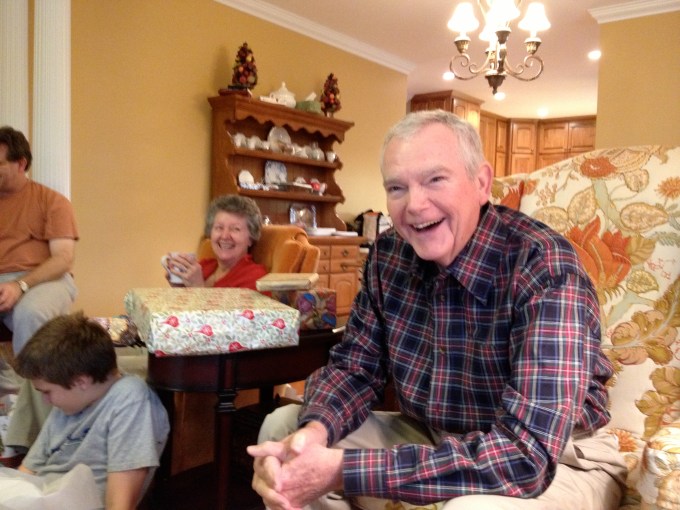
November has always been hard for me with the loss of daylight, gray weather, trees stripped down to bare. Then, eight years ago I spent the first three weeks of November at my father’s bedside, gathered with my mother and sisters as he slowly slipped away from this life. He was such a stunningly generous gift to all of us. Facing his death with him was the hardest, holiest time of my life. 

That loss still lives in me. I, a nephesh, bear that grief still. November is the hardest month. I have to work hard to make space to breathe in November. 

And … last November also held the most nephesh-draining season of my vocational life. Things had been hard for some time, but starting in late summer, the intensity shot up fiercely. In October, it rose even higher and kept climbing. I felt trapped in a lament psalm, caught between the “terror of the night” and “arrow that flies by day” (Psalm 91:5). 

It was the hardest—in every single sense of that word—and most demoralizing season of my life. That lament still lives in me. I, a nephesh, bear it still. This makes November even more so the hardest month. This year, I have to work even more to make space to breathe in November. 

So I profoundly needed this All Saints service, designed and led by Rev. Dr. Eileen Campbell-Reed. I had personal grief and gratitude, awareness of the catastrophic losses going on all around me in our world, and a new layer of vocational grief to lift up to the God who hears. Even just the video of the burning candles during the service helped me settle and breathe more deeply. 

But the service couldn’t give me what I had hoped for—because time-sensitive texts about that emergency assistance check kept coming in and I had to respond on the spot to untangle what I had tangled up. I got tangled up because it was my FFT and I didn’t fully understand our benevolence-fund-check-writing system. Everyone was gracious and helpful in helping me work it out, but UGH! What an FFT!

Here’s the good news. Last night my spiritual director reminded me that I could have an All Saints do over. As a living, breathing nephesh, I could try again. It wasn’t like All Saints Day had passed me by and I would have to wait until next year. It wasn’t like God was tapping a foot, sighing, “she sure blew that chance!” Grace abounds. 

I could circle back and watch the video, which, thankfully, had been made available to us. Which is what I am doing as soon as I finish this post. I am going to turn off alllllll the alerts, get a cup of hot tea, and breathe as I honor All Saints Day, all the griefs and gratitudes, losses and laments, and simply let God love me and all our lamenting world.  

This nephesh deserves that. 

Rev. Alicia Davis Porterfield midwifes this communal blog, serves as Minister of Missions at Oakmont Baptist Church in Greenville, NC, and moms 3 young adult-ish men.


  1. Here’s a good explainer about FFTs and BB’s podcast episode on FFTs—warning: both contain a curse word; if that will distract you from her teaching, skip these links. ↩︎
  2. https://www.biblestudytools.com/lexicons/hebrew/nas/nephesh.html. I was too exhausted to look up my Divinity school Old Testament notes to work with a fuller source. They’re packed up in the attic.  ↩︎
Melanie Storie: When It Stops

Today on the mountain, I watched it raining in my backyard while there was no rain at all in my front yard. The sun was shining through the fog. The cows were grazing in the front pasture. If I moved, maybe it would have all stopped. So, I stayed still. It rained like this for minutes in the back. The sun gazed bright on the cows. The rain stopped. The sun bathed everything. 

A few weeks ago, I was an elementary school teacher. I had served as a Children’s minister and then a missionary where my work often overlapped with local schools. I was called to work in public schools. I became a substitute, then a tutor, then I earned my teaching degree through a lateral entry program. I taught kids who needed a good teacher. They depended on me for far more than academics. A student whose dad went to jail in the night needed my black cozy chair for a nap the next day. I poured out my heart for the children I taught. Teaching was my new ministry.

I taught through deaths in my family, through COVID, through surgery, through a lockdown due to an actual shooting within our school zone (the Sheriff Deputies examined my classroom door for bullet fragments), and through the Big Ugly that put both of my children in the hospital.

Teaching is a ministry of stamina and dedication. In the profession, there is a phrase often echoed, “Find your WHY.” I knew my “WHY?” I was called by God to help children and families. In this new phase of my life, this calling kept me going on hard days, on scary days, on days when I didn’t think I could keep going. I loved my job and I kept going well in a hard profession.

Until I couldn’t. 

We moved to the mountains. It had always been our dream. Our boys have flown the nest, we found jobs. We moved. I started the school year.

Everything felt off. The supports I had in place in my old district were gone. More depended on me. Truthfully, more has been piling on for teachers every year. My husband, who works as a chaplain, was making more money than me, but I left for work before him and was home after him. I always had work with me at home. It was getting worse with the move. I was having a hard time getting everything done. My anxiety was through the roof. 

My nineteen year old son, Owen, asked me if I had seen the hummingbird at our house. I hadn’t. I hadn’t had time to see anything but work. 

After a weekend of tears and panic attacks, I quit my teaching job. All those traumatic times I had taught through caught up with me. There was no way to find “balance” or “self-care” without walking away. 

I don’t know what’s next. I do have faith that there is something good. I had time to  sit outside and meet my hummingbird. I can see miracles like rain in the backyard and sun in the front.

Sometimes, we need everything to stop so we can see and hear all of those things we have been missing. I cared for other people’s children so very much. I’m grieving that loss. I almost lost myself. I’m a precious child too. I thank God for reminding me.

“After the earthquake came a fire, but the LORD was not in the fire. And after the fire came a gentle whisper.” ~1 Kings 19:12

Melanie Storie is a writer, minister, and educator who lives in the NC mountains.

Elizabeth Evans Hagan: Third Week of Advent: Expecting, Yet Not Yet Expecting

sorrowornament
Photo courtesy of love sanctuary.com/2015/12/embracing-both-joy-and-sorrow-this-christmas/


Nehemiah said, “Go and enjoy choice food and sweet drinks, and send some to those who have nothing prepared. This day is holy to our Lord. Do not grieve, for the joy of the Lord is your strength.” Nehemiah 8:10


For a woman expecting but not yet expecting a baby, Advent can be a miserable time.

While songs of “peace on earth, goodwill to men” and “joy the world, the Lord has come!” are being blasted on the radio, this time for the wait-ers among us can often feel more like Holy Week than it does Advent.

But it is the holiday season, and most of us want to be happy. We want to be able to put whatever is bothering us aside and rejoice as the scripture exhorts us too. We want joy—even as much as our life circumstances aren’t naturally joyful.

I would love to offer that joy is a formula that can be followed as many preachers offer: Jesus first, Others second, and Yourself last. I’d love to suggest that joy is an emotion of the will that we can just pray harder to make happen. Or, if we force ourselves to sing one more Christmas carol or bake one more sheet of cookies, the joy of the Christmas spirit will find us.

Maybe you’re better at joy than I . . . but it has been my experience that seeking joy in the midst of waiting for children does not come through formulas and cookies. Throughout my journey to become a mother, I’ve waited through some of the darkest days of my life.

Read more here.

15107339_10154737886309168_417095950521987826_n

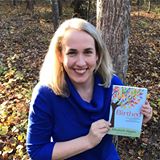
Elizabeth Hagan is an ordained American Baptist minister serving churches through intentional interims in the Washington DC area. She blogs about her adventures in non-traditional mothering over at Preacher on the Plaza. Check out her new book Birthed: Finding Grace Through Infertility recently released through Chalice Press.

Elizabeth Evans Hagan: Second Sunday of Advent: Infertility and Waiting on Jesus

Dear Readers,

You’ll notice we’re a week behind this Advent because . . . well, it’s Advent and things are hopping–as in hopping all over us. 😉 We’ll publish Elizabeth’s Third Sunday of Advent offering this Friday.  Thanks again to Elizabeth for bravely sharing her story with us.

Advent Blessings!

8238709065_a75780e280_z


“Therefore, since through God’s mercy we have this ministry, we do not lose heart.” II Corinthians 4:1

I was in labor for almost eight years.

There were ultrasounds.

There was blood work.

There was pain: both physical and emotional.

I felt called to motherhood. It’s as strong as the calling I felt to enter the pastorate ten years ago. It’s as strong as the calling that I felt to marry in 2007.

When I first began the journey toward motherhood, I was naïve.

After being married a year, I thought we’d start trying to have kids and then nine months later pop out a beautiful baby. I saw so many of my friends become mothers so easily. My mind and body felt strong. I saw no groaning up ahead. Why would childbirth not happen easily for me?

I had no idea the process of waiting for a baby can extend Advent after Advent, year after year.

To keep reading, click here.


15107339_10154737886309168_417095950521987826_n

Elizabeth Hagan is an ordained American Baptist minister serving churches through intentional interims in the Washington DC area. She blogs about her adventures in non-traditional mothering over at Preacher on the Plaza. Check out her new book Birthed: Finding Grace Through Infertility recently released through Chalice Press.


Elizabeth Evans Hagan: Advent: Infertility and Waiting on Jesus

Throughout this Advent, we will be sharing Elizabeth Evans Hagan’s blog series from Faith Forward at patheos.com. The series interweaves the stories and symbols of Advent with the journey of infertility, a journey explored in Hagan’s new book, Birthed: Finding Grace through Infertility (Chalice Press). Welcome, Elizabeth, and thanks for sharing your story and reflections with us. We look forward to reading your book and leaning more into ministry and support for all who’ve been on this journey.

3079925015_e15e1e38d6_z-1.jpg

This is the first in a weekly series of Advent devotionals reflecting on what an experience of infertility can teach us about waiting for Jesus here at Faith Forward.

He has sent me to bind up the brokenhearted, to proclaim freedom for the captives and release from darkness for the prisoners . . . Instead of your shame you will receive a double portion, and instead of disgrace you will rejoice in your inheritance. And so you will inherit a double portion in your land, and everlasting joy will be yours.” Isaiah 61: 2, 7

Some of my favorite Advent texts to preach on come from Isaiah. I mean, who doesn’t love an opportunity to “to proclaim the year of the Lord’s favor” and “people who have walked in darkness have seen a great light” on Christmas Eve?

Two Advents ago, only a week and a half before Christmas, I lingered extra-long in my sermon writing chair one morning with cup of coffee in hand with my Bible opened to that week’s Isaiah lection #61. I’d read the passage numerous times before and even preached a subpar sermon on the text in seminary. But on this cold morning bundled up in a fuzzy blanket, something about the beauty of the phrase “He has sent me to bind up the brokenhearted” caught my attention anew. My eyes could not move on to the next sentence. For it was true: this preacher was still so brokenhearted.

On our sixth, going on seventh year of trying to welcome a child into our family after completing IVF 8 times and 2 failed adoptions already—there was just so much to continue to wonder and weep about.

(click here to continue reading Elizabeth’s post)

15107339_10154737886309168_417095950521987826_n.jpg

Elizabeth Hagan is an ordained American Baptist minister serving churches through intentional interims in the Washington DC area. She blogs about her adventures in non-traditional mothering over at Preacher on the Plaza. Check out her new book Birthed: Finding Grace Through Infertility recently released through Chalice Press.

Alicia Davis Porterfield: All Saints and the Anniversary Syndrome


img_0848
Gray November Sky Photo courtesy of touch2touch.wordpress.com

Since childhood, November was one of my least favorite months. Halloween’s candy was long eaten and Christmas felt too far away.The leaves lost their brilliant hues and fell to the ground, leaving bare branches up high and a raking chore waiting below. Gray skies and a gray heart.

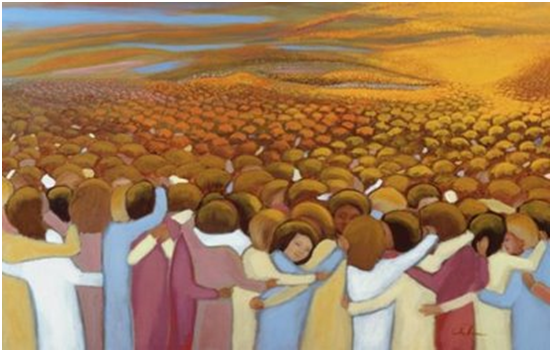
In Divinity School, I discovered All Saints Day, which helped start my gray month off with a gild of theological wonder. My favorite image of All Saints was the across-time-and-space unity of the people of God, the sense of a cosmically bigger picture than any human mind could comprehend. That “cloud of witnesses” stretched far and wide and deep, surrounding us all with their stories and faith, weaving us together as one family.

In my time as an eldercare chaplain at a Continuing Care Retirement Facility, our All Saints observance involved lighting candles for each community member who had died  the preceding year. We talked about each light being a reflection of the light of Christ our Savior; how each flame spoke to the life of a person who had touched countless other lives. We shared stories of the light these people had shed in our lives, those memories and moments that we would hold onto for the days to come.

all-saints-day
Photo courtesy of http://www.mattoonfirst.com/events/allsaintsday

All Saints became one of my favorite services, full of remembrance and wonder, thanksgiving and grief, shared tears and shared laughter.

Then, my father died last November. We had three weeks between the diagnosis that finally told us what had been happening to him over the past year and his funeral. Those three weeks were priceless and holy and rich–and not nearly long enough. 74 years was not nearly long enough for my father’s light to shine.

(Note: God knows how I feel about this.  And God’s OK with it, according to the Biblical witness of the Psalms, the lived out faith of those who have gone before, and my own prayers. We’re good.)

Grief has been a constant companion this year, an invisible armband on every outfit I wear, taking up room and energy and attention, some days more than others. Sometimes this grief is a silent companion; other times it jerks me out of another conversation or train of thought and unashamedly takes over the space it needs.

I’ve been dreading the anniversary of Daddy’s death since summer. Last year, we were all still stunned and absolutely raw when Thanksgiving rolled by two days after his funeral. We limped through Christmas, grateful for the children in whom Daddy delighted to keep us distracted enough to function.

This year, the shock won’t be there to cushion the reality of his absence.

This year, we’ll be facing the fact that a whole year has passed since we lost Daddy. The world has been racing on as normal, pulling him farther and farther into memory and the past and pushing us forward into life without him and a future where his stories and guidance and laughter are not present.

And it is that framework that I find I cannot bear.

img_1808

The Anniversary Syndrome wasn’t just going to dredge up all the pain of the original loss–it was going to tell me that I should be somewhere else with my grief, that life had moved on, that I wasn’t keeping up, that a whole year has passed and that’s a mighty long time. 2016 was about to roll into 2017, making our 2015 loss ancient history in a nanosecond world.

I wasn’t just dreading the resurfacing of the deepest grief of Daddy’s death. I was dreading the reality that a whole year has passed without him in our lives. I was dreading the judgment doled out by way we frame time, the calendar’s unspoken but powerful assessment.

But All Saints Day rescued me.

All Saints Day offers a wondrous counterpoint to the peculiar judgment I was dreading on the anniversary of my father’s death. Time doesn’t matter.  At least not the way our world thinks about and measures time. According to Hebrews, that cloud of witnesses we will all join one day binds us together over time and space, death and life, woven by the love of Christ Jesus.

all-saints-day-2
from internetmonk.com

Past, present, future–it’s all God’s time. The cloud of witnesses brings together the earliest followers of God’s call as outlined in Hebrews to those who lived when Hebrews was written to all of us who read Hebrews now to those who have not yet taken their first breaths.

My father is now part of that cloud of witnesses. We are still part of the same grand, cosmic, beyond-human-comprehension story of God. Through the Light the darkness could not overcome, Daddy’s light still shines, in all of us who loved him: in our memories, in the countless kindnesses he offered, in the welcoming space he taught us to create for others, in the childlike curiosity about God’s amazing creation–especially people–that he fostered in us, in the songs he taught us, stories he told . . .

So November looks different for me this year. Never my favorite month, it is now a holy month. Still gray with the loss of an hour of evening light, with the bareness of the trees, with the death of my father.

But now, November is infused with the “substance of things hoped for, the assurance of things not seen.” Things not seen, like the cloud of witnesses that whispers me on, one voice in particular I know by heart.

IMG_1447Alicia casual-1

Alicia Davis Porterfield recently moved to the wilds of West Virginia with her family, where she serves as Associate Pastor for Adult Education at Fifth Avenue Baptist Church, Huntington, WV.


Katrina Brooks: Everyday Theology: Pastored by Our Daughters

I began a DMin program the summer of 2015. The first day of class my daughter took me to breakfast, walked me to class and took the obligatory first day of class photo. In celebration of the adventure she designed a planner to make sure I chronicled my journey and kept track of my assignments. That year conversations with my ministry coach often left me with more questions than answers, but for the most part I progressed through the program on track.

In July 2016 I had a meltdown. When I say meltdown I mean broken-hearted, tears rushing down my face, wondering why I was subjecting myself to the humiliation type of meltdown. I probably should have expected it. The two week long DMin seminar was tough.

On the first day I ran to the car at break and cried. The next break I called my spouse and whined. Between weeks I had a week with my family. Correction. I had a few days with my family and a lot of time by myself. The meltdown came the first night of the second week.

The day started out well. I was on point. I was engaged. I was rediscovering my scholar self. I felt refreshed and renewed. When case studies were presented after lunch things changed. By the time I entered the hotel room I shared with our daughter I was one hot mess. Sensing I was “on the brink” my seminary-trained daughter asked a few innocent questions. I melted.

Lost in an emotional downward spiral all I could think of was having another student walk away from the campus organization I served. I was heart broken after one particular student left. The way he exited the organization. The way his words of parting cut me to the core.

And this was the second one in two weeks. Both exited with the words, “God wants me to do something else.” For three years we had done life together and the grief was overwhelming as images, ideas, feelings and run on sentences ran through my mind at world record pace.

Our daughter let me whine. She let me babble. She let me cry. Using her powerful ministerial authoritative voice she demanded, “Give me your hands.” My face must have betrayed my thoughts because this time she insisted, “Mom, give me your hands.”

As my daughter firmly held my hands in hers, she looked deep into my eyes and said, “It’s okay to let them leave. It is okay that they only stay a season and then move on. You didn’t do anything wrong.” For what seemed like an eternity I looked into her eyes and allowed her word to shatter my grief. She then offered, “Maybe you need to think of campus ministry as an interim pastorate. Students are going to leave and that is okay. It is okay if they are only there for a season.”

Her words shocked me, but I allowed them to marinate. What a revolutionary idea–so counter-intuitive to being a local church pastor. Folks are not supposed to leave. Folks visit, join, stay and the result is an increased church roll. The longer I breathed, quickly at first and then finally calm and rhythmically, the idea seemed to take root and then began to spread like a virus. Campus ministry as an interim pastorate?

When our children are young and are navigating a host of crises, parents are the ones who grab their children’s hands, look deep into their eyes and offer words of hope. In July it was my daughter who offered healing to her mom. In grabbing my hands, looking into my eyes and offering hope she blessed me to reimagine who I am in this season and invited me to consider a new ministry paradigm.

Months later I am still wrestling with the implications of my daughter’s words. As I consider new paradigms, dreams and metaphors, I do so empowered by her words. Thank you, Tara Danielle, for being the hands and feet of Christ to your mom that night. Thank you for hearing me and providing what I needed to become the campus pastor I need to be in this season. I love you my ministry sister! PS…the next round of cupcakes is on me (lol)!

IMG_1856

Katrina Stipe Brooks serves Lynchburg College as campus pastor and Madison Heights BC as youth pastor. She is the mom of two amazing young adults and the wife of an equally amazing spouse.


LeAnn Gardner: Everyday Theology: Subversive Hope

If you are anything like me, the energy and current of our world can squelch my hope in the future in a matter of seconds. I start to fear for my boys, and before I know it, I’m parenting out of fear. I’m wife-ing out of fear. I’m friend-ing out of fear. Which is not at all the person I want to be.

Newsprint

There is indeed a lot to fear. What I have come to learn about myself is that I cannot let myself go down the spiral of anxiety for too long. Given my personality, sitting in that place would leave me immobilized, isolated and hopeless. It does not help anyone, including these littles I am parenting to stay in that place. I don’t want them to have a mother whose modus operandi is fear.

Nor do I want to live in denial. Because pretending or ignoring that nothing bad happens in our world is inauthentic as well. So what can we do to care for our hearts so that we are not constantly bogged down with helplessness?

First, we decide to ingest images of hope. I am a visual person. If I see something one time, it is locked away forever in my mind’s eye. Because my vocational choices have led me down paths where I heard, day after day, stories horrific of abuse and neglect, I have to be very disciplined about what I choose to hear and see.

This vocation of hearing people’s sadness has put certain things off limits for me- certain movies, books, etc I cannot read. When someone tells me of a great book they have just finished, I ask questions. “Is it graphic? Does it involve abuse of any kind?” If the answer is yes, I can’t do it. Same goes for TV. My husband knows not to even ask me to watch a Quentin Tarentino movie. It’s just not ever going to happen.

This is a conscious decision on my part. This may not be a big deal to you, but I know that for hope to have its full potential to enter my heart, I have to keep certain visuals out of my mind. This is where I’m sounding very preachy and again, everyone is different. What kind of inventory needs to be done in your mind to make room for the seed of hope?

I also believe we have to be intentional about letting the good things in as well. There is new research that says our brains are wired to pay more attention to the negative than the positive. Neuroplasticity means that by simply training the brain to stop and pay 15-20 seconds of attention to small positives (a stranger’s greeting, a sweet kiss from a baby, the sweet signs of a loved one in your life, the chance to feel your lungs and legs working) can actually rewire your outlook to be more positive. Hope is intentional and subversive.

Nadia Bolz-Webber, a Lutheran pastor in Denver, talks about her tendency to become angry and hopeless- and quickly. One Sunday, right before she was to serve the Eucharist to her congregation, someone said something to her that elevated her cortisol levels rapidly and high. She spotted infant twins in the congregation and instinctively asked the parents if she could hold one of the babies. That day, she served the Eucharist with a baby in one hand and the elements in another. She knew that she had to replace her anger with good energy- the energy of an innocent baby- to get through the service and to offer her congregants the elements.

Now not all of us have access to babies when our stress elevates, but the point is it could be helpful to have a strategy to mitigate the stress and fear that enters our brains and hearts at a rapid pace. As we continue being bombarded by election coverage, perhaps we can be on the journey to exploring a good balance of being informed, but not overcome by this election season, knowing that our ultimate hope does not rest in a candidate, but in a Savior.

We surround ourselves with hope bearers. Being in a community of faith makes this one easy for many of us. In my community of faith, we hope together, as a body of Christ, as we gather school supplies for kids who are in a difficult place. We work alongside Metanoia, a holistic community development non-profit, to make lasting community change. And on a micro level, we surround ourselves with intimates who don’t have their heads in the sand, but who believe alongside us, that love wins every single time, even if at that particular time it doesn’t feel like it.

I’m not talking about Pollyanna faith here-I’m not talking about someone who says to a person in deep grief: God wanted one more angel in heaven. NO. I’m talking about the people, who in deep vulnerability, walk alongside the wounded as they grieve, recognizing that pain, death, poverty and suffering are realities.

But even beyond pain, I believe that a church community are witnesses to the wholeness of our lives- even the seemingly mundane part of our lives. We not only celebrate the big things: baptisms, weddings, graduations, births, but we show up and bear witness to new jobs, beginnings of school years, lost teeth, basketball games and new homes. We bear witness to one another’s lives.

Unknown-1

We roll up our sleeves and become agents of hope ourselves. What if, instead of allowing our fear to immobilize us or make us angry, we meet fear in the face and defiantly say, “I’ll show you!” And what we show is service. When we fear, we serve. When we have anxiety, we serve. When someone moves, we help them pack. When someone has a baby, we take them food. When youth go to camp, we go as a chaperone. When the church needs locking up, we stay late and lock up. When the children need teachers, we teach. When the tables need moved, we move them. When the Spirit lays someone on our heart, we call them.

My rolling up of sleeves service will look different than your roll up your sleeves service because we are different in our giftings and callings. The point is, as we wait, as we long for the suffering of the world to end, we serve. And we celebrate the good that is already happening in our midst. God knows no one is glad that the Charleston shooting of nine innocent souls happened, nor the trauma of the survivors. But the hope that peeks through in tragedy is God’s business and we have seen the Gospel on display many times throughout the aftermath of that unspeakable tragedy.

Every night as I lie in bed with my four year old or as I rock my two year old, I sing a hymn. It is my quotidian act of subversion; to sing this song of hope into their ears. Hear these words:

“Go my children with my blessing, you are my own. Waking, sleeping, I am with you, never alone. In my love’s baptismal river, I have made you mine forever, go my children with my blessing, never alone.”

We are not alone. We belong to God, the one who gives us our hope. We are loved. We love. And we speak truth to the hope that propels us. Love wins….every single time. Amen.

IMG_5543

LeAnn Gardner is a right brained social worker and minister married to a left brained engineer. Together they (sometimes) compose a full brain. She is mother to two boys, ages 4 and 2 years.


Leah Grundset Davis: Everyday Theology: Everywhere

An article makes its way around social media every year during summer. It details the differences between a vacation and a trip when you’re traveling with young children. It was so true that I laughed heartily as I read it the first time.

With the knowledge that our beach “vacation” was actually a trip (save for the two days Grammy joined us and my husband and I actually ate some full meals sitting down), my husband and two daughters packed our bags and traveled to Hilton Head, S.C., for a week.

IMG_3474

We were expecting to take a little break from our daily routines, as anyone hopes to, on our trip. And the news in our world had been heavy. We’d just walked through the first days of grief from the shooting in Orlando and great loss of life in Istanbul and Baghdad. One afternoon while the girls were napping, exhausted from their morning of beach play, I came across this poem by Warsan Shire:

“later that night

I held an atlas in my lap

Ran my fingers across the whole world

And whispered

Where does it hurt?


It answered

Everywhere

Everywhere

Everywhere.

This poem rang through my head. It’s so true. There was and is a great grief hanging over our world. There is this deep sadness and pain throughout our world.

And we feel it. Sometimes it is ours directly and sometimes indirectly. But when we are paying attention, we feel it. And it can feel hopeless. Even when we know and believe in hope.

We all went out to dinner our last night at the beach. Waiting outside to enter the restaurant, my soon to be three-year-old, a preacher’s kid through and through, was playing with Bible trivia cards. She promptly walked up to a woman and showed them to her. It turns out, my daughter had naturally gravitated to another minister who was excited to play the game with her. (My daughter’s version of game is naming the characters on the nativity scene on the front and paying no mind to the trivia questions).

IMG_3317

As she and her new friend played the game, the sky opened and it started pouring. Her new friend said to her as we all went to our tables, “Lydia, remember you are loved by God.” Lydia said, “so are you!” We smiled and parted ways.

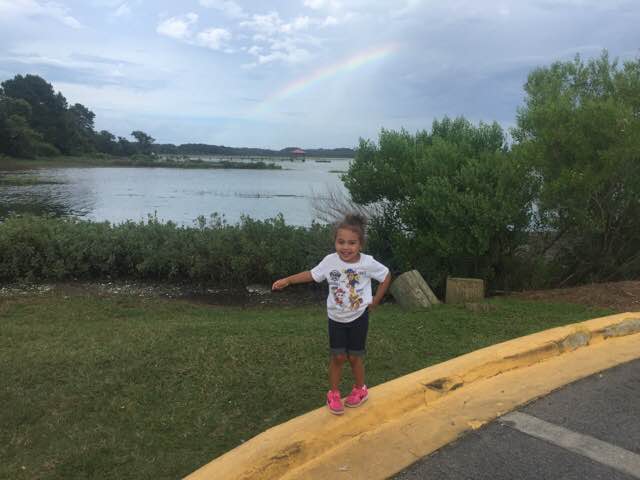
The rain poured as we ate our seafood. When we came out, the rain stopped as suddenly as it had started and a beautiful rainbow stretched over the water of the inlet. Lydia was overjoyed to see her first rainbow in person.

IMG_3475

She jumped up and down and loudly proclaimed, “Mommy, that’s my first rainbow I see. That means God loves everyone, everywhere! God loves the whole world!”

At the end of our trip, that was the hope-filled benediction I needed to hear. Some words of healing from the mouth of an almost three-year-old—that especially in the places where it hurts, the love of God is there too.

We return again and again to our calling to be the people of God who hope and love in ways that seem impossible. But we do it. And we work for justice and for peace. We must.

Indeed, God loves everyone.

leah grundset davis

Rev. Leah Grundset Davis is the communications specialist for the Alliance of Baptists. She lives in Bristow, Va., with her husband John, daughters Lydia and Sadie Pearl and dog, Moses.

Joanne Costantino: Everyday Love and Tenderness

“Let all you do be done in love.” I Corinthians 16:14

connie and frank wedding

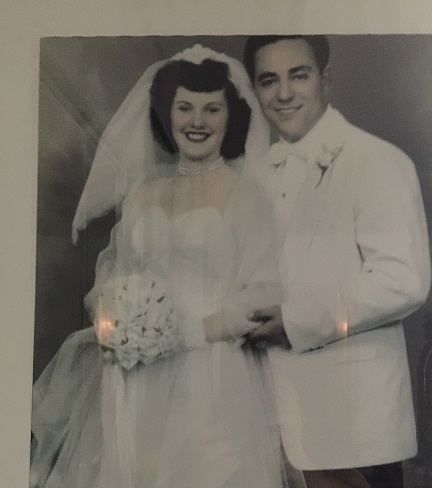
As I sat with my Mother-in-law in the Cardiac Cath lab for a ‘versioning,’ waiting for her turn to be prepped for the procedure, I felt my cell phone vibrate. It was my father-in –law. I answered assuming he was just checking on his wife of 60 years.

“Joanne, this is Pops. I’m lost. I don’t know how to get back home.”

`I said to Mom, “I’ll be right back,” and exited to the hallway.

He could clearly identify where he was. I tried to talk him through getting his bearings, but the more we discussed, the more confused he became. I had left an already anxious woman alone while she waited her turn to have electricity zapped to her heart to regulate rhythm. So after instructing him to stay put I called my husband Mike and put him to the task of getting his Dad safely home.

Mom asked what Pops wanted and I somewhat lied, saying I didn’t have the answer he was looking for and had told Mike to call him. But it was obvious she suspected there was more to the phone call.

Once we were through with the medical procedures and well rested at home, we asked if there were other episodes where Dad got ‘lost.’ Mom acknowledged there had been a few, but that lately it seemed to be happening more frequently.

That was over three years ago. After medical testing and evaluations the suspicions were confirmed. Dad has moderate dementia.

mom&pop 2015

My own grandmother slowly deteriorated with dementia. I remember that her ‘episodes’ affected my mother mostly through hurt feelings. But it was my father who truly suffered the heartbreak of seeing his own Mom become a stranger. She often relived years he could not know, those first twenty years of her life in rural Ireland, sometimes speaking in Gaelic as if we should understand what she was saying.

That is where we are with Pops.

Physically, at 84 years of age, he’s still pretty much a bear of a man who did manual labor most of his life. Mentally, his mind has betrayed what he and his wife had counted on as the “Golden Years.” He has always been loving but ornery. Lately he’s been ornery more often than not.

If you were to ask Mom how things are going, she will shrug her tiny shoulders and say, “Hangin’ in there. Doin’ the best I can.” And that would be the extent of the conversation.

She won’t tell you about his midnight jaunts when he leaves the house to go to one of his ‘side jobs.’ He often worked two and three jobs at a time while Mom took care of their five children.

She won’t detail for you how he claims someone, somehow was in their house and stole a very specific amount of money from his wallet, when in reality he simply hid it and forgot where. She also won’t tell you that the huge hole in the ceiling is because he tried to fix something and eventually decided the fix wasn’t needed after all. She won’t tell you how sad she is to see him do these strange and uncharacteristic things.

This is not her Frank.

We have tried to convince Mom and Dad to consider alternative living arrangements, considering their safety and well-being. But Dad won’t budge. I understand. He knows his own home and in that, there is his personal sense of security.

When I’m with him and realize he’s ‘gone off’ into another time and place, talking about what he did and who he was with and the conversation that happened as if it were present time, I just ‘go with it,’ hanging on to every word he shares. For me, he’s giving me a glimpse in to his past, like a family history lesson.

My siblings-in-law have a different perspective than I do with this inevitable progression of dementia. I understand that, too. They are missing their Daddy, the bear of man who hugged you and then kissed both of your cheeks, with a “Mmmmm. Love ya!”

They are missing the everyday things that defined their Daddy. They miss his velvet voice singing Italian lullabies and Frank Sinatra love songs, him strumming his ukulele while sipping his homemade red wine in the kitchen. They miss the pet names he had for them, like, Rags or Moose or Murph. Because he doesn’t remember.

Most of my understanding is with Mom.

My sainted mother-in-law is torn between preserving her husband’s dignity and the emotional exhaustion of his episodes, which sometimes relive a time she’d rather not. This is not the same man who pursued her in their dating days . . .  and yet he is, during tiny moments here and there.

Maybe those moments sustain her to make every day as ordinary as possible for both of them. She does this with extraordinary strength and grace, love and tenderness. She is his wife and she loves him.

As I watch her care for him, I hear a whisper that love is bigger than shared memories. That even when we forget who we are or lose our way, we are yet loved and valued. That even when, piece by piece, we are losing who we have been, we are still precious to the ones who love us. And to the One who loved us before we knew who we were and loves us through and beyond the day we might forget altogether.

mike and Joanne prom
Joanne and one of her five grandchildren, Mikey

Joanne Costantino is a Philly girl and “cafeteria Catholic” laywoman living in the wild suburbs of South Jersey, where she still pines for city life. She graduated from college in 2008, two weeks shy of the birth of her 4th grandchild and now there are five grands. The “accidental matriarch” of a life she didn’t sign up for, Joanne chronicles that life at www.weneedmoresundaydinners.blogspot.com. We do indeed need more Sunday dinners.