Wonder Women and Their Socks

Last week I wrote about the inspiration of a week full of Wonder Women. From a Zoom meeting of women lead pastors to the re-start of a women’s Bible study at the church I now serve to Baptist Women in Ministry of North Carolina’s 40th Anniversary Symposium (I am still thinking about that phenomenal cake!!), I was filled to the brim in the presence of such Wonder Women.
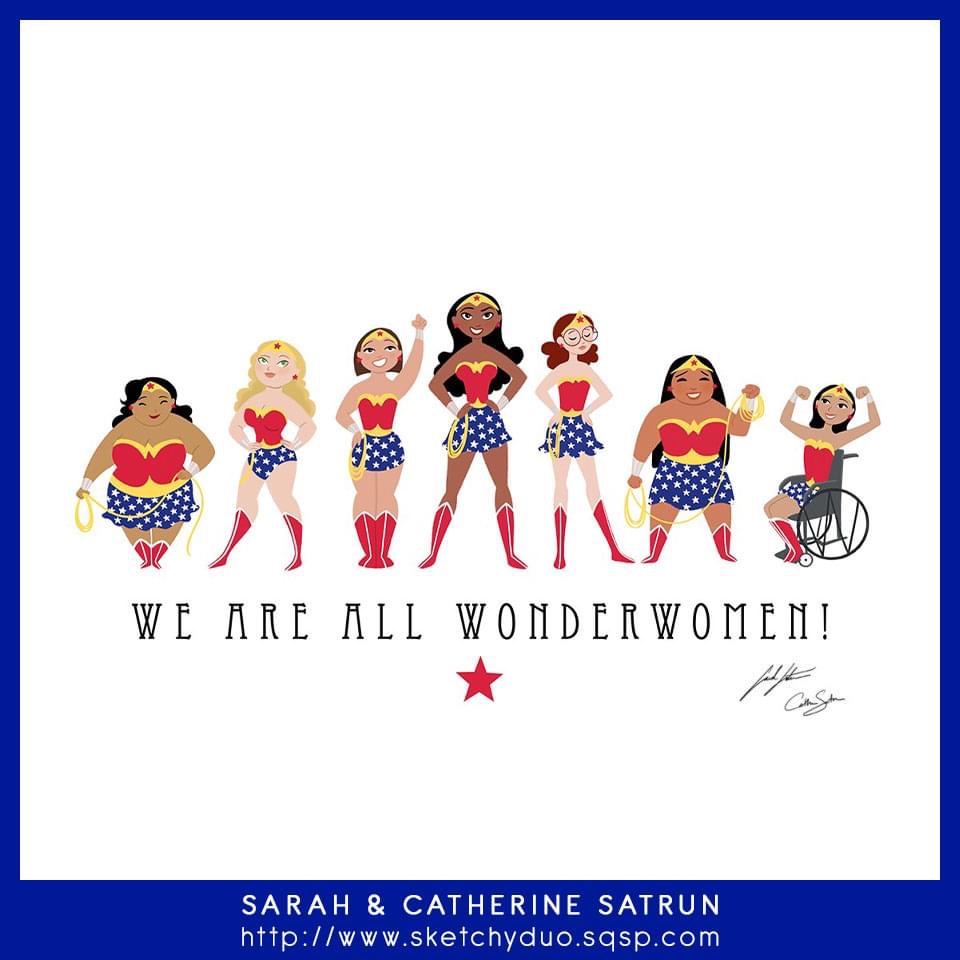
A more seasoned ministry friend, whom I deeply admire and love serving with whenever possible, noted that the artwork I shared by the immensely talented twins, Sarah and Catherine Satrun did not include her more “full of years” (Gen. 25:8) group.

“None of these Wonder Women look like women of my ilk— you know, decrepit, wrinkled, spry, with compression socks. Jus’ sayin’. In our caricature, though, please do keep the twinkle in the eye!”

This led to a conversation about my love for Wonder Women of a certain age (my years as an eldercare chaplain were some of my favorites!), which led to a chat about WW themed compression socks, which she swiftly located. Always resourceful!

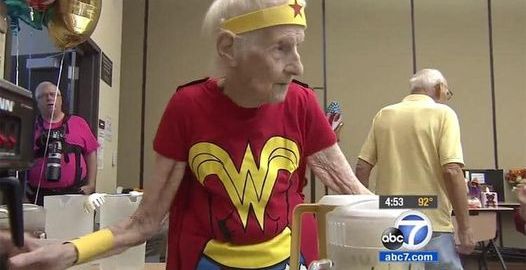
She also found a photo that I immediately saved on my desktop.
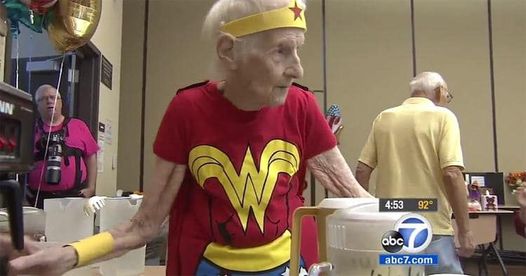
YES to every pixel of this. YESYESYES!! Friends, this Wonder Woman was 103 when this was taken! Read more about her here.

YES to those who have gone before and lived with courage and whole-hearted love and perseverance and compassion for themselves and others and who still, as they adapt to the last season of this life, open their hearts to what is now.

That’s my favorite aspect of the Wonder Women of a certain age in my life: the ability to honor what has been—what worked for them, what didn’t work for them, the truth of their experiences without rose-colored or doom-colored glasses—AND to be present to the now, to value that the world is always changing, and to not hold the women or the world of now to the shape and substance of the past.

When I am in the presence of a woman who can hold her story with respect and grace and love and also make room for others’ unique-yet-connected story…I know I am with a true Wonder Woman. That space is holy. That space is filled with the love that makes all things possible.

We can do both. We can honor what has been and what worked in the past and how hard certain things were that aren’t that kind of hard anymore. And, at the same time, we can honor what is happening now and how what used to work isn’t working anymore and lean into the desire for transformation and adaptation. Living with that kind of versatility is wisdom in motion: willingness to be malleable, responsive to the Spirit, leaning into reflective learning.

Years ago, I served a community with two prominent women leaders, whom we’ll call Polly and Alice. Both had a deep passion for loving God and loving others. Each had her own gifts to bring to the table and contributed greatly to the ministries around them.

They could not have been more different.

Polly wore vibrant clothes, laughed often and loudly, and taught her Sunday School class even after macular degeneration limited her vision. She procured a special machine that enlarged the writing in her quarterly until she could read it and kept right on leading the friends with whom she had walked most of her life.

She once told me she planned to teach until she couldn’t see anymore–and then she might learn braille! I’m pretty sure she was joking about the braille. But with Polly, you never knew—she just might do it.

Alice found her niche in missions. She’d led women gathered in someone’s fancy, seldom used parlor to learn about missionaries serving in places they struggled to locate in a map. They prayed for missionaries and raised funds in all sorts of creative ways, from collecting dimes in tiny cardboard church-shaped boxes (which fascinated me as a child!) to selling baked goods and cookbooks and crafts.

Alice struggled hard when women’s interest in missions began to shift from learning about “foreign” missionaries to doing hands-on missions in their own communities or traveling to participate in missions around the country—and even the globe. On Wednesday nights, more women opted for Bible study rather than the traditional missions study. Their call was to study scripture and live it out by doing missions themselves, making an impact right where they lived.

Alice became deeply frustrated when she could not influence younger women to do missions like their mothers or grandmothers did. She worried that “no one cares about missions anymore!” As we humans often do, she couldn’t quite make the shift to what had already shifted and was never going to shift back. Her grief for what she viewed as “lost”–the old, familiar, defining ways–was so powerful and so painful, that she couldn’t quite see the good that was happening in new, different ways of living missions.

I know now that in a way I didn’t know then that sometimes grief comes out with protective fronts like frustration or judgment, which make the grief hard to hear. Looking back, I realize that sometimes, in both ministry and my own spiritual journey, I have missed the deeper grief as I tried to deal with (or duck) the sharper, protective emotions coming my way. I want to keep becoming more attuned to the grief underneath, to listen for its tones in those protective emotions and know that what I am hearing is pain, fear, loss–grief.

During that season of ministry, I told my husband, “I want to grow up and be Polly.” I still do. Imperfect, colorful, determined to use her gifts as long as she could, finding ways to adapt and giving room for new learning. Polly absolutely would have worn Wonder Woman compression socks.

I want to as well. I also want to keep learning how to lovingly tend to my own grief, listening for my own protective measures– criticism or anger or judgment–and recognizing that they connect to something that hurts. And the first step to healing that hurt is realizing that it exists.

As I keep getting fuller in years, I want more twinkle in my eye, more compassion for myself and others. I want to give more room for others to be, to create space for those who come after to make their own ways of living out their faith—and know that, just like I did “back In the day,” they need support for the hard work of figuring it out in their own setting. When the things I hold dear shift, I pray for the grace to grieve what was so good for me for so long and trust that God is still, as always, doing a new thing, a new good thing.

Both Polly and Alice were Wonder Women in their own ways. They taught me so much. I think maybe Alice just forgot for awhile that her tiara could also be a boomerang—more than one thing can be true at once.

In fact, a whole lot of things can be true at once, including the rich variety of Wonder Women, of every age, size, style, spirit and socks.

Photo from https://myfavoritescrubsllc.com/collections/women-compression-socks
A Week of Wonder Women

This past week I had THREE different opportunities to be in the company of Wonder Women. Women whose unique brilliance shone bright, simply by their presence in the room. Women whose compassion showed in the way they welcomed others, embracing old friends and warmly connecting to new people. Women whose commitment appeared in how they intentionally engaged with others, truly listening, seeing, and valuing the other.

There’s just something powerful that I see over and over in a gathering of women–the laughter, the connection, the kindness, the willingness to show up for one another. A room full of Wonder Women.

The first gathering was via Zoom, a group of women lead pastors that I was graciously invited to help shepherd as they form a Peer Learning Group. In every face in every square, I saw glimpses of their gifts, their calling, their perseverance, their love for God and God’s people so apparent even in our first meeting. Women who pastor in faith traditions that are late to the “and your daughters shall prophesy” party are a courageous kind. There are layers upon layers upon layers of realities women pastors face that may not be apparent on the surface. What a privilege and honor to get to walk and learn alongside these Wonder Women as they keep following God’s call on their lives, step by step.

The second gathering was a Women’s Bible Study at the church where I now have the privilege and honor of serving as Minister of Missions. The church has a rich and meaningful history of Bible studies oriented to women through the years. So there was serious positive energy about getting to re-start this ministry after a long, hard pandemic pause.

About 30 women gathered around tables in our Fellowship Hall and several others are signed up to join us. As I looked around the room last Wednesday night I again saw the wonder of women who show up for one another. Women who know hardship and pain, who bear losses carved on their bones, whose joy and goodness rise in a thousand ways. Women whose commitment to deepening their relationship with God and one another is reflected in their willingness to set aside this time to slow down and open their hearts. It’s perfectly fitting that we are learning about lesser known women in scripture who followed God’s call and changed the world. Wonder Women studying Wonder Women.

The third gathering was the Baptist Women in Ministry of North Carolina Symposium and 40th Anniversary Celebration. It was my first BWIMNC gathering after six and a half years out of state, where such an organization didn’t exist, much to my disappointment and grief. A small group of women in ministry in the town where we served in West Virginia tried to gather quarterly and it was always a gift to be together, but it was hard work to make it happen. I had several Wonder Women there who anchored me in stormy times–and still do. They truly helped carry me through some of the hardest days in ministry I have ever experienced.

But having an organization like BWIMNC to organize, advocate, educate, and support us as we together follow God’s call is priceless. No one has to add corralling calendars and emails and people for a gathering onto our already overflowing ministry–and usually motherhood–plates, because BWIMNC is doing all the heavy lifting, executive functioning, and execution for us. PRAISE GOD FROM WHOM ALL BLESSINGS FLOW! And Ka’thy Gore Chappell, one of Wonder-est of Wonder Women, and her team do faithful and fantastic work in ministering to us.

Everywhere I looked in that room–Wonder Women. So much creativity, compassion, determination, loving-kindness, wisdom, and a bevy other blessings filled that space. Each woman bearing scars and tending wounds, even as they honor the scars and minister to the wounds of those they serve. Each one profoundly gifted and shaped for what the “such a time–and place–as this” that God has called them to in this moment. Each one with questions, struggles, stories, and testimonies to God’s faithfulness and learning things the hard way.

There was no “ideal” woman I met this past week. They don’t exist. Yet we were all ideal in the sense that we were willing to show up, to listen, to be changed, to honor what God is doing in and among us.

I want to spend more time this weekend giving thanks for the Wonder Women I met. And I want to spend more time in the days to come seeing–really seeing–the Wonder Women around me…and letting them know how wondrous they are, just by being who God God has created and is calling them to be.

On Fouls and Freedom

Last week, I wrote about becoming the referee in our own lives.

The writing had more of a prophetic voice than the pastoral voice that comes naturally to me. Usually I lean toward reflective, careful, warm, pensive ways of sharing and being with people. Pastoral care (spiritual care) is at the center of ministry for me. 

But in that post, like ancient Israel’s prophets or John the Baptist, my tone was far more clear, direct, and definitive. Declarative. “No one gets to tell you, ‘no harm, no foul.’ You are the ref in your own life. You are the steward of your experience. No one else.” 

I squirmed a bit as I prepared to publish. I heard that clarity and sharpness—not sharp like a knife, but sharp like focusing a picture. The opposite of blurry. But, ummmm, different. 

Is it OK that this sounds different? What if people are confused or put off by the shift in tone?  Should I go back and soften it? 

After some pondering, praying, and processing, I sensed a settledness about publishing it with the original sharp focus. Here’s why: “Pent-up truth-telling tends to come out with some velocity on it.”[1]

Here’s my why:

I’ve worked so hard for so long to even get to a point where I had words about becoming the ref in my own life. So many things about me, from being a white woman raised in suburban Atlanta in the 70’s and 80’s to my particular family story to my birth order to my interior hardwiring to living as an Enneagram 2 to being taught that Jesus only wanted me for a sunbeam (a lesser sunbeam, of course, because girl) for so, so long, plus a dozen other realities, shaped me to be someone who had to work for years to tell the truth about what I experienced, what I felt, what I saw, what I knew to be real in my own personal journal

Journaling became essential for me in middle school. I discovered then that writing helped me figure out what I was thinking, feeling, or experiencing. A true extrovert, verbal processing is how I make sense of things. There were so many voices in my world, right at my ear, always speaking so loudly and with so much authority that I had trouble hearing myself. 

As a teen and young adult, much as I might argue my point of view or stomp off when I wasn’t heard or speak with sureness and even arrogance to say my piece, right under that veneer was a sea of self-doubt, and even more so, self-distrust. Not just, should I have said ?! Or Oh, wow, I didn’t handle that well! or Ugh, I’m so embarrassed. All of which are awkward and hard enough.

But something much deeper was at play. Other people’s points of view and perspectives and versions of the truth took up almost all the space in me and in my world. In a black-and-white/either-or/zero-sum system, there can only be one winner. Other voices dominated. My inner voice got smaller and smaller and smaller. It was only with intense velocity that the deeper truths could come out, which I usually regretted–or was made to regret–immediately. So that inner voice went down even deeper.

I often came across as confident and self-assured. I was neither.

So journaling became a refuge, a place to hear myself. Yet, even in my personal journal, I would often hedge my language, editing myself before the words even made it from pen to page. 

No one else was reading my journals (thank God!). But I didn’t need to experience anyone judging me or making fun of me or telling me that I was “crazy” or “too sensitive or “too angry.” I had internalized all that feedback, all the verbal and non-verbal corrections, all the nebulous codes of “how to be and be seen” to such an extent that I fed back, corrected, and coded myself automatically. 

I didn’t even realize I was doing it for the longest time. I’d just shut my journal with a strange sense of sadness, not realizing I was shutting out myself. It took decades of journaling and growth and hard things I could no longer shut out and a phenomenal support system and oceans and oceans of grace to figure out I had other options. 

First and foremost, I had the option of listening to God. Not the “sunbeams, only” version my fundamentalist upbringing had taught, but the God who loves and sees us all. Who understands us better than we understand ourselves. Who hears us before a word is on our lips or formed in our minds. Who designed us to thrive as we love our neighbor as we love ourselves. Who knows why we get stuck in the unhelpful and often tragic cycles that we do and how to help us get unstuck. Whose grace is always writing new hope in our lives. 

In listening to God, I started learning to listen to myself, to the truths I knew, but didn’t think I was allowed to hear or to say. The Spirit slowly, slowly helped me start to hear myself and tell my truth, even and especially if it was just for me.

Years ago, a mentor suggested I start reading the Psalms closely. There the voices of our ancestors gave me permission to lay it all out, spill the beans, pitch a fit, vomit up a torrent of feelings, dance with praise, sing with abandon, and let God work me through it. 

I write the truth in my journals now. Most of the time!

So the settledness around publishing the post as-is came when I realized I didn’t want to hedge anymore. I didn’t want to press “publish” and feel that same strange sense of sadness. The Spirit has guided, prodded, and dragged me too far toward freedom to start backtracking now.  

“I am the steward of my own experience. No one else.” Yep. And I want to be a faithful steward, valuing my own voice as I also value the voices of others. It’s not a black-and-white/either-or/zero-sum game after all. It never was. 

As it turns out, there are far more truths, more possibilities, more room to be than I had ever imagined. Thanks be to God.     


[1] Carolyn Hax, advice columnist. I’m thinking I need this tattooed in my soul. https://www.washingtonpost.com/advice/2023/09/04/carolyn-hax-dog-back-sister/?utm_campaign=wp_carolyn_hax&utm_medium=email&utm_source=newsletter&wpisrc=nl_hax

[2] Photo from https://thewritelife.com/journaling-writing-techniques/

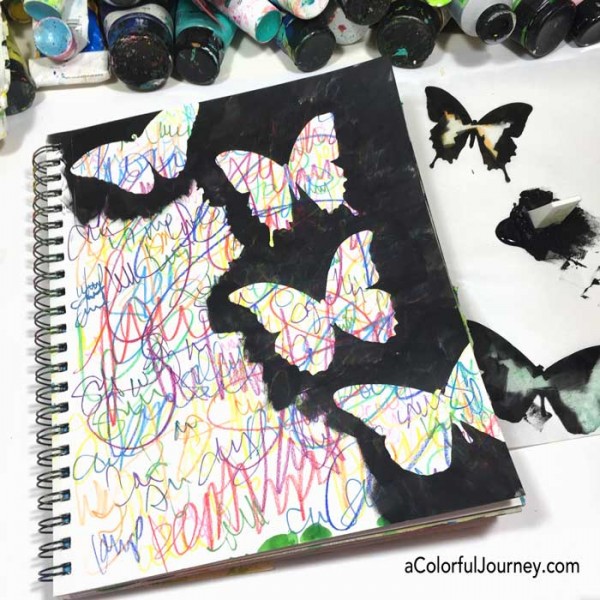
[3] Carolyn Dube created this amazing journal. I’m really interested in leaning into her playful approach to art since I am a stick-figure-at-best artist, but love to create. https://acolorfuljourney.com/colorfully-scribbled-morning-pages-transform-into-butterflies/

“No Harm, No Foul”… No, Thanks.

After growing up watching Braves baseball with my dad, I married a basketball `player. The game feels so fast for me, so intense. I’ve spent so much time asking my ever-patient spouse, “Wait! What just happened?!”

The ever-patient former basketball player spouse who answers my question-on-repeat, “Wait! what just happened?!”

I ask that most often about fouls: “illegal personal contact or unsportsmanlike conduct on the court or sidelines of a game. Most player fouls involve contact that impedes an opposing player’s gameplay.”1

The referees call the fouls based on the rules of the game. Sounds simple on paper. Not so much in real life.

Like most human endeavors, calling fouls is about perspective.

As a non-basketball person, here’s what I’ve been learning over the years: just because a foul doesn’t get called on the court doesn’t mean harm wasn’t done, wrong wasn’t done. Just because the ref doesn’t see it doesn’t mean it didn’t happen. Just because there’s no visible wound doesn’t mean it didn’t happen.

So often, fouls are finessed in such a way that they’re hard to see. That’s why they have instant replay. That’s why sports talking heads spend so much time parsing and arguing over a certain play. Thousands of fans and anti-fans weigh in online. Everybody wants a say: foul or no foul? A player can get seriously hurt and a foul still not be called.

Fouls in real life are different. Everyone may want to weigh in about what “really happened” from their perspective. But the older I get, the more I realize how essential it is for many of us to become the ref in our own lives.

If something hit or hurt, you get to call the foul in your own life, even if you don’t do it out loud. Even if it’s just for your own heart and mind and processing. Tell yourself the truth.

You don’t need to wait for another ref to confirm it or a committee of instant replay parsers to weigh in. It happened to you, you know what it felt like, you feel or remember the power of it, the surprise of it, or the sting of it. It happened to you. You are the expert on what it felt like and how it affected you.

Pleading our case to get those around us to acknowledge our experience places the locus of understanding outside of ourselves. So many women, so many people I know–myself included–have been mistakenly taught not to trust our own experience, our own judgment, our own gut. Too often, we prioritize what others tell us “really” happened or how we “should” think or feel about it and find ourselves doubting what we experienced. It’s a form of giving away our power to name the truth we know in our bodies, in our memories, in our truest selves.

That power exists only within your own skin. Naming what you experienced is about you. Other people don’t get to decide what it felt like in you or how it impacted you or what you carried forward in yourself because of that experience. That privilege and responsibility belongs with you–in you.

Supportive people who center us can help with the process, absolutely and amen. Others who have earned our trust and lived their love for us in compassionate and wise ways—seek these out if and when you need them. Your experience, struggle, and pain are pearls of great price. Trust only others who will treasure them with you, care for them with you.

Be wise in protecting and providing for yourself. At the first whiff of minimizing or hedging from anyone, get the heck out of there. Stop the conversation when you hear someone trying to “fix” the situation by telling you what you should feel or how to interpret what happened before you’re ready to go there (if you ever are—that’s your choice, too).

You don’t have to be “nice” about it. In fact, don’t be “nice” about it. Be kind to yourself with a quick and hard “stop,” hand up to make your point. If it’s someone you normally can trust (who might be having a wonky time of their own), you might clarify, “I’m telling you something precious to me and I need you to listen. If that’s not what you can offer right now, let me know and we’ll pause this for later.”

Looking at a foul, a wound, straight on with open, clear eyes is part of healing. No one gets to tell you it didn’t happen. It happened. It happened to you.

No one gets to tell you, “no harm, no foul.” You are the ref in your own life. You are the steward of your experience. No one else.

  1. https://www.masterclass.com/articles/how-fouling-works-in-basketball
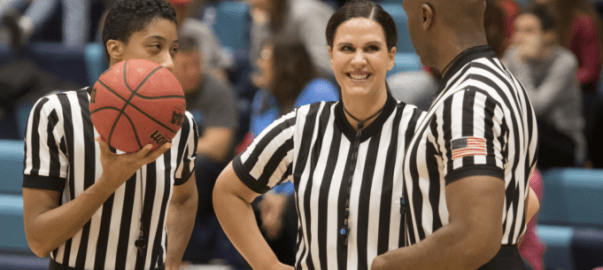
  2. Referee photo: From left, Stacey Thomas, Novi, Mich.; Lindsay VanDyken, Jenison, Mich.; and Charles Smith, Fort Wayne, Ind. Photo Credit: Ralph Echtinaw. Source: https://www.referee.com/dont-sell-your-halftime-short/

A Sink with a View

In 27 years of marriage, we have lived in four different houses. In 27 years of marriage with three children born in four years’ time, I have spent huge chunks of my life standing at the kitchen sink in each of these four houses. Thankfully, each sink had an interesting view. 

Our first home in Sanford, NC was a little brick cottage built in 1949. Character rested in every heart-pine plank of flooring, which a kind-hearted church member refinished for us at cost when we first moved in. Thank you, friend. Those gleaming floors led into a partially updated kitchen with a double sink.  

That sink seemed to birth litters of dirty dishes. Standing in place, I wrestled the tops of hundreds of sippy cups, prying apart their innards using my fingernails and some hanging-on-by-my-fingernails language. Pyrex casserole dishes soaked there in hopes of less scrubbing later. Baby oatmeal, peanut butter smears, soaked-then-dried Cheerios conspired to a concrete crust that awaited my efforts after nap time. 

Elbows deep in suds, I once tried to calculate how much time I spent at that sink. But I gave up because that required math-ing, which required more of my always-leaking-out energy than I had to give. I kept scrubbing. 

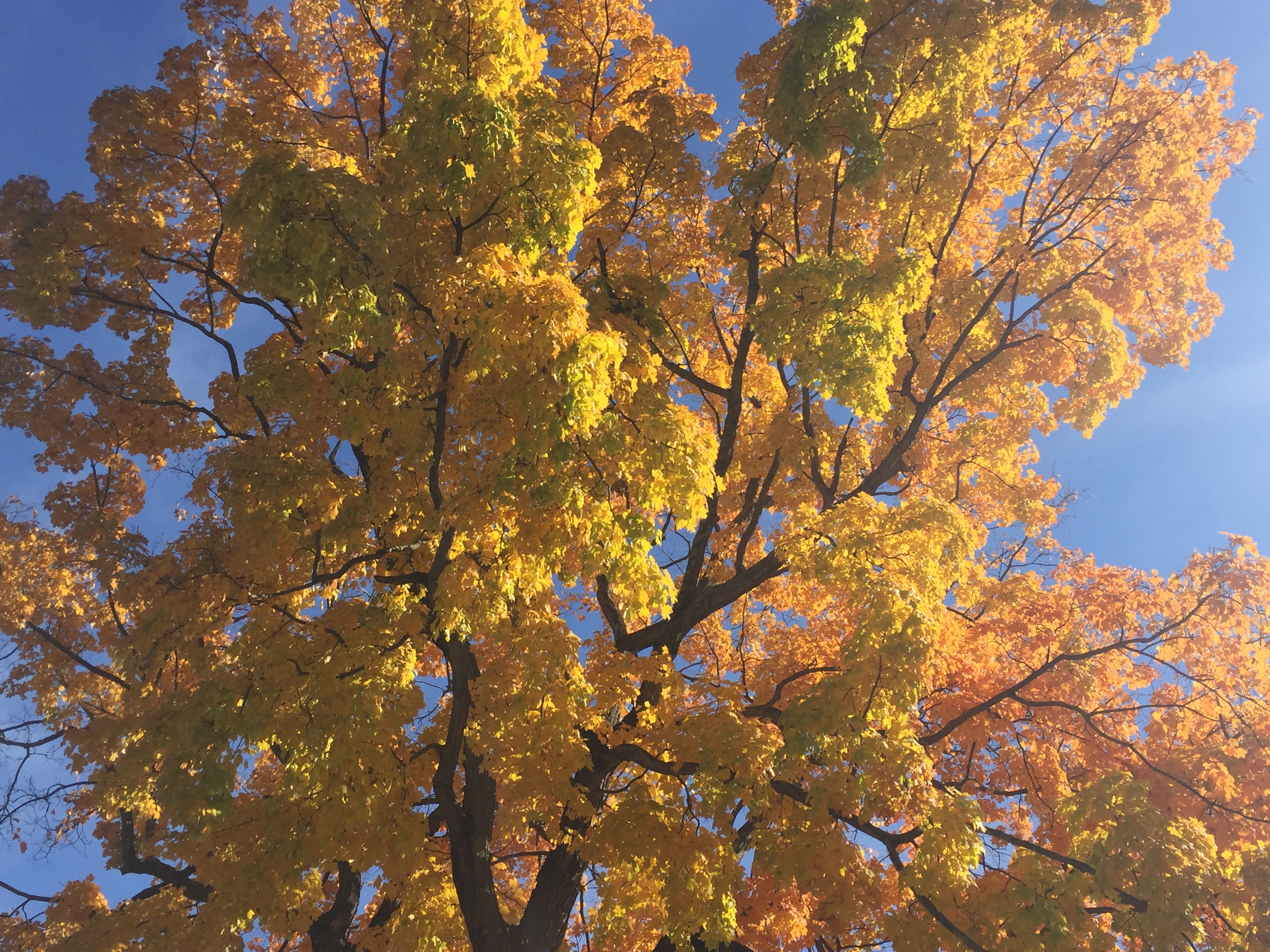
My neighbor’s full, graceful maple tree filled half the window’s view. It was old enough to have spread itself up and over their 1950’s ranch and most of their small backyard. Its twin sheltered our backyard. 

One fall afternoon, when Eric was the P.O.D. (parent-on-duty), I dragged a lawn chair under the branches of our maple to sit under its golden-yellow glory. Looking up, I felt the wonder of creation and my tiny spot in such a grand story. 

I could only enjoy our backyard tree when I was outside playing with the boys or raking up its multitude of leaves in November. I could also see it if I turned my head a bit farther than was natural as I rocked and fed our babies in the nursery, the only room with a view to that part of the yard. 

But every day, several times a day over a decade, I had a perfect view of the neighbor’s maple. Standing at the sink, doing the mundane reproductive labor of washing the dishes while caring for three tiny people and serving as an eldercare chaplain and running through the many lists in my head of what else needed to be done by when, I had a glimpse of the sheer gift that it is to be alive in this world. 

I remember standing with my mother, who had come up with Dad for a fall visit, and remarking that looking at that tree was like “sipping sunshine.”  We were side-by-side, one washing, one rinsing and drying. As our hands worked in tandem, we both lifted our eyes to the tree and then smiled at each other. She knew exactly what I meant. 

At our next house in Wilmington, NC, the sink was situated for perfect sunset viewing. Our neighbors across the street had a Bradford pear that turned a rich burgundy red that lasted, in that warmer place, long into Advent. 

I stood at that sink for nine years, shepherding little boy plates that turned into big boy plates that turned into breakable, everyday adult plates. There I washed my last sippy cup. My last chunky baby spoons. Endured my last can-this-bib-be-saved maneuvers. 

But, I kept the little melamine Thomas the Tank Engine bowl, which we still use for single snack servings. It survived the past two moves. One to West Virginia, where the kitchen sink welcomed me with view of the hills laced in morning mist or stained with evening’s last light. Over our six years there, the number of dishes reduced by one person as our oldest began and finished high school and then headed off to college. 

And that little bowl survived the last move in January back home to North Carolina, this time in the East. Here the sink faces an ever-changing mosaic of shared-with-my-neighbor green foliage, long leaf pine, and Carolina blue skies that meld into each sunset’s palette. The last of the sun’s rays poke through the spaces between the branches, slowing the transition, saying a long last Southern goodbye. 

Our second child is off to college now, too, so the washing up load is lighter most days and mostly free of plastic, besides our rotation of reusable water bottles, which are notably reminiscent of sippy cups in their resistance to being cleaned.  

So much has changed in the 27 years of four sinks, each with its own gift of a view. I am still me, yet so very different from when I first stood at that sink in Sanford, NC, gazing at that glorious maple. 

That first sink saw me become a minister (officially) and become a mother. I am still these things. God is still faithful. 

It has been a long, hard season in my little part of the world. And the leaves will still turn, the sun will rise and set in splendor, punctuating our days with blessing and beauty. 

The view from the sink never fails to say something I need to hear. Thanks be to God. 

Starting Again

Over the course of 2022, I had not one, not two, but three different physical challenges that sent me to physical therapy. Because each challenge involved a different part of my body, I worked with three different therapists during that time. The gifts and skills of all three therapists, as well as a perfect-for-me therapy assistant, helped me through the toughest year of my life so far.

Because I was there so often that painful year, when I signed in each visit, I had to pause and think hard before filling in who I was seeing that day. Too much change. Too many problems.

But something stayed the same every single visit: the collection of inspirational posters lining the walls of the big treatment area. No matter where I looked, there was some strong man in an outdoorsy photo coupled with a grit-centric saying. “Determination: never stop pushing for what you want” or “Commitment: stay the course no matter what.”

I can’t remember what they actually said because they said nothing to me. At least nothing that my ears could hear as encouragement or blessing. I understood that the intent was to push us toward our treatment goal. I wasn’t confused. I was just exhausted.

I had nothing left in me that could push or stay the course. I felt empty. Worse, I felt trapped.

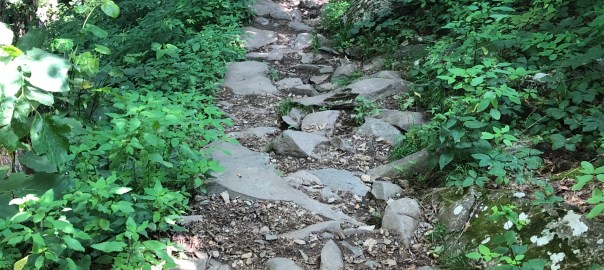
A long string of loss and struggle and grief had needed my attention for years. But over an eight year period I found myself in a seemingly endless season of unfamiliar shifting circumstances. I couldn’t find my feet in this new terrain. What I thought was solid ground often gave way. Hidden stones jutted just under the surface. I lost count of the times my step landed wrong, jarring me down to my bones.

All of my pastoral skills, all my chaplaincy training, all my theological thinking, all my passion for scripture and prayer and compassion and grace, all the wisdom of a lifetime of mentors, spiritual friendships, study, openness to learning and commitment to working through my stuff…none of it helped me find my way out of that maze of broken ground.

Even so, those things helped me get up and keep walking, over and over again, like PT for the soul. God was at work. I kept going, picking my way over sharp edges, trying to avoid loose stones, concentrating on each footfall, treading diagonally on the steepest declines, growing painfully familiar with falling.

Each rising was harder than the last one. I kept hoping the trail would even out, grow smoother. I just had to keep trying, keep going.

But after too long traveling that way, I was grit-less.

PT helps us find ways to work with or work around some part of us that isn’t working like it should. Contrary to the messages on those posters, what that year of PT did for me was help me come to the end of my grit, courage, and determination to get back up and keep going. That was the only way things were going to change.

In the middle of my work with one PT specialist, I found that things were suddenly getting worse, not better. Troubled and anxious, I perched on the examination table and told her how the past week had gone. I remember her tilting her head, listening closely, and then saying, “You know, sometimes we can work so hard on strengthening that we forget how important it is to soften, to release. So let’s focus on that today.”

Wait, what?!? I had no idea that was available to me. I had no idea that was part of the process.

She took me through a slow series of stretching exercises. We focused on my breathing. We worked on me actively relaxing certain muscles. I’d been strung so tightly for so long, it took intense focus to let myself let go.

Something shifted in me that session. As I moved through the series of stretches, she asked me more about what I do as a pastor. What I told her was what I wanted to do, what I value, what I believe is vital for the body of Christ, what I long to see in us and for us.

“I didn’t go into ministry to give my life to an institution,” I surprised myself by saying out loud. A long, slow, once-trapped breath suddenly poured out of me. She heard me. I heard myself.

Over time, I learned I could stop trying to walk that rock-filled path. I realized it wasn’t the only path. I started to give myself permission over and over to put down my determination, grit, courage, boldness, and whatever else the poster preachers demanded. I really didn’t have much of a choice anyway. Everything in me was so tensed and tied up in trying to be resilient that I was practically paralyzed.

In time, a new path emerged in that wilderness. In time, I’m becoming healed and rested enough to start again. But God knows it’s been a starting again that looks very different from how I have ever done things before. And thank God for that.

So here we are, starting again. Ten years after the publication of our book, A Divine Duet: Ministry and Motherhood, this communal blog, Ministry and Motherhood, is ready to take some new steps after a hiatus. Join us.

Here’s the details:

What and When: 500-1000 word pieces are due on Thursdays. Single spaced, 12 point font. Photos welcome (with credit as needed). Pieces will be lightly edited and formatted for the space. Send to hello@ministryandmotherhood.com.
What to write: Share where you are, what you’re learning, what you’re up against, what you’re thinking about, what you want to say about ministry, motherhood, and anything else the Spirit is stirring in you. This is a space for saying what you want and need to hear yourself say.
Support: Need help zeroing in on a topic or exploring what you want to say? Want to write but feel overwhelmed or a little reluctant? I’ll be delighted to schedule a conversation for support and processing space.
Why write?: Women called to ministry have things to say that our church and our world need to hear. Women have always been part of the story. If we don’t tell our own stories and frame our own reflections and insights, they tend to get lost in all that’s overflowing off our already full plates. • Purpose: To mutually create a space where we can tell the truths we see, the ones we feel burning in our bones like Jeremiah (20:9).

Contact hello@ministryandmotherhood.com to learn more and sign up for a week that best fits your life and schedule.

In the meantime, blessings for all who are starting again in big and small ways. May we know in heart, mind, and body that God is with us…as God always is.

Limping into Advent

The people walking in darkness have seen a great light; on those living in the land of the shadow of death a light has dawned . . .                                           Isaiah 9:2

images-1

It was dark, in those days. Very dark. Rome ruled Israel, the latest in a long line of conquerors. David’s line seemed all dried up after a succession of useless kings who led a great people to ruin. Caesar had ordered a new census with an eye toward his coffers.

The more people he could account for, the more taxes he could raise; the more taxes he could raise, the more people he could conquer. And so on and so on.

There was no one to challenge him in those days, no one who could shake the grip of the Roman Empire. Israel was a conquered people doing the will of a Caesar they neither chose nor revered nor trusted.

And so it was that Joseph put Mary on that donkey to take the long trip to his ancestral home of Bethlehem. They were not going for a great family reunion, tables laden with favorite foods and local delicacies. They were not headed home for a religious celebration with its own time honored traditions and deep roots in their faith.

They were doing the bidding of Caesar, whose command had come at just the wrong time for their lives, just when Mary’s pregnancy was coming to an end. When she should have been home in Nazareth surrounded by relatives and neighbors who could help her through the trial of labor, she was far from home, alone with only Joseph to attend her.

There was nothing about this story that seemed right, nothing that felt warm or homey or comforting. Mary got pregnant too early and under circumstances no one could believe. Joseph, confused and angry, was ready to quietly un-engage her, until an angel intervened.

And if that wasn’t enough, Caesar interrupted the whole thing with his call for a census, requiring a trip to Bethlehem, a place far from the home and family they knew. They would travel all that way, endangering themselves and the baby, so their conquerors could collect more tax money. This is not a happy story. Not yet.

If you are hurting or angry or confused or just plain weary this Advent season, you are in good company, at least according to the actual Biblical story. If you are lonely or grieving this Advent season, your story is their story, a people who had been conquered for centuries, wondering if God had forgotten them. If you’re not up for being full of good cheer and cringe at the thought of trying to do or attend all the things (that are roaring back fast this year) you are not being a Grinch.

In fact, you may know better than most the real struggle in this story we know almost too well. Perhaps those with troubled hearts might just have the ears to hear the depth of pain and longing the “holly jolly” approach has written right out of the story. This is the quiet story, not the one of hustle and bustle and ringing cash registers.

This is the story that makes room for pregnant teenagers and confused husbands and people who wonder what God is up to—or even sometimes, if God is up to anything, but who go anyway. This is the true story, according to scripture, the story that has almost been drowned out by demands for good cheer and rushed festivities that actually have little to do with the nativity.

The birth of Christ was as far from a Hallmark Christmas special as it possibly could be. Don’t be snowed by the hype. If you are hurting in any way, if your heart is troubled, if you are limping instead of leaping, this is your story.

Advent is a time to prepare for the light coming into the darkness, which means that there is indeed darkness in the story. It does not have the last word, praise be to God. But the darkness is there, the struggle, the loss, the grief, the disappointment and anger–no matter how hard the marketers push to convince us otherwise. In the past twenty months, many of us have met new shades of darkness we’d not encountered, in ourselves, in those around us, in our world.

If you are searching for the light, longing for it amidst the darkness, limping into Advent, you are not alone. The Bible tells us so. May we wait together in the darkness, searching for the light that cannot be overcome.

IMG_1447

Rev. Alicia Davis Porterfield has served as a chaplain and writer and currently serves on pastoral staff in a local congregation. This post originally appeared in December 2015. Since the original publication just weeks after Alicia lost her father, she has moved with her family from one region of the country to another, left one ministry position for another ministry position, and lived through moving her mother to a memory care community, sending her oldest off to college, and learning to navigate a global pandemic. She is definitely limping into Advent this year.

Loss, Love, and Cataracts

Something hard happened to me recently and it has knocked me for a serious loop. Of course, this hard thing happened during a global pandemic–which means resources were already low and energy drained.

It’s been a year and a half of pivoting, pivoting, and pivoting again; adapting to the first guidelines and then to the new guidelines based on new information, and then to the newest guidelines as numbers rise in our area; regularly working through all the questions: worship inside? outside? online? all three? when? how? with all the ensuing details each decision requires; and then providing pastoral care for the myriad strong reactions elicited by this constantly changing landscape.

It’s exhausting and frustrating for the congregation. It’s exhausting and frustrating for the pastors …and anyone in any helping profession …and anyone who is, well, human.

And then there are all the family adaptations and pivots and adjustments: online school or in person; masks or safe without them (thanks, Delta for ruining that!); class demands stacking up; the online hunt for the assignment list; extra days added onto the end of an already excruciating year for teachers, students, and families.

In the midst of this hard season, the other more “normal” hard things of life–illness, accidents, relational challenges, practical challenges, job stress, family needs, human error–feel so much more intense because we don’t have the reserves to deal with one more thing.

My years as a healthcare chaplain taught me that just as “deep calls to deep at the thunder of your cataracts”(Ps. 42:7), loss calls to loss within us. Every new loss contains some of the echoes of old losses, old struggles, old pain.

In this on-going season, so much has been lost. And the losses keep coming, no end, no break in sight, each one stirring up parts of our stories we might rather stay buried.

Loss keeps calling to loss, over and over.

I’m finding some solace in the next lines of Psalm 42: “all your waves and your billows have gone over me. 8 By day the Lord commands his steadfast love, and at night his song is with me, a prayer to the God of my life. 9 I say to God, my rock, “Why have you forgotten me? Why must I walk about mournfully because the enemy oppresses me?”

Seasons like the one we are trying to live through have been a reality throughout creation. We are not unique and we are not alone. The Psalmist offers wisdom for these days, holding two truths at once: the struggle of being overwhelmed by waves and billows and the steadfast love of God. Out of that ability to hold both, the speaker aims the hard questions right where they belong: with God, the only place they can be held and honored as they deserve.

The final verse contains a gentle self-pep-talk: 11 “Why are you cast down, O my soul, and why are you disquieted within me? Hope in God; for I shall again praise him, my help and my God.”

I don’t have the reserves right now for my own self-pep-talk. I’m all self-pepped out. So I’m praying these verses, asking for help to keep learning how to hold two true things together at once.

CBF Pastors and Leaders Invited to “I’ll Push You” Screening

Great opportunity to be uplifted!

Carrie Harris's avatarCBFblog

I'll Push You - banner.jpg

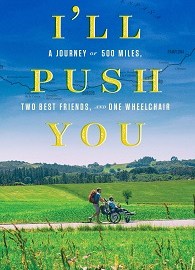
I’LL PUSH YOU is the remarkable story of two friends, 500 miles, and one wheelchair, and its messages of friendship, hope, faith, and community are the perfect antidote to the divisive times in which we find ourselves. I’LL PUSH YOU tells the story of Patrick Gray and Justin Skeesuck, two lifelong best friends. When Justin, who is living with a degenerative muscle disease, expressed interest in making the 500-mile pilgrimage across the Camino de Santiago in northern Spain, Patrick simply responded, “I’ll push you.” The film is an intimate portrait of an epic journey and explores the true meaning of friendship, generosity, and vulnerability. It’s a one-of-a-kind documentary chronicling their pilgrimage, which will resonate with viewers craving stories of faith, hope, love, and the power of community.

View a trailer of I’LL PUSH YOU here.

I’LL PUSH YOU will release theatrically on Thursday, November 2nd, at 7:30 p.m. in over 550 theaters across the…

View original post 88 more words