Friends, I want to share this post today from the Cooperative Baptist Fellowship blog by my wise and gifted pastor friend Rev. Danielle Glaze. We met in Wilmington years ago when our kids were little-ish. I have never had a conversation with or heard a sermon or teaching from Danielle that wasn’t rich with wisdom, insight, and both passion and compassion.
I had lunch with Danielle a couple of weeks ago, our first in person, one-on-one time since my family moved back to NC last January after six years away. We huddled close around a small table at The Peach House in Kinston, NC, a cute, local restaurant (highly recommend!) about halfway between where we each live. Every bite, every laugh, every story fed my soul.
Our lives have both changed so much since we first met! Danielle now pastors First Baptist Church of Teachey, NC. I serve as Minister of Missions at Oakmont Baptist in Grenville, NC. Our kids are older: hers now both young adults gainfully employed (woohooo!) and my three young adults either entering, in the middle of, or about to graduate college (hopefully with gainful employment on the near horizon!).
God has been hard at work shaping us, working in, through around, and sometimes in spite of us. We are both same and different. And Danielle is still full of wisdom. How grateful I am for her.
Give yourself a gift and click the continue reading link below to read her offering, “Creation: God’s Sanctuary.”
I’ve been settling into a new ministry position for the past two months: slowly learning all the names, the systems, the already existing ministries associated with my role (minister of missions), figuring out what is and isn’t working, introducing myself over and over and over to the neighbors and community organizations we partner with…and generally discovering something new each day.
I am truly loving getting to connect with our neighbors and partner with our loving, missional congregation as we seek to love and serve our community. Dozens of holy moments light up each day.
And, whew…I am worn slam out.
Brené Brown’s work around “FFTs” or “freaky first times” (that’s the non-spicy translation) helps me stay in touch with how much work, time, and energy this stage of anything truly is.1 If it’s my FFT doing something, then of course I’m going to be clueless about how to make it happen, anxious because of that cluelessness, and learning—often the hard way– and adapting every second of the experience.
No wonder I am exhausted when I get home! No wonder I am having trouble remembering all the things! No wonder my days off are less fruitful in dealing with “everything else that has to happen to make life work.”
Mom, I had to buy some extra textbooks I wasn’t expecting so can you reimburse me from my 529? Mom, I need to get my sports physical by Thursday so I can try out for basketball. And (from our financial planner), Alicia, please fill out these forms detailing what your family spends annually in these 672 (slight exaggeration) categories.
But in addition to the FFTs, I am experiencing something else significant: embodied grief and the Anniversary Syndrome.
The older I get and the longer I serve in ministry, the more I experience the ancient Hebrew understanding that we don’t just have a body, we are a body. The Hebrew word nephesh, sometimes translated as “soul,” has a rich, layered meaning. Nephesh incorporates soul in its meaning, but not as a counter-reality to body, as Greek thought would later use the word. In ancient Hebrew thought, our soul-mind-body are intimately, wonderfully connected–not disconnected, opposite realities.
Nephesh means “that which breathes,” “a living being,” “a creature.2 The word is connected to breath, the breath of God that gave the first nephesh life. The breath that keeps us alive, physically and spiritually.
When I am anxious, rushed too much, task-overwhelmed, etc., my breathing gets short and shallow. It’s my most reliable sign that my nervous system is “activated,” as somatic therapy describes, and starting to function in survival mode. When I notice the short, shallow breathing, my most reliable calming response is to concentrate on slow, deep, deliberate breaths.
On Monday, I’d just finished leading a particularly task-heavy, congregation-wide community ministry, an amazing time of connection and loving our neighbors. It was an absolute joy! And…waiting on my desk was everything I had set aside to get ready for that ministry. Then, someone needed emergency financial help and I needed to make that check happen. But as the next few days revealed, I didn’t know our system quite well enough and got myself tangled up.
I knew I needed to breathe deep and slow. So I signed up for an online All Saints Day gathering set for Wednesday at 1:00 pm. I needed that time.
But I needed that time not just because I was task-and-FFT-tired.
November has always been hard for me with the loss of daylight, gray weather, trees stripped down to bare. Then, eight years ago I spent the first three weeks of November at my father’s bedside, gathered with my mother and sisters as he slowly slipped away from this life. He was such a stunningly generous gift to all of us. Facing his death with him was the hardest, holiest time of my life.
That loss still lives in me. I, a nephesh, bear that grief still. November is the hardest month. I have to work hard to make space to breathe in November.
And … last November also held the most nephesh-draining season of my vocational life. Things had been hard for some time, but starting in late summer, the intensity shot up fiercely. In October, it rose even higher and kept climbing. I felt trapped in a lament psalm, caught between the “terror of the night” and “arrow that flies by day” (Psalm 91:5).
It was the hardest—in every single sense of that word—and most demoralizing season of my life. That lament still lives in me. I, a nephesh, bear it still. This makes November even more so the hardest month. This year, I have to work even more to make space to breathe in November.
So I profoundly needed this All Saints service, designed and led by Rev. Dr. Eileen Campbell-Reed. I had personal grief and gratitude, awareness of the catastrophic losses going on all around me in our world, and a new layer of vocational grief to lift up to the God who hears. Even just the video of the burning candles during the service helped me settle and breathe more deeply.
But the service couldn’t give me what I had hoped for—because time-sensitive texts about that emergency assistance check kept coming in and I had to respond on the spot to untangle what I had tangled up. I got tangled up because it was my FFT and I didn’t fully understand our benevolence-fund-check-writing system. Everyone was gracious and helpful in helping me work it out, but UGH! What an FFT!
Here’s the good news. Last night my spiritual director reminded me that I could have an All Saints do over. As a living, breathing nephesh, I could try again. It wasn’t like All Saints Day had passed me by and I would have to wait until next year. It wasn’t like God was tapping a foot, sighing, “she sure blew that chance!” Grace abounds.
I could circle back and watch the video, which, thankfully, had been made available to us. Which is what I am doing as soon as I finish this post. I am going to turn off alllllll the alerts, get a cup of hot tea, and breathe as I honor All Saints Day, all the griefs and gratitudes, losses and laments, and simply let God love me and all our lamenting world.
This nephesh deserves that.
Rev. Alicia Davis Porterfield midwifes this communal blog, serves as Minister of Missions at Oakmont Baptist Church in Greenville, NC, and moms 3 young adult-ish men.
Here’s a good explainer about FFTs andBB’s podcast episode on FFTs—warning: both contain a curse word; if that will distract you from her teaching, skip these links. ↩︎
“Hey Mommy, we need to talk,” my daughter, Trellace, a freshman at Georgetown University was in her first college level religion class and she was not happy.
“Mom! The book of Judges is awful! I never knew all this was in the Bible!”
Trellace, born in 1994 after the Cooperative Baptist Fellowship (CBF) split from the Southern Baptist Convention (SBC), was as much a church kid as I had been. But she came along when CBF churches like ours were still trying to figure themselves out; we had not yet created reliable literature to help our volunteers teach kids biblical truths.
Determined not to be fundamentalists, some of us failed to teach fundamentals at all. As a result, there’s a whole generation of faithful little Baptists who missed out on the kind of focused Bible teaching I had received in my formative years.
I was a child in the seventies. I went to GA’s and Acteens on Wednesdays and Training Union every Sunday night. I competed in “sword drills” so much that I could turn to a text in Haggai as fast as I could one in Genesis or Revelation. In the churches of my childhood, “read-the-Bible-through” efforts restarted every January. “Read the Bible Daily” was a tick box on our offering envelopes which we turned in weekly, containing at least 10% of our allowances.
Say what you will about old-timey SBC churches; but they taught us how to be disciplined and intentional students of Holy Scripture.
Trellace also went to church every Wednesday and Sunday. But our church focused on God’s love, forgiveness, and grace and glossed over some of the nastier bits of the biblical narrative. Trellace had hardly even heard of Satan, let alone realized that God takes a lot of heat for ungodly behavior. Judges caught her off guard.
“Levite’s concubine?” I asked her.
“What? No. . . who is that?”
“Never mind.” She’d find out soon enough.
“Okay so anyway, Judges,” Trellace continued. “So much war and devastation. How could God call for all that evil?”
Aha. She’d just begun the book then. She had not even met Jephthah’s daughter yet, bless her heart. “How many times have you read the passages that bother you?” I asked her.
“Um once, why?”
“You need to read them again.”
She wasn’t having it.
“Here’s the thing,” I said. “There are not many things we know with absolute certainty about God. But there are two truths I keep in mind when I’m reading the Bible. First, we know that God loves us more than we can imagine, and mere humans cannot change that, no matter what. Second, we know God is a God of grace and mercy. God is always ready to forgive us, ready to offer us a second—or 102nd chance.”
“So then why did God ordain all this fighting, killing, and just meanness?” Trellace asked, teetering between skepticism and relief.
“Well, that’s why you need to read it again. Maybe you misunderstood.”
“Yeah Mom, I don’t think so.”
“Here’s the thing: God is NOT a Big Bad Meany. We know that. We know that we know that. This is an absolute. There may be infinite additional truths about God, but this is one we know for certain. So, when it looks like God is being a Big Bad Meany, we know that there is more to the story,” I explained. “So, we need to read it again.”
This has been a failsafe method of Bible study for me for decades.
Sometimes there’s a nuance in the text that I overlook. For example, Psalm 109. In this text, the Psalmist is nothing if not a Big Bad Meany. But a close look will remind readers that it is not God pronouncing these evils; this is a psalmist’s honest prayer that his own wicked desires be sanctified. It’s a beautiful example of how to be authentic before God, regardless of how ugly we look in the moment.
Other hard texts might depict antiquity seeking explanations for life’s successes or failures. It’s not like they could check satellite images, order MRI’s, or run blood tests. They made sense of things the best they could. And often that meant throwing God under the (not yet invented) bus.
I remember getting downright furious with God for killing off Uzzah. You’ll find the story in 2 Samuel 6. David and the boys are celebrating the return of the Ark of the Covenant when the ox leading the cart that holds the Ark stumbles. Uzzah reacts reflexively and catches the ark before it falls. Then, according to the text, God strikes Uzzah dead for touching the Ark.
That’s some serious Big Bad Meany behavior, right? I tagged the text for future discussion with my father, a pastor. In those pre-cellphone days, we had to wait for face-to-face visits for conversation, or at least until after 10 when the long-distance rates went down.
A few weeks later, sitting in his living room, I recalled the Uzzah story. “Daddy!” I said, “God’s just being petty here. Uzzah was only trying to help. Would God prefer that the Ark fall into the road?”
“Hmm,” Daddy said, hardly looking up from the solitaire game he had laid out on his lap desk. “I always figured Uzzah had a heart attack when he realized what he had done, and the people gave God the credit because they didn’t understand science.”
For parents who are also biblical scholars, we give you thanks, oh Lord.
Of course, there are also times when the texts won’t become clear upon subsequent readings. Faithful students learn to live with this because contrary to Descartes’ declaration of cognito ergo sum, we cannot always think our way into understanding. Often, we need to sit with our questions, live in the mystery of faith. As difficult as that can be, it’s a lot easier if we remember that God is NOT a Big Bad Meany.
“Oh,” Trellace said. “I get it. Okay. Thanks. Headed to class. Love you Mommy!”
“Love you too Trellace,” I signed off.
Help her to keep reading, I prayed. Help her to keep asking questions. And help her always to find shelter in the truth that you love her more than she can imagine, and that you are not now, never have been, and never will be a Big Bad Meany.
Rev. Dr. Aileen Lawrimore is a minister, writer, and parent of three adult children who currently pastors Ecclesia Church in Asheville, NC.
Today on the mountain, I watched it raining in my backyard while there was no rain at all in my front yard. The sun was shining through the fog. The cows were grazing in the front pasture. If I moved, maybe it would have all stopped. So, I stayed still. It rained like this for minutes in the back. The sun gazed bright on the cows. The rain stopped. The sun bathed everything.
A few weeks ago, I was an elementary school teacher. I had served as a Children’s minister and then a missionary where my work often overlapped with local schools. I was called to work in public schools. I became a substitute, then a tutor, then I earned my teaching degree through a lateral entry program. I taught kids who needed a good teacher. They depended on me for far more than academics. A student whose dad went to jail in the night needed my black cozy chair for a nap the next day. I poured out my heart for the children I taught. Teaching was my new ministry.
I taught through deaths in my family, through COVID, through surgery, through a lockdown due to an actual shooting within our school zone (the Sheriff Deputies examined my classroom door for bullet fragments), and through the Big Ugly that put both of my children in the hospital.
Teaching is a ministry of stamina and dedication. In the profession, there is a phrase often echoed, “Find your WHY.” I knew my “WHY?” I was called by God to help children and families. In this new phase of my life, this calling kept me going on hard days, on scary days, on days when I didn’t think I could keep going. I loved my job and I kept going well in a hard profession.
Until I couldn’t.
We moved to the mountains. It had always been our dream. Our boys have flown the nest, we found jobs. We moved. I started the school year.
Everything felt off. The supports I had in place in my old district were gone. More depended on me. Truthfully, more has been piling on for teachers every year. My husband, who works as a chaplain, was making more money than me, but I left for work before him and was home after him. I always had work with me at home. It was getting worse with the move. I was having a hard time getting everything done. My anxiety was through the roof.
My nineteen year old son, Owen, asked me if I had seen the hummingbird at our house. I hadn’t. I hadn’t had time to see anything but work.
After a weekend of tears and panic attacks, I quit my teaching job. All those traumatic times I had taught through caught up with me. There was no way to find “balance” or “self-care” without walking away.
I don’t know what’s next. I do have faith that there is something good. I had time to sit outside and meet my hummingbird. I can see miracles like rain in the backyard and sun in the front.
Sometimes, we need everything to stop so we can see and hear all of those things we have been missing. I cared for other people’s children so very much. I’m grieving that loss. I almost lost myself. I’m a precious child too. I thank God for reminding me.
“After the earthquake came a fire, but the LORD was not in the fire. And after the fire came a gentle whisper.” ~1 Kings 19:12
Melanie Storie is a writer, minister, and educator who lives in the NC mountains.
For everything there is a season and a time for every purpose under heaven. Ecclesiastes 3:1
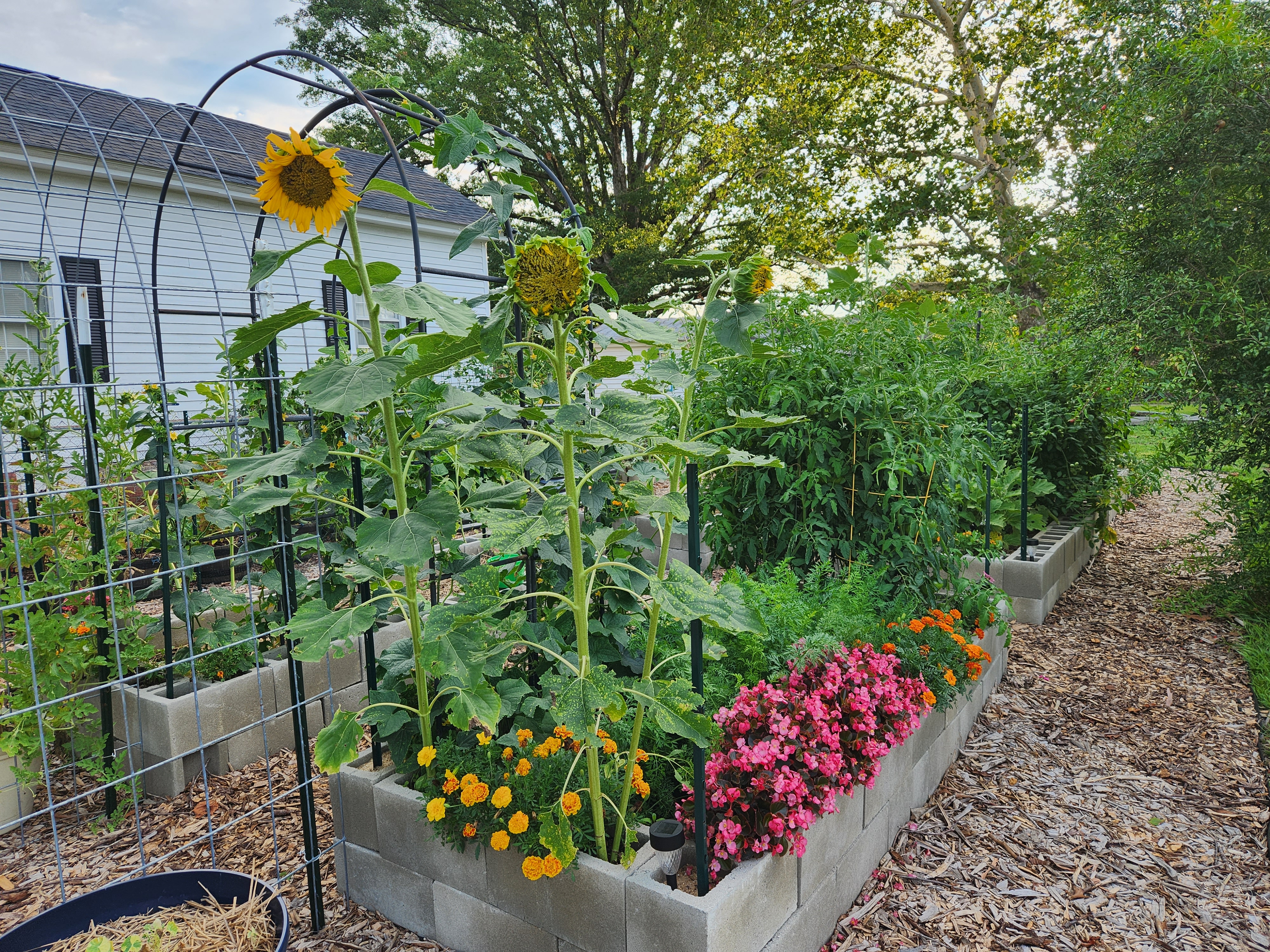
I pulled out the rest of my summer garden last weekend. I always have a hard time making the decision to close the garden for the season, even when I know it is time.
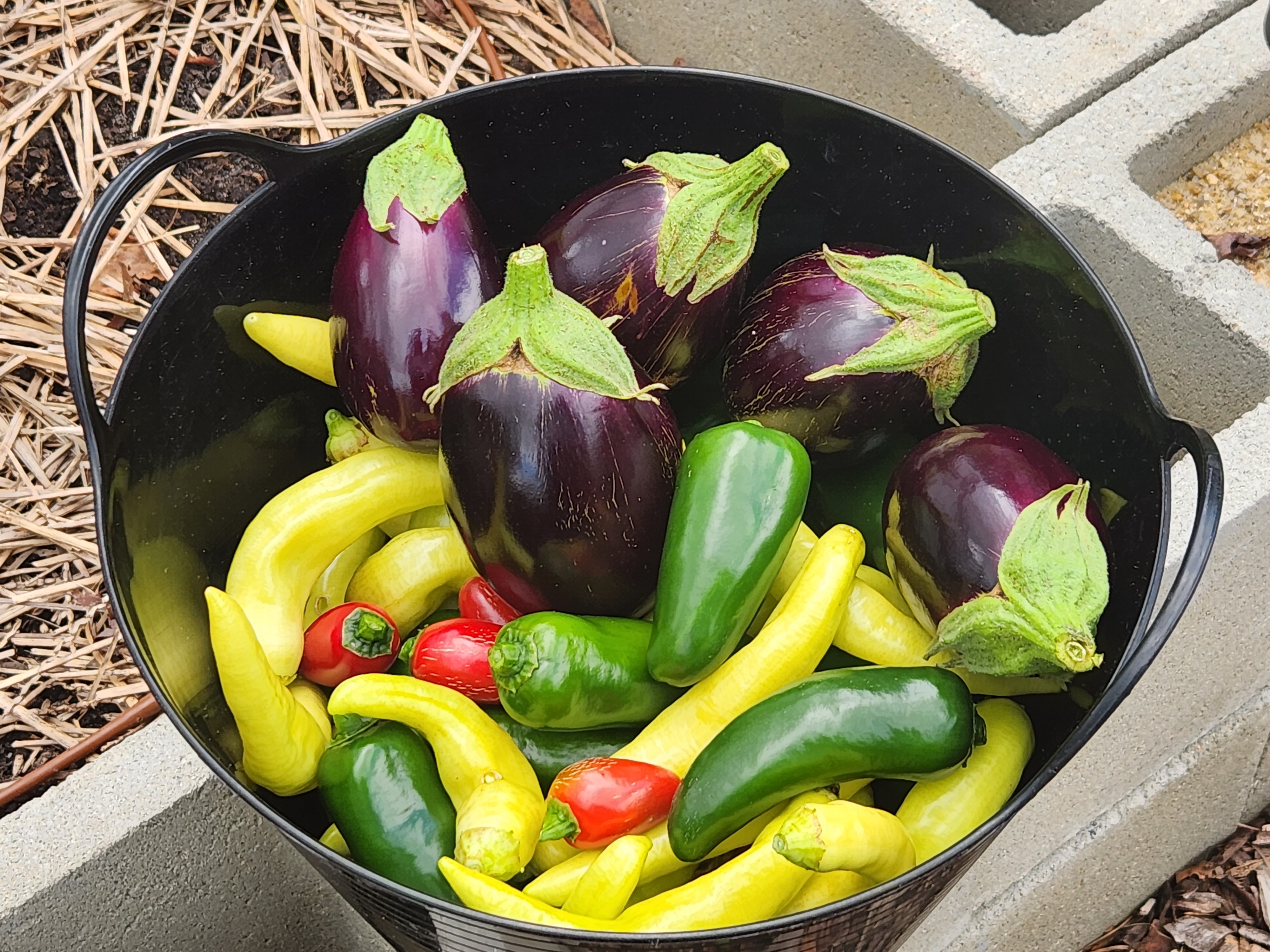
Even as I walked out into the crisp Saturday morning with tools in hand, I hesitated when I saw the abundance of tiny peppers, eggplants, tomatoes, and okra still appearing on each plant. But harvesting the last of the mature fruits only to find at least half of them marked by holes from garden pests whose eggs had hatched in the late-summer warmth assured me that I would receive diminishing returns on any remaining efforts, and delaying in order to pick a few more mouthfuls of summer flavor would only make next year’s bug battles harder.
So, reluctantly, I filled my baskets one last time, cut all the plants down, and went inside to begin freezing the garden’s final bounty.
I love gardening as much for the lessons it teaches as the produce it yields. Putting my hands in the dirt is a profoundly spiritual exercise, and in quiet communion with the plants and pollinators, I often hear their Creator speak. The garden sometimes reveals truths about God, but I’ve also learned to be attentive to what it teaches me about myself.
So as I trimmed and pulled on Saturday, I discovered that my difficulty with knowing when to pull the garden is not unlike so many other questions of knowing when to let go.
Perhaps changes of season are hard for many of us who are moms and ministers because we are called to invest ourselves in growing things. We pour our love, creativity, and energy into ministries, places, and especially people, hoping they will flourish in our care. They become an extension of our own identities and a witness of God’s working in the world. In our best moments, that divine partnership produces gifts that nourish and comfort, but in our desire to nurture, we can sometimes hold on too long.
Changes of season can be difficult to discern and even harder to accept. With our own children as they mature, in our places of ministry, or in the seasons of our own lives, knowing when to prune and till for a new season can feel like loss, but allowing things that have been lovely and useful to die away in the proper time so that they can feed new growth helps to bring fresh beauty, even when the process is uncertain and difficult. Changes of season require trust and faith, but they can also cultivate hope, and with it, new life.
I haven’t yet finished cleaning up from my work last weekend. What has been harvested will be preserved to help feed my family in the coming months. Healthy growth that has been cut away will be composted to fertilize next year’s garden. What is spoiled will be discarded. And in due season, spring will come, I will plant–hopefully with a little more wisdom and patience than before–and I will trust that God will bring new growth once again.
Rev. Elizabeth Jones Edwards serves as Associate Minister at Lakeside Baptist Church in Rocky Mount, NC.
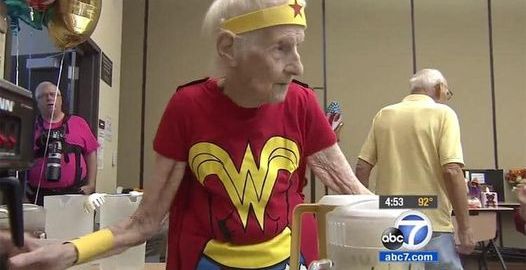
Last week I wrote about the inspiration of a week full of Wonder Women. From a Zoom meeting of women lead pastors to the re-start of a women’s Bible study at the church I now serve to Baptist Women in Ministry of North Carolina’s 40th Anniversary Symposium (I am still thinking about that phenomenal cake!!), I was filled to the brim in the presence of such Wonder Women.
A more seasoned ministry friend, whom I deeply admire and love serving with whenever possible, noted that the artwork I shared by the immensely talented twins, Sarah and Catherine Satrun did not include her more “full of years” (Gen. 25:8) group.
“None of these Wonder Women look like women of my ilk— you know, decrepit, wrinkled, spry, with compression socks. Jus’ sayin’. In our caricature, though, please do keep the twinkle in the eye!”
This led to a conversation about my love for Wonder Women of a certain age (my years as an eldercare chaplain were some of my favorites!), which led to a chat about WW themed compression socks, which she swiftly located. Always resourceful!
She also found a photo that I immediately saved on my desktop.
YES to every pixel of this. YESYESYES!! Friends, this Wonder Woman was 103 when this was taken! Read more about her here.
YES to those who have gone before and lived with courage and whole-hearted love and perseverance and compassion for themselves and others and who still, as they adapt to the last season of this life, open their hearts to what is now.
That’s my favorite aspect of the Wonder Women of a certain age in my life: the ability to honor what has been—what worked for them, what didn’t work for them, the truth of their experiences without rose-colored or doom-colored glasses—AND to be present to the now, to value that the world is always changing, and to not hold the women or the world of now to the shape and substance of the past.
When I am in the presence of a woman who can hold her story with respect and grace and love and also make room for others’ unique-yet-connected story…I know I am with a true Wonder Woman. That space is holy. That space is filled with the love that makes all things possible.
We can do both. We can honor what has been and what worked in the past and how hard certain things were that aren’t that kind of hard anymore. And, at the same time, we can honor what is happening now and how what used to work isn’t working anymore and lean into the desire for transformation and adaptation. Living with that kind of versatility is wisdom in motion: willingness to be malleable, responsive to the Spirit, leaning into reflective learning.
Years ago, I served a community with two prominent women leaders, whom we’ll call Polly and Alice. Both had a deep passion for loving God and loving others. Each had her own gifts to bring to the table and contributed greatly to the ministries around them.
They could not have been more different.
Polly wore vibrant clothes, laughed often and loudly, and taught her Sunday School class even after macular degeneration limited her vision. She procured a special machine that enlarged the writing in her quarterly until she could read it and kept right on leading the friends with whom she had walked most of her life.
She once told me she planned to teach until she couldn’t see anymore–and then she might learn braille! I’m pretty sure she was joking about the braille. But with Polly, you never knew—she just might do it.
Alice found her niche in missions. She’d led women gathered in someone’s fancy, seldom used parlor to learn about missionaries serving in places they struggled to locate in a map. They prayed for missionaries and raised funds in all sorts of creative ways, from collecting dimes in tiny cardboard church-shaped boxes (which fascinated me as a child!) to selling baked goods and cookbooks and crafts.
Alice struggled hard when women’s interest in missions began to shift from learning about “foreign” missionaries to doing hands-on missions in their own communities or traveling to participate in missions around the country—and even the globe. On Wednesday nights, more women opted for Bible study rather than the traditional missions study. Their call was to study scripture and live it out by doing missions themselves, making an impact right where they lived.
Alice became deeply frustrated when she could not influence younger women to do missions like their mothers or grandmothers did. She worried that “no one cares about missions anymore!” As we humans often do, she couldn’t quite make the shift to what had already shifted and was never going to shift back. Her grief for what she viewed as “lost”–the old, familiar, defining ways–was so powerful and so painful, that she couldn’t quite see the good that was happening in new, different ways of living missions.
I know now that in a way I didn’t know then that sometimes grief comes out with protective fronts like frustration or judgment, which make the grief hard to hear. Looking back, I realize that sometimes, in both ministry and my own spiritual journey, I have missed the deeper grief as I tried to deal with (or duck) the sharper, protective emotions coming my way. I want to keep becoming more attuned to the grief underneath, to listen for its tones in those protective emotions and know that what I am hearing is pain, fear, loss–grief.
During that season of ministry, I told my husband, “I want to grow up and be Polly.” I still do. Imperfect, colorful, determined to use her gifts as long as she could, finding ways to adapt and giving room for new learning. Polly absolutely would have worn Wonder Woman compression socks.
I want to as well. I also want to keep learning how to lovingly tend to my own grief, listening for my own protective measures– criticism or anger or judgment–and recognizing that they connect to something that hurts. And the first step to healing that hurt is realizing that it exists.
As I keep getting fuller in years, I want more twinkle in my eye, more compassion for myself and others. I want to give more room for others to be, to create space for those who come after to make their own ways of living out their faith—and know that, just like I did “back In the day,” they need support for the hard work of figuring it out in their own setting. When the things I hold dear shift, I pray for the grace to grieve what was so good for me for so long and trust that God is still, as always, doing a new thing, a new good thing.
Both Polly and Alice were Wonder Women in their own ways. They taught me so much. I think maybe Alice just forgot for awhile that her tiara could also be a boomerang—more than one thing can be true at once.
In fact, a whole lot of things can be true at once, including the rich variety of Wonder Women, of every age, size, style, spirit and socks.
This past week I had THREE different opportunities to be in the company of Wonder Women. Women whose unique brilliance shone bright, simply by their presence in the room. Women whose compassion showed in the way they welcomed others, embracing old friends and warmly connecting to new people. Women whose commitment appeared in how they intentionally engaged with others, truly listening, seeing, and valuing the other.
There’s just something powerful that I see over and over in a gathering of women–the laughter, the connection, the kindness, the willingness to show up for one another. A room full of Wonder Women.
The first gathering was via Zoom, a group of women lead pastors that I was graciously invited to help shepherd as they form a Peer Learning Group. In every face in every square, I saw glimpses of their gifts, their calling, their perseverance, their love for God and God’s people so apparent even in our first meeting. Women who pastor in faith traditions that are late to the “and your daughters shall prophesy” party are a courageous kind. There are layers upon layers upon layers of realities women pastors face that may not be apparent on the surface. What a privilege and honor to get to walk and learn alongside these Wonder Women as they keep following God’s call on their lives, step by step.
The second gathering was a Women’s Bible Study at the church where I now have the privilege and honor of serving as Minister of Missions. The church has a rich and meaningful history of Bible studies oriented to women through the years. So there was serious positive energy about getting to re-start this ministry after a long, hard pandemic pause.
About 30 women gathered around tables in our Fellowship Hall and several others are signed up to join us. As I looked around the room last Wednesday night I again saw the wonder of women who show up for one another. Women who know hardship and pain, who bear losses carved on their bones, whose joy and goodness rise in a thousand ways. Women whose commitment to deepening their relationship with God and one another is reflected in their willingness to set aside this time to slow down and open their hearts. It’s perfectly fitting that we are learning about lesser known women in scripture who followed God’s call and changed the world. Wonder Women studying Wonder Women.
The third gathering was the Baptist Women in Ministry of North Carolina Symposium and 40th Anniversary Celebration. It was my first BWIMNC gathering after six and a half years out of state, where such an organization didn’t exist, much to my disappointment and grief. A small group of women in ministry in the town where we served in West Virginia tried to gather quarterly and it was always a gift to be together, but it was hard work to make it happen. I had several Wonder Women there who anchored me in stormy times–and still do. They truly helped carry me through some of the hardest days in ministry I have ever experienced.
But having an organization like BWIMNC to organize, advocate, educate, and support us as we together follow God’s call is priceless. No one has to add corralling calendars and emails and people for a gathering onto our already overflowing ministry–and usually motherhood–plates, because BWIMNC is doing all the heavy lifting, executive functioning, and execution for us. PRAISE GOD FROM WHOM ALL BLESSINGS FLOW! And Ka’thy Gore Chappell, one of Wonder-est of Wonder Women, and her team do faithful and fantastic work in ministering to us.
Everywhere I looked in that room–Wonder Women. So much creativity, compassion, determination, loving-kindness, wisdom, and a bevy other blessings filled that space. Each woman bearing scars and tending wounds, even as they honor the scars and minister to the wounds of those they serve. Each one profoundly gifted and shaped for what the “such a time–and place–as this” that God has called them to in this moment. Each one with questions, struggles, stories, and testimonies to God’s faithfulness and learning things the hard way.
There was no “ideal” woman I met this past week. They don’t exist. Yet we were all ideal in the sense that we were willing to show up, to listen, to be changed, to honor what God is doing in and among us.
I want to spend more time this weekend giving thanks for the Wonder Women I met. And I want to spend more time in the days to come seeing–really seeing–the Wonder Women around me…and letting them know how wondrous they are, just by being who God God has created and is calling them to be.
The writing had more of a prophetic voice than the pastoral voice that comes naturally to me. Usually I lean toward reflective, careful, warm, pensive ways of sharing and being with people. Pastoral care (spiritual care) is at the center of ministry for me.
But in that post, like ancient Israel’s prophets or John the Baptist, my tone was far more clear, direct, and definitive. Declarative. “No one gets to tell you, ‘no harm, no foul.’ You are the ref in your own life. You are the steward of your experience. No one else.”
I squirmed a bit as I prepared to publish. I heard that clarity and sharpness—not sharp like a knife, but sharp like focusing a picture. The opposite of blurry. But, ummmm, different.
Is it OK that this sounds different? What if people are confused or put off by the shift in tone? Should I go back and soften it?
After some pondering, praying, and processing, I sensed a settledness about publishing it with the original sharp focus. Here’s why: “Pent-up truth-telling tends to come out with some velocity on it.”[1]
Here’s my why:
I’ve worked so hard for so long to even get to a point where I had words about becoming the ref in my own life. So many things about me, from being a white woman raised in suburban Atlanta in the 70’s and 80’s to my particular family story to my birth order to my interior hardwiring to living as an Enneagram 2 to being taught that Jesus only wanted me for a sunbeam (a lesser sunbeam, of course, because girl) for so, so long, plus a dozen other realities, shaped me to be someone who had to work for years to tell the truth about what I experienced, what I felt, what I saw, what I knew to be real in my own personal journal.
Journaling became essential for me in middle school. I discovered then that writing helped me figure out what I was thinking, feeling, or experiencing. A true extrovert, verbal processing is how I make sense of things. There were so many voices in my world, right at my ear, always speaking so loudly and with so much authority that I had trouble hearing myself.
As a teen and young adult, much as I might argue my point of view or stomp off when I wasn’t heard or speak with sureness and even arrogance to say my piece, right under that veneer was a sea of self-doubt, and even more so, self-distrust. Not just, should I have said ?! Or Oh, wow, I didn’t handle that well! or Ugh, I’m so embarrassed. All of which are awkward and hard enough.
But something much deeper was at play. Other people’s points of view and perspectives and versions of the truth took up almost all the space in me and in my world. In a black-and-white/either-or/zero-sum system, there can only be one winner. Other voices dominated. My inner voice got smaller and smaller and smaller. It was only with intense velocity that the deeper truths could come out, which I usually regretted–or was made to regret–immediately. So that inner voice went down even deeper.
I often came across as confident and self-assured. I was neither.
So journaling became a refuge, a place to hear myself. Yet, even in my personal journal, I would often hedge my language, editing myself before the words even made it from pen to page.
No one else was reading my journals (thank God!). But I didn’t need to experience anyone judging me or making fun of me or telling me that I was “crazy” or “too sensitive or “too angry.” I had internalized all that feedback, all the verbal and non-verbal corrections, all the nebulous codes of “how to be and be seen” to such an extent that I fed back, corrected, and coded myself automatically.
I didn’t even realize I was doing it for the longest time. I’d just shut my journal with a strange sense of sadness, not realizing I was shutting out myself. It took decades of journaling and growth and hard things I could no longer shut out and a phenomenal support system and oceans and oceans of grace to figure out I had other options.
First and foremost, I had the option of listening to God. Not the “sunbeams, only” version my fundamentalist upbringing had taught, but the God who loves and sees us all. Who understands us better than we understand ourselves. Who hears us before a word is on our lips or formed in our minds. Who designed us to thrive as we love our neighbor as we love ourselves. Who knows why we get stuck in the unhelpful and often tragic cycles that we do and how to help us get unstuck. Whose grace is always writing new hope in our lives.
In listening to God, I started learning to listen to myself, to the truths I knew, but didn’t think I was allowed to hear or to say. The Spirit slowly, slowly helped me start to hear myself and tell my truth, even and especially if it was just for me.
Years ago, a mentor suggested I start reading the Psalms closely. There the voices of our ancestors gave me permission to lay it all out, spill the beans, pitch a fit, vomit up a torrent of feelings, dance with praise, sing with abandon, and let God work me through it.
I write the truth in my journals now. Most of the time!
So the settledness around publishing the post as-is came when I realized I didn’t want to hedge anymore. I didn’t want to press “publish” and feel that same strange sense of sadness. The Spirit has guided, prodded, and dragged me too far toward freedom to start backtracking now.
“I am the steward of my own experience. No one else.” Yep. And I want to be a faithful steward, valuing my own voice as I also value the voices of others. It’s not a black-and-white/either-or/zero-sum game after all. It never was.
As it turns out, there are far more truths, more possibilities, more room to be than I had ever imagined. Thanks be to God.
After growing up watching Braves baseball with my dad, I married a basketball `player. The game feels so fast for me, so intense. I’ve spent so much time asking my ever-patient spouse, “Wait! What just happened?!”
The ever-patient former basketball player spouse who answers my question-on-repeat, “Wait! what just happened?!”
I ask that most often about fouls: “illegal personal contact or unsportsmanlike conduct on the court or sidelines of a game. Most player fouls involve contact that impedes an opposing player’s gameplay.”1
The referees call the fouls based on the rules of the game. Sounds simple on paper. Not so much in real life.
Like most human endeavors, calling fouls is about perspective.
As a non-basketball person, here’s what I’ve been learning over the years: just because a foul doesn’t get called on the court doesn’t mean harm wasn’t done, wrong wasn’t done. Just because the ref doesn’t see it doesn’t mean it didn’t happen. Just because there’s no visible wound doesn’t mean it didn’t happen.
So often, fouls are finessed in such a way that they’re hard to see. That’s why they have instant replay. That’s why sports talking heads spend so much time parsing and arguing over a certain play. Thousands of fans and anti-fans weigh in online. Everybody wants a say: foul or no foul? A player can get seriously hurt and a foul still not be called.
Fouls in real life are different. Everyone may want to weigh in about what “really happened” from their perspective. But the older I get, the more I realize how essential it is for many of us to become the ref in our own lives.
If something hit or hurt, you get to call the foul in your own life, even if you don’t do it out loud. Even if it’s just for your own heart and mind and processing. Tell yourself the truth.
You don’t need to wait for another ref to confirm it or a committee of instant replay parsers to weigh in. It happened to you, you know what it felt like, you feel or remember the power of it, the surprise of it, or the sting of it. It happened to you. You are the expert on what it felt like and how it affected you.
Pleading our case to get those around us to acknowledge our experience places the locus of understanding outside of ourselves. So many women, so many people I know–myself included–have been mistakenly taught not to trust our own experience, our own judgment, our own gut. Too often, we prioritize what others tell us “really” happened or how we “should” think or feel about it and find ourselves doubting what we experienced. It’s a form of giving away our power to name the truth we know in our bodies, in our memories, in our truest selves.
That power exists only within your own skin. Naming what you experienced is about you. Other people don’t get to decide what it felt like in you or how it impacted you or what you carried forward in yourself because of that experience. That privilege and responsibility belongs with you–in you.
Supportive people who center us can help with the process, absolutely and amen. Others who have earned our trust and lived their love for us in compassionate and wise ways—seek these out if and when you need them. Your experience, struggle, and pain are pearls of great price. Trust only others who will treasure them with you, care for them with you.
Be wise in protecting and providing for yourself. At the first whiff of minimizing or hedging from anyone, get the heck out of there. Stop the conversation when you hear someone trying to “fix” the situation by telling you what you should feel or how to interpret what happened before you’re ready to go there (if you ever are—that’s your choice, too).
You don’t have to be “nice” about it. In fact, don’t be “nice” about it. Be kind to yourself with a quick and hard “stop,” hand up to make your point. If it’s someone you normally can trust (who might be having a wonky time of their own), you might clarify, “I’m telling you something precious to me and I need you to listen. If that’s not what you can offer right now, let me know and we’ll pause this for later.”
Looking at a foul, a wound, straight on with open, clear eyes is part of healing. No one gets to tell you it didn’t happen. It happened. It happened to you.
No one gets to tell you, “no harm, no foul.” You are the ref in your own life. You are the steward of your experience. No one else.
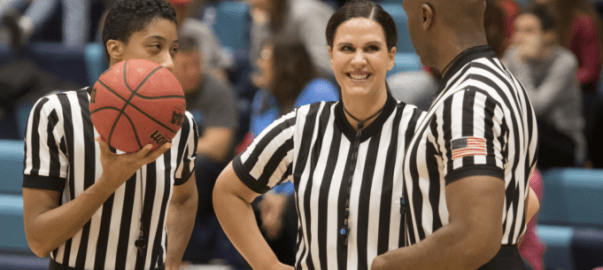
Referee photo: From left, Stacey Thomas, Novi, Mich.; Lindsay VanDyken, Jenison, Mich.; and Charles Smith, Fort Wayne, Ind. Photo Credit: Ralph Echtinaw. Source: https://www.referee.com/dont-sell-your-halftime-short/
In 27 years of marriage, we have lived in four different houses. In 27 years of marriage with three children born in four years’ time, I have spent huge chunks of my life standing at the kitchen sink in each of these four houses. Thankfully, each sink had an interesting view.
Our first home in Sanford, NC was a little brick cottage built in 1949. Character rested in every heart-pine plank of flooring, which a kind-hearted church member refinished for us at cost when we first moved in. Thank you, friend. Those gleaming floors led into a partially updated kitchen with a double sink.
That sink seemed to birth litters of dirty dishes. Standing in place, I wrestled the tops of hundreds of sippy cups, prying apart their innards using my fingernails and some hanging-on-by-my-fingernails language. Pyrex casserole dishes soaked there in hopes of less scrubbing later. Baby oatmeal, peanut butter smears, soaked-then-dried Cheerios conspired to a concrete crust that awaited my efforts after nap time.
Elbows deep in suds, I once tried to calculate how much time I spent at that sink. But I gave up because that required math-ing, which required more of my always-leaking-out energy than I had to give. I kept scrubbing.
My neighbor’s full, graceful maple tree filled half the window’s view. It was old enough to have spread itself up and over their 1950’s ranch and most of their small backyard. Its twin sheltered our backyard.
One fall afternoon, when Eric was the P.O.D. (parent-on-duty), I dragged a lawn chair under the branches of our maple to sit under its golden-yellow glory. Looking up, I felt the wonder of creation and my tiny spot in such a grand story.
I could only enjoy our backyard tree when I was outside playing with the boys or raking up its multitude of leaves in November. I could also see it if I turned my head a bit farther than was natural as I rocked and fed our babies in the nursery, the only room with a view to that part of the yard.
But every day, several times a day over a decade, I had a perfect view of the neighbor’s maple. Standing at the sink, doing the mundane reproductive labor of washing the dishes while caring for three tiny people and serving as an eldercare chaplain and running through the many lists in my head of what else needed to be done by when, I had a glimpse of the sheer gift that it is to be alive in this world.
I remember standing with my mother, who had come up with Dad for a fall visit, and remarking that looking at that tree was like “sipping sunshine.” We were side-by-side, one washing, one rinsing and drying. As our hands worked in tandem, we both lifted our eyes to the tree and then smiled at each other. She knew exactly what I meant.
At our next house in Wilmington, NC, the sink was situated for perfect sunset viewing. Our neighbors across the street had a Bradford pear that turned a rich burgundy red that lasted, in that warmer place, long into Advent.
I stood at that sink for nine years, shepherding little boy plates that turned into big boy plates that turned into breakable, everyday adult plates. There I washed my last sippy cup. My last chunky baby spoons. Endured my last can-this-bib-be-saved maneuvers.
But, I kept the little melamine Thomas the Tank Engine bowl, which we still use for single snack servings. It survived the past two moves. One to West Virginia, where the kitchen sink welcomed me with view of the hills laced in morning mist or stained with evening’s last light. Over our six years there, the number of dishes reduced by one person as our oldest began and finished high school and then headed off to college.
And that little bowl survived the last move in January back home to North Carolina, this time in the East. Here the sink faces an ever-changing mosaic of shared-with-my-neighbor green foliage, long leaf pine, and Carolina blue skies that meld into each sunset’s palette. The last of the sun’s rays poke through the spaces between the branches, slowing the transition, saying a long last Southern goodbye.
Our second child is off to college now, too, so the washing up load is lighter most days and mostly free of plastic, besides our rotation of reusable water bottles, which are notably reminiscent of sippy cups in their resistance to being cleaned.
So much has changed in the 27 years of four sinks, each with its own gift of a view. I am still me, yet so very different from when I first stood at that sink in Sanford, NC, gazing at that glorious maple.
That first sink saw me become a minister (officially) and become a mother. I am still these things. God is still faithful.
It has been a long, hard season in my little part of the world. And the leaves will still turn, the sun will rise and set in splendor, punctuating our days with blessing and beauty.
The view from the sink never fails to say something I need to hear. Thanks be to God.









 ministryandmotherhood