Monthly Archives: May 2016

Joanne Costantino: Everyday Love and Tenderness

“Let all you do be done in love.” I Corinthians 16:14

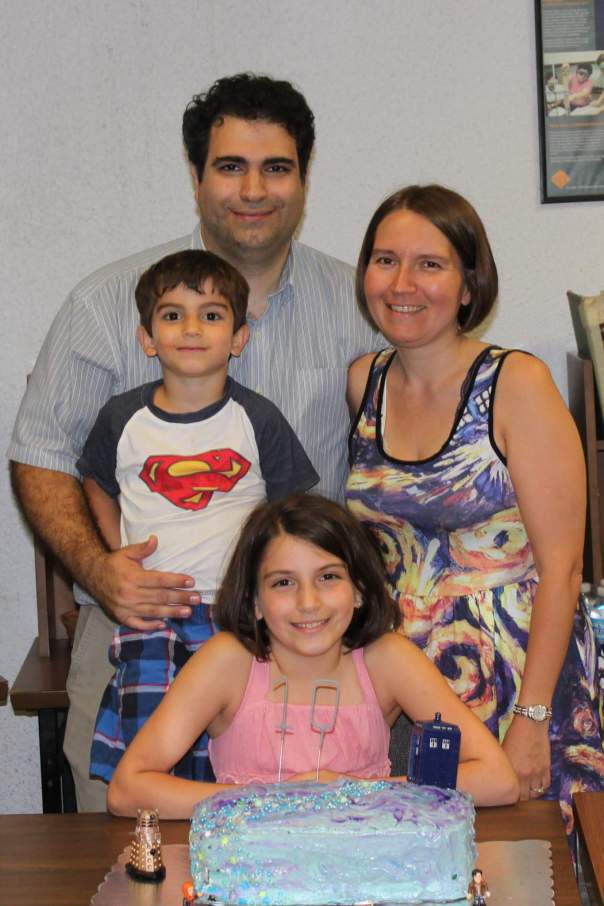
connie and frank wedding

As I sat with my Mother-in-law in the Cardiac Cath lab for a ‘versioning,’ waiting for her turn to be prepped for the procedure, I felt my cell phone vibrate. It was my father-in –law. I answered assuming he was just checking on his wife of 60 years.

“Joanne, this is Pops. I’m lost. I don’t know how to get back home.”

`I said to Mom, “I’ll be right back,” and exited to the hallway.

He could clearly identify where he was. I tried to talk him through getting his bearings, but the more we discussed, the more confused he became. I had left an already anxious woman alone while she waited her turn to have electricity zapped to her heart to regulate rhythm. So after instructing him to stay put I called my husband Mike and put him to the task of getting his Dad safely home.

Mom asked what Pops wanted and I somewhat lied, saying I didn’t have the answer he was looking for and had told Mike to call him. But it was obvious she suspected there was more to the phone call.

Once we were through with the medical procedures and well rested at home, we asked if there were other episodes where Dad got ‘lost.’ Mom acknowledged there had been a few, but that lately it seemed to be happening more frequently.

That was over three years ago. After medical testing and evaluations the suspicions were confirmed. Dad has moderate dementia.

mom&pop 2015

My own grandmother slowly deteriorated with dementia. I remember that her ‘episodes’ affected my mother mostly through hurt feelings. But it was my father who truly suffered the heartbreak of seeing his own Mom become a stranger. She often relived years he could not know, those first twenty years of her life in rural Ireland, sometimes speaking in Gaelic as if we should understand what she was saying.

That is where we are with Pops.

Physically, at 84 years of age, he’s still pretty much a bear of a man who did manual labor most of his life. Mentally, his mind has betrayed what he and his wife had counted on as the “Golden Years.” He has always been loving but ornery. Lately he’s been ornery more often than not.

If you were to ask Mom how things are going, she will shrug her tiny shoulders and say, “Hangin’ in there. Doin’ the best I can.” And that would be the extent of the conversation.

She won’t tell you about his midnight jaunts when he leaves the house to go to one of his ‘side jobs.’ He often worked two and three jobs at a time while Mom took care of their five children.

She won’t detail for you how he claims someone, somehow was in their house and stole a very specific amount of money from his wallet, when in reality he simply hid it and forgot where. She also won’t tell you that the huge hole in the ceiling is because he tried to fix something and eventually decided the fix wasn’t needed after all. She won’t tell you how sad she is to see him do these strange and uncharacteristic things.

This is not her Frank.

We have tried to convince Mom and Dad to consider alternative living arrangements, considering their safety and well-being. But Dad won’t budge. I understand. He knows his own home and in that, there is his personal sense of security.

When I’m with him and realize he’s ‘gone off’ into another time and place, talking about what he did and who he was with and the conversation that happened as if it were present time, I just ‘go with it,’ hanging on to every word he shares. For me, he’s giving me a glimpse in to his past, like a family history lesson.

My siblings-in-law have a different perspective than I do with this inevitable progression of dementia. I understand that, too. They are missing their Daddy, the bear of man who hugged you and then kissed both of your cheeks, with a “Mmmmm. Love ya!”

They are missing the everyday things that defined their Daddy. They miss his velvet voice singing Italian lullabies and Frank Sinatra love songs, him strumming his ukulele while sipping his homemade red wine in the kitchen. They miss the pet names he had for them, like, Rags or Moose or Murph. Because he doesn’t remember.

Most of my understanding is with Mom.

My sainted mother-in-law is torn between preserving her husband’s dignity and the emotional exhaustion of his episodes, which sometimes relive a time she’d rather not. This is not the same man who pursued her in their dating days . . .  and yet he is, during tiny moments here and there.

Maybe those moments sustain her to make every day as ordinary as possible for both of them. She does this with extraordinary strength and grace, love and tenderness. She is his wife and she loves him.

As I watch her care for him, I hear a whisper that love is bigger than shared memories. That even when we forget who we are or lose our way, we are yet loved and valued. That even when, piece by piece, we are losing who we have been, we are still precious to the ones who love us. And to the One who loved us before we knew who we were and loves us through and beyond the day we might forget altogether.
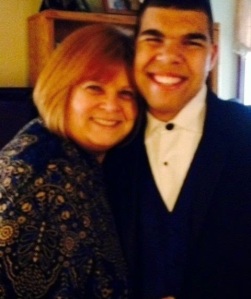
mike and Joanne prom
Joanne and one of her five grandchildren, Mikey

Joanne Costantino is a Philly girl and “cafeteria Catholic” laywoman living in the wild suburbs of South Jersey, where she still pines for city life. She graduated from college in 2008, two weeks shy of the birth of her 4th grandchild and now there are five grands. The “accidental matriarch” of a life she didn’t sign up for, Joanne chronicles that life at www.weneedmoresundaydinners.blogspot.com. We do indeed need more Sunday dinners.


Alicia Davis Porterfield: Everyday Theology

It’s Ordinary Time again, the season after Pentecost stretching from late spring into the fall. This is the growing season for the people of God, time to sink our roots deep, nourished by the Word and spiritual practices that bless. No high holy days to prepare for, no intentional seasons, no long list of mandated activities, festivities, or parties.

Ordinary time. (Cue a deep, cleansing breath here).

Unknown

For the past two summers, we’ve used the summer of Ordinary Time to host a series about an “ordinary” topic. The first series was “Ordinary Saints” about the people who have shaped or supported us or spoken to our hearts. The second was “Ordinary Miracles” about the God-winks and miracle moments we’ve experienced.

This summer, our Ordinary Time series is “Everyday Theology.”

Every day, embedded theology floats, zings, and crams into our lives through “ordinary” means: TV, movies, commercials, conversations, books, magazines, toys, family history. The messages are directed at us, our families, our children, the people in our ministry settings.

As ministry-moms, we often have a dual awareness: the content of the message and then its underlying theology. While we’re reading the children’s book/watching the commercial/perusing the parenting magazine article with part of our brain, we’re often analyzing it theologically with another part.

What situations, messages, experiences in the kid or adult worlds around you could use some unpacking? What grabs your attention or makes you angry/grateful/confused/uncomfortable and why?

We invite you to reflect, pray, and write about these things. We want to hear what God is stirring in you. Contact us to claim your week to write.

Here’s a brief offering about some of the Everyday Theology I’m unpacking these days:

Love it or Be Loved

We can’t fix anything around our house. I can tighten a screw with a screwdriver and change a light bulb (except the one that broke off in the socket of one of our outside lights. It’s been like that for years now because I keep forgetting about it. Oops). Eric mows the lawn. He doesn’t know how to fix things either.

Our go-to person about how to fix (small) things or who to call to get everything else fixed was always my dad, who died this past November. He was also the person we called to talk through decisions or ask advice or figure out our kids’ math homework, but that’s another post.

So our kids have to live with things that are messed up for long periods of time before we call someone to fix it.

http://www.busykidshappymom.org/wp-content/uploads/2014/03/April-fools-broken-faucet.jpg


And since there’s usually multiple things wrong at once, things never get all fixed all at the same time. There is no “Love it Or List It” great reveal.

Enter guilt. Especially as I’ve just wrapped up a 13 month interim pastorate, I am re-discovering about seventeen (seventeen hundred?) things around the house that need to be fixed and have needed to be fixed for a long time.

Broken floor tiles in the kitchen.  The half bathroom sink backsplash, which has always looked like a kindergartener put it up (or like I did–same difference), is now also cracked. The ceiling in our oldest son’s bedroom looks like it might have leprosy and I am ready to consult Leviticus about how to make it clean.

I could call every “fixer” on Angie’s List in a 20 miles radius and still, nothing will ever be fixed all at the same time. Much less in sixty minutes. Especially in a house with three boys.

Images of house perfection (or body perfection or garden perfection or relational perfection or life perfection) are, for many, inspirational and encouraging: “I could do that!” or “I could have that!” or simply, “Oh, how beautiful.” Sometimes I’m there.

But (many) other times (especially when I’m tired), I hear an embedded theology of perfection in these images and ideas. Nothing broken is acceptable. Good is not good enough. It could always be better. Cute could be pretty. Pretty could be beautiful. Keep working, keep fixing, keep rearranging.

Or as my grandmother used to say, “Good, better, best; Never let it rest, ’til the good is better and the better is best.”

Underlying these thoughts, for me, is an embedded theology that we are not good enough as we are. Not acceptable to God, not loved, not part of the story. Unless we’re fixed. Unless we’re cleaned up, spruced up, the very best fresh-and-new version of ourselves.

If I stop and breathe and listen, I can hear “Come to me all you who are weary and heavy-laden and I will give you rest.” And I find rest for my soul, rest in the One who heals instead of fixes–and who is never expecting my perfection.

Then the broken tiles don’t feel like such a big deal.

Because I am loved.

10481019_10204339754038839_4493226148113287578_n
Grammie, Grandad, and family

Alicia Davis Porterfield (back row, far right) is a ministry-mom who lives in Wilmington, NC. She moderates the Ministry and Motherhood blog and enjoys preaching, teaching, reading, singing, and laughing.


Christina Ryan Perkins: Blessings and Dust

When  you go to a home, give it your blessing of peace. If the home is deserving, let your blessing remain with them. But if the home isn’t deserving, take back your blessing of peace. If someone won’t welcome you or listen to your message, leave their home or town. And shake the dust from your feet at them. —Matthew 10:12-14

Whatever house you enter, stay there until you leave that city. And as for those who do not receive you, as you go out from that city, shake the dust off your feet as a testimony against them. —Luke 9:4-5

When you’re in seventh grade, building friendships is difficult. I remember the time my best friend from fourth grade, Gemma, decided to host a small slumber party. She invited only three girls: Angel, Mary, and myself. About two hours after Angel and I arrived, Gemma called Mary and asked her if she was still coming. Mary replied, “No, I don’t like Christina, so I don’t want to go anywhere she is.”

I was confused. Mary and I had been in the same school for four months. We did have any of the same classes and our parents didn’t know any of the same people. The only thing Mary and I had in common was that we had both recently been cut from the basketball team during tryouts. I thought to myself, “why doesn’t she like me? She doesn’t even know me. Everyone likes me.”

bullying

(http://www.goodtoknow.co.uk/family/158430/What-to-do-if-your-child-is-being-bullied)

That wasn’t really true. I had always been a victim of bullies. They each picked different reasons to bully me: my petite size, my glasses, the eye patch I wore in early elementary school to “train” my bad eye to work, my being a Protestant attending an almost all Catholic school, my academic talents… the list was endless. People didn’t like me. In fact, they seemed to seek out reasons to not like me.

Yet I still stand by the intentions behind what twelve year old me thought to myself. “Why doesn’t she like me? I’ve not done anything to make anyone not like me.” Then and now, I go out of my way to help and support people. Being a pastor, I see the best in people. I see the promise of perfection in each individual. As an adult and a pastor, I still ask myself, “why doesn’t she or he like me? I have been caring, compassionate, and welcoming.”

Recently, I relived a very vivid experience with the kind of bullying common in many churches. Every Sunday I would welcome people at the door and ask about their family members, their health, the recent concert or ballgame their child participated in. Week after week I received the “grocery store answer.” The response you give the acquaintance you sometimes run into at the grocery store. The person you ‘know’ but for whatever reason don’t really know all that well but still wish to be polite to just the same.

“Oh, dad is home now, thanks for asking.”

I continually send out emails filled with reflections, prayers, congratulations and thank you’s to members of the congregation for the time and services to our Lord. All these carefully crafted and thoughtful emails were left unanswered, unless it was to lob yet another complaint.

Family, friends, coworkers all saw the bullying and identified it. Once the bullying behavior was identified, I knew what to do: Be the pastor I’m called to be by shepherding them and leading them to greener pastures.

I was torn between two lessons from divinity school. The first lesson taught me that tough situations are opportunities to learn and grow. Some churches never seem to recognize that they cycle through the same mistakes time and time again. As pastors, we are called to be prophetic. We are called to speak the truth with grace and to walk the congregation through this wilderness so that once and for all it can break this cycle.

But the second lesson was just as memorable, just as important. As I left a chapel service, someone handed me a paintbrush with these opening scriptures printed on the handle. Simply put, “if they won’t welcome you, leave them and shake the dust off your feet.”

I found the first lesson as part of my calling–walking with the congregation as I lead them to a better, healthier place. So I devoted more time to the congregation. I arrived earlier. I began offering more resources and taking more time to pray.

Of course, more time spent with the congregation meant less time with my family. Unless I brought them along. One weekend we spent eight hours prepping for an event. My two children organized materials, ran errands, and helped me cook. The next day, we arrived at church three hours early. The event went off amazingly well!

But not one volunteer complimented it or thanked us for the work. The next week we headed over on Saturday again to prepare things for Sunday’s big event. Still no thanks voiced or offers to help the next week. Finally, on the fourth consecutive Saturday in a row we had dedicated to preparing everything for Sunday, my typically selfless oldest child paused to ask,

“How long are we going to be at church THIS time?”

In that moment I realized I was sacrificing our family’s weekends to serve a people ungrateful but also unreceptive. I cannot please everyone. People do not have to have a reason to dislike me. Sometimes, for reasons that make no rational sense, people are not capable of appreciating the work that goes into the things I do. Some people simply cannot be pleased and cannot receive the shepherding I am called to provide. I’m wasting my time, I’m wasting their time, and worst of all, I’m wasting the few valuable moments I have with my children.

That is when I realized the second most memorable lesson from divinity school was the most important. I was not received and it was time to go. My best way for me to be their pastor is to open the door for someone they will receive. To hold onto that door and keep trying would be the worst failure of all. The realization freed me–healed me.

I am holding hands with my children as we skip freely away, the dust is flying off our feet, blessing the congregation all the way home.

.facebook_1462907075577

Christina Ryan Perkins is a graduate of Campbell University Divinity School and a ministry mom living in  Fort Wayne, Indiana and serving as the Interim Pastor at First Baptist Church, Huntington Indiana.

Kheresa Harmon: The Mystery of Prayer

images-11

We can spend a lifetime struggling to understand how, or even if, our prayers are answered. We beg for the diagnosis not to be cancer. We silently cry for this pregnancy test to be positive. We scream out to God for her not to die today. We groan for the relationship to be restored. We bargain with God to fix it, whatever it may be, one more time. We struggle. Did God hear us? Did God answer us? Why did it turn out this way? Where is God?

We can spend a lifetime struggling with prayer.

A 402 mile bus ride drove my nine-year-old son, Timothy, to his knees. As dusk’s delicate fingers slowly pulled the curtain on Maundy Thursday, my son became sick. He was very sick. Tears welled up in his fearful eyes. Timothy looked frantically at me and pleaded, “Please pray!”

The charter bus swayed and lurched along I-85 South. Timothy rested limply in his seat and I kneeled on the floor. He and I forgot about the other children, their parents, and his teachers. I begged God to take away the headache and the nausea. I begged. The bus swayed and I prayed, “Please help Timothy not be scared, Jesus. Please make your face known to him right now.”

Maundy Thursday darkened. The bus swayed and lurched. Timothy’s nausea and pain intensified. Somewhere along I-85 South in Gaston County, Timothy’s prayer was not answered.

Or was it?

With his eyes closed and his little head resting against the bus’s window, Timothy whispered, “Before I threw up, I was not scared anymore. I just felt safe and that, no matter what happened to me, I would be O.K.”

Good Friday dawned, and health was restored to my son. Timothy and I spent the better part of that holy day reflecting on the sacred moment of prayerful struggle that happened in my son’s life a few hours earlier.

In a swaying bus on a dark Maundy Thursday evening, Timothy struggled with prayer. In his struggle, Timothy grasped what it was that makes prayer so powerful. He did not get what he wanted. The pulsing pain in Timothy’s head did not abate. The nausea would not loosen its grip on him. Timothy vomited, in a bag, on a charter bus filled with peers.

Timothy did not get from God what he asked (nor did Jesus on the first Maundy Thursday, for that matter). Timothy did get precisely what he needed – God’s peaceful presence.

Our model for prayer and the struggle with it is captured perfectly in Jesus’s words in Matthew 6:9-13, and especially in verse 11 – “Give us this day our daily bread.” Our good and gracious God gives us exactly what we need for each minute of the day, even when we are ignorant of our own needs.

What we need is God. We are given God.

Timothy got God’s yes! As the bus swayed and lurched along I-85 South, Timothy felt the powerful presence of the God who is with us. Timothy was not alone. We are never alone, for our God is with us.

The mind-boggling beauty of God’s presence with us is that God’s presence with us is God suffering with us. God does not merely carry us. God holds our hand and groans with our pains as we struggle along this swaying, lurching journey called life.

That is more powerful than a prayerful petition answered simply the way we want it to be.

Kheresa

Kheresa Harmon is married to Steve Harmon and they are the parents of a fourth-grader named Timothy.  A graduate of Campbell University Divinity School, Kheresa serves as the Director of Admissions for the School of Divinity at Gardner-Webb University.